
There’s no such thing as a perfectly accurate translation because languages are different.
If only it were so easy!
My mom once had a tutoring client once who wanted to learn Spanish but didn’t understand what foreign languages are like. He asked her for the Spanish word for “performance”. She said, “What’s the context? Do you mean a ballet performance, or job performance?” He said, “The context doesn’t matter, I just want to know the Spanish word for ‘performance’!” He didn’t think there could be more than one. He thought switching to another language was as easy as learning exactly one word for every English word, something like those simple secret codes where every letter of the alphabet gets assigned a number from 1 to 26. If it were, we could just exchange one set of symbols for another and be done. (If only!)
Literal vs Accessible
Translators can’t just substitute in “the correct English words” for the foreign works they’re translating. There are some obvious, easy choices—and thus a lot of overlap between different translations—but also a lot of room for variation.
In particular, there is a spectrum of possible translation strategies: On one end is “literal” or “close” and on the other end is “accessible” or “loose”. Other names for the ends of the spectrum are “source-oriented” and “target-oriented”. Both strategies have their advantages, as does the strategy of doing some of both so as not to end up at either end of the spectrum.
Who doesn’t love cabbages?
In French, “mon petit chou”, meaning “my little cabbage”, is a term of endearment. According to my understanding, it’s fairly common, or at least fairly recognizable, and genuinely affectionate. If a character in a book says this, what should the translator do?
A literal translation might include the actual words “my little cabbage”, which has the effect of giving the English work a French flavor—assuming you know what the phrase means among French people. If you don’t know, it’s probably a bit distracting. You might think it’s something the character made up to refer to the specific person he uses it with. You might think it has something to do with her family’s agricultural background. Is it condescending? Insulting, even? Or just cute? To avoid such confusion among people who don’t recognize the French phrase, the translator could add a an explanatory note as a footnote or endnote.
A beyond-literal translation will leverage deep knowledge that’s not in the text and perhaps not even of interest to most readers. Arguably, the French phrase does not refer to a cabbage. It is perhaps a shortening of a phrase referring to a pastry like a cream puff, which tbh makes a lot more sense. So then the most literal English translation might be “my little cream puff”. The translator may now feel the need to explain why he has erased all traces of the cabbage that some English-speaking readers might have recognized, and should probably accept that readers will treat “cream puff” as some sort of special innovation, whether on the part of the character or the translator.
A loose translation would just use a normal-sounding English-language term of endearment, like “my darling”, perhaps, and get on with the scene. It’s arguably very fitting to use a word that has the same emotional impact in English that the French phrase has in French. In an English translation, why use any phraseology that is not idiomatic in English? Why confuse readers by including wording they might not recognize, or distract them with explanatory notes? Just let them read the story as if it was written in English to begin with.
A beyond-loose translation, to give readers the benefits of reading a literal translation without requiring them to understand the source language and culture, will insert paraphrases and explanations directly into the text. One could imagine a translator keeping “my little cabbage” but then writing, “She responded to the commonplace endearment by crossing the room to sit beside him” where the original text might only have said that “she crossed the room to sit beside him.” I have the sense that Dennis Washburn’s Tale of Genji is of this type.
Cabbages, Doves, and Brothers
I invented this cabbage example based on a debate surrounding Pevear and Volokhonsky’s choice to translate “golubushka” as “my little dove” because while I don’t know any Russian, I do know some French, and because I didn’t want to wade into the P&V debate.
Or maybe I’d heard this example before, and the debate about doves just made me think of it. At any rate, it’s actually the same example given by E.V. Rieu, who initiated and edited the Penguin Classics series and was a translator himself. His goal for his own and Penguin’s translations was to follow what he called the “principle of equivalent effect”:
[The] translation is the best which comes nearest to giving its modern audience the same effect as the original had on its first audiences. Just to illustrate that, may I use a rather crude example from modern French? French novelists often represent married couples as calling each other mon chou, which I don’t think would strike a Frenchman as funny at all. If you translate that into English by the words, ‘my cabbage,’ you’re going as far as possible as you can from the principle of equivalent effect. In fact, you’re making the English reader think that Frenchmen are silly, which is the last thing that you should do.
There are, of course, an unlimited number of other examples, subtle and unsubtle, of decisions translators face when one language doesn’t mirror another.
Another that comes to mind is the issue of word ordering in the title of Dostoevsky’s Brothers Karamazov. Translator Ignat Avsey, whose translation philosophy is similar to Rieu’s, calls his version The Karamazov Brothers. Putting “brothers” first is just as normal in Russian as putting it second is in English.
Discussion
What do you prefer? A translation that leaves behind traces of its origins, or one that doesn’t? Would you prefer footnotes or inserted paraphrases? Literal or beyond-literal, loose or beyond-loose?

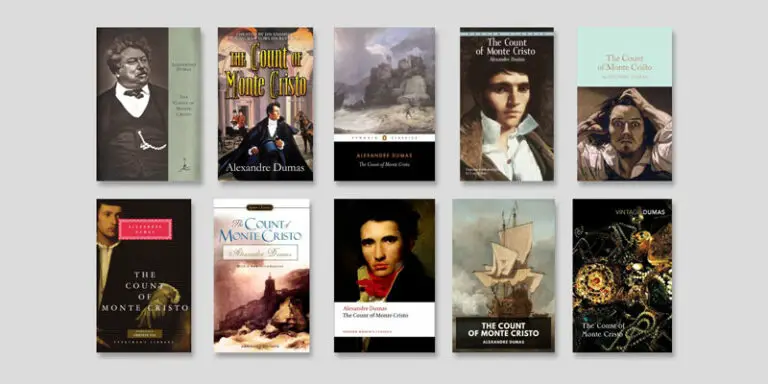
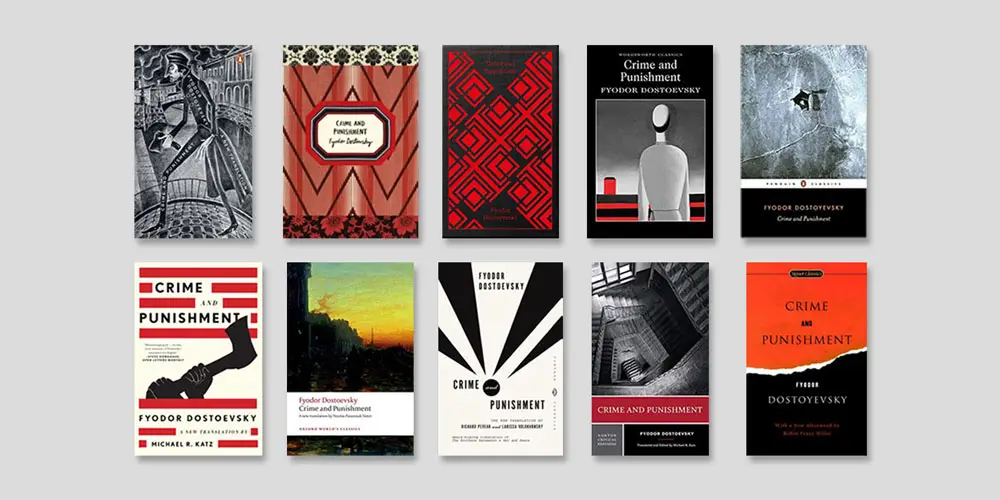
This isn’t quite the same question, but another dimension of translation, particularly relevant to the reading experience, is simply whether the translator is a decent writer in their own language. Haruki Murakami’s Pinball, 1973 has been translated into English twice, for instance, and while the more recent 2015 Goossen translation was apparently more accurate (I would assume in a literal sense) and claimed to be unabridged, I had a more enjoyable time when I recently revisited it with the earlier Birnbaum translation, which had originally only been published in Japan. Amusingly, the main character is himself a translator.
But setting aside the differences between multiple translations of his individual works, there’s a larger point to be made: Murakami’s English audience has been blessed with several regular translators of his work who are themselves great writers.
Thanks for your comment! I think a lot of the translators of classic literature I’ve learned about are writers, but I think a lot of them tend to write academic nonfiction (articles or books about literature) rather than their own fiction. The skills of a translator and a novelist overlap but aren’t all the same skills, since translators don’t have to develop their own characters and plot, for example. But maybe the best translator for a novel would ideally be a bilingual novelist. A good novelist would be good at dialog… Actually I think the translators of more recent fiction are more likely to be novelists themselves rather than academic specialists in literature or translation. I don’t really know, but that’s my guess.
I didn’t realize any works by Murakami had multiple English translations. I think usually in the case of modern fiction, there’s only one translation per language, because the foreign publisher has to pay the original publisher for translation rights, and then maybe they have exclusive translation rights, so another publisher couldn’t buy the rights even if they wanted to. But it makes sense for there to be two translations of Pinball if the earlier English translation was for sale exclusively in Japan; translation rights definitely can be sold by region. (It would make even more sense if one translation were British and one American, but it looks like both the translations of Pinball are by North Americans.)
Gosh, I think translating from Japanese, even if it isn’t thousand-year-old Japanese like in the Tale of Genji, would be such a challenge! It’s nothing like English. We are, as you say, blessed to have translators bring us good English translations of Japanese works.
Happy reading!