
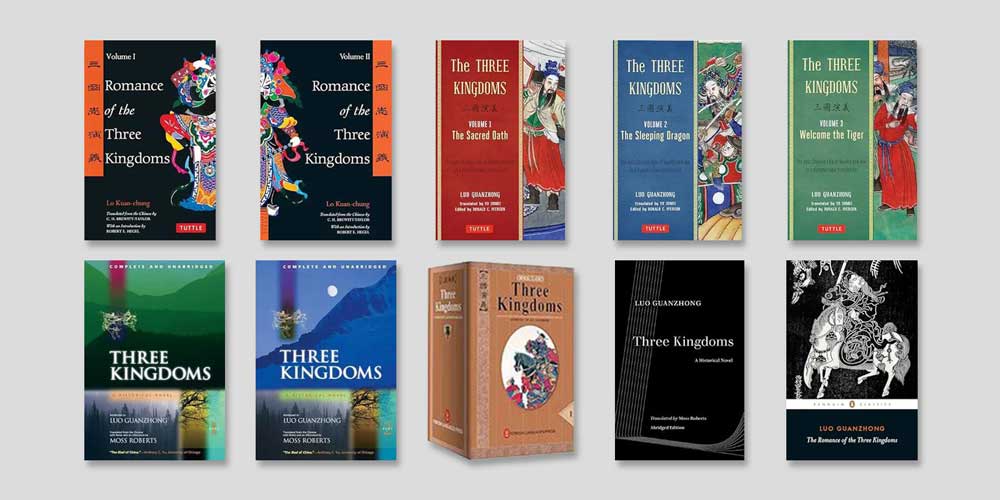
Disclosure: This page contains affiliate links. If you purchase through links to Amazon, AbeBooks, Bookshop.org, or Libro.fm, I may earn a commission at no additional cost to you. As an Amazon Associate I earn from qualifying purchases.
Which English translation of Romance of the Three Kingdoms should I read?
A complete version of the epic we know as Romance of the Three Kingdoms was published in China in 1522, although the story itself was based on already-centuries-old historical records, and had been performed on theater stages for generations. In other words, this work is old by any measure. It’s also important.
From the introduction by John S. Service to the Roberts translation:
“For at least four hundred years it has continued to be a favorite of the world’s largest public. The literate of China read and reread it; those who can not read learn it (perhaps even more intensely) from storytellers and opera and word of mouth. It is, simply, a terrific story. Every element is there: drama and suspense, valor and cowardice, loyalty and betrayal, power and subtlety, chivalry and statecraft, the obligations of ruler and subject, conflicts in the basic ties of brotherhood and lineage. By any criterion, I suggest, it is an important piece of world literature.”
And yet, the story was late in coming to the West. The first English translations were all extracts. For example, British sinologist Herbert Allen Giles included parts of Three Kingdoms in his 1922 book Gems of Chinese Literature, but there were many others, including a translation of the central Battle of the Red Cliff by the Yangs, who translated The Dream of the Red Chamber.
Now, though, you have three different choices if you want to experience the entire sweep of the hundred-year conflict between rival states Wei, Shu, and Wu, led by Cao Cao, Liu Bei, and Sun Quan, and meet dozens of memorable characters, including Zhang Fei, Guan Yu, and Zhuge Liang (Kong Ming).
Here's a quick recommendation.
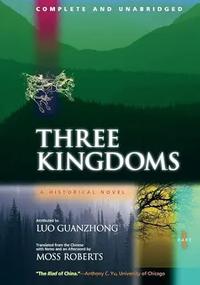
Get the Roberts translation of Romance of the Three Kingdoms (published by University of California). Available as a paperback (ISBN 9780520224780, 552 pages). Learn more about the Roberts translation.
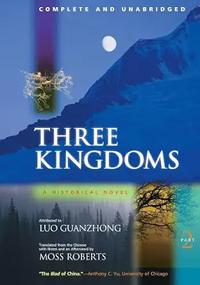
Get the complete modern translation in two parts. (This is part 2.)
Get the Roberts translation of Romance of the Three Kingdoms (published by University of California). Available as a paperback (ISBN 9780520225039, 555 pages). Learn more about the Roberts translation.
Want more choices? Keep reading for a comprehensive list of all translations and editions in English.
This page also provides more background on the work and a selection of related books and adaptations.
It also lists recommendations for different readers’ needs (e.g., affordability, scholarly apparatus, language style).
Romance of the Three Kingdoms: Translations in English
As of October 6, 2026, this list is (to the best of my knowledge) complete, and editions in bold are in print.
- 1925 — C.H. Brewitt-Taylor (complete)
- 1991 — Moss Roberts (complete and abridged)
- 2014 — Sumei Yu (complete)
- 2018 — Martin Palmer (abridged)
1925 · C.H. Brewitt-Taylor · Romance of the Three Kingdoms
About C.H. Brewitt-Taylor
Charles Henry Brewitt-Taylor was a British customs officer, naval school teacher, sinologist, and translator, best known for this translation.
About the Brewitt-Taylor translation of Romance of the Three Kingdoms
Publication history
The Brewitt-Taylor translation was originally published in Shanghai in 1925 in two volumes, by Kelley and Walsh as “San Kuo, or Romance of the Three Kingdoms, an English version of 三國志演義” and, interestingly, says it was “Especially prepared for the use and education of the Chinese People.” It was reprinted by Tuttle in the US and Japan in 1959.
The Brewitt-Taylor translation was written in British English using the Wade-Giles romanization system, which was typical of the time, thus the names of the three sworn brothers Liu Bei, Zhang Fei, and Guan Yu are spelled “Liu Pei”, “Chang Fei” and “Kuan Yü”.
Opinions
Ruined Chapel: Review of Brewitt-Taylor translation by Berthold Gambrel
“Brewitt-Taylor was an Englishman, and his translation shows a rather Victorian sensibility. So this is looking at a historical-mythopoetic account of ancient China through the lens of an early 20th century Briton…. the most fun parts are the translator’s renderings of the condemnations heaped upon Liu Bei’s enemy, the villainous minister Cao Cao. For instance: ‘Thus Cao Cao is the depraved bantling of a monstrous excrescence, devoid of all virtue in himself, ferocious and cunning, delighting in disorder and reveling in public calamity.’”
East China Normal University Professor Zhao Gang Lectures on Yu Sumei’s Translation of The Romance of the Three Kingdoms
“From the perspective of style, C. H. Brewitt-Taylor’s translation reflects the characteristics of Victorian English, with formal, elegant and academic words, even including some archaic words, and longer sentences with fewer punctuations.”
Availability
The Brewitt-Taylor translation is in the public domain, but no complete digital transcription as of Mid-2026. Project Gutenberg has Volume 1 of 2, and Hathi Trust has Volume 2 of 2.
There is an un-proofread transcription available at Wikisource.
There are scans of Volume 1 and Volume 2 and Volume 2 available at archive.org.
A version that uses pinyin, with commentary by Dr Rafe de Crespigny and thousands of readers’ notes, was available to read free online at https://threekingdoms.com/. The website seems to be down, but if I click the chapter links, I can see pages that Google cached.
Oh actually it seems the edited pinyin version of the Brewitt-Taylor translation is online at https://kongming.net/threekingdoms/, so you can now read the text online in a more modern web style.
First sentence of the Brewitt-Taylor translation of Romance of the Three Kingdoms
» See extracts to compare the translations of Romance of the Three KingdomsEmpires wax and wane; states cleave asunder and coalesce.
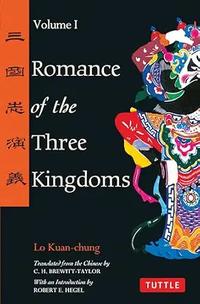
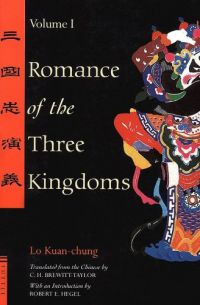
Get the Brewitt-Taylor translation of Romance of the Three Kingdoms (published by Tuttle)
Introduction by Robert E. Hegel. Volume 1 of 2.
Available as a paperback (ISBN 9780804834674, 708 pages).
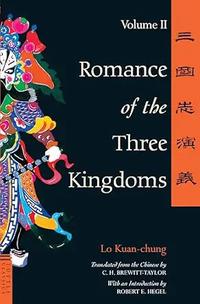
Get the Brewitt-Taylor translation of Romance of the Three Kingdoms (published by Tuttle)
Introduction by Robert E. Hegel. Volume 2 of 2.
Available as a paperback (ISBN 9780804834681, 680 pages).

Get the Brewitt-Taylor translation of Romance of the Three Kingdoms (published by Tuttle)
Introduction by Robert E. Hegel. Volume 1 of 2.
Available as an ebook.
Get the Brewitt-Taylor translation of Romance of the Three Kingdoms (published by Tuttle)
Introduction by Robert E. Hegel. Volume 2 of 2.
Available as an ebook.
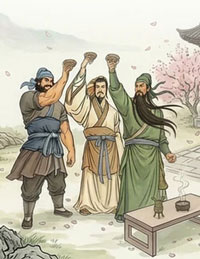
Get the Brewitt-Taylor translation of Romance of the Three Kingdoms (published by Kongming.net)
This is an edited Pinyin version of the Brewitt-Taylor translation, available to read online.
Available as an online ebook.
1991 · Moss Roberts · Three Kingdoms: A Historical Novel
About Moss Roberts
Moss Roberts is an American sinologist, emeritus professor at NYU, and translator. He has also produced translations of the Analects of Confucius and the Dao De Jing.
» Faculty page of Moss Roberts at NYU
» Another faculty page of Moss Roberts at NYU
» Eulogy for John S. Service (author of foreword), chaired by Moss Roberts
About the Roberts translation of Romance of the Three Kingdoms
Publication history and availability
Prior to publishing a complete translation, Roberts produced a collection of selected excerpts, published by Pantheon in 1976 under the title Three Kingdoms: China’s Epic Drama. This book is out of print, but you may be able to find a second-hand copy: Search AbeBooks
The complete Roberts translation was first published by University of California Press in 1991, and subsequently reissued by Foreign Languages Press in China in 1994. There is also a 2017 bilingual edition from Shanghai Foreign Language Education Press. The 1991 UC Press version was updated in 2004.
The FLP editions have illustrations of Liu Bei, Zhang Fei, Guan Yu, Zhao Yun, and Zhuge Liang from the Shu Kingdom; Cao Cao from the Wei Kingdom; Sun Quan, Lu Su, and Zhou Yu from the Wu Kingdom; Sima Yi; and Lü Bu and Diao Chan. Some major incidents are also illustrated.
Roberts also produced an abridgement, which was published in 1999, with an updated 15th anniversary version in 2014 (with a new foreword) and a repackaged version in 2020 (maybe only the cover is different?). The abridgment was created primarily for use in literature courses.
The first few sentences of Chapter 1 are the same in the complete and abridged versions.
Opinions
Wuxia Wanderings: “Guide to Romance of the Three Kingdoms” by Lone Crane
“Moss Roberts’ translation is about as ‘definitive’ of a translation as you could want, in my opinion. He has more notes than anyone else, including some which offer comments from Mao Zonggang and Mao Lun, the influential Qing dynasty commentators on the novel. Roberts’ translation also follows the original syntax more closely than any of the other translators.”
Chinese Literature: Review of complete Roberts translation by Andrew C. West
“Professor Roberts has managed to achieve a rare feat in producing a translation that is not only a fine example of meticulous scholarly translation, but that is at the same time also a highly entertaining novel which should be a delight to readers with or without any prior knowledge of Chinese literature. The translation itself is generally very accurate, and maintains fidelity to the original text without falling into the trap of pedantic literalism that is an unfortunate characteristic of some recent scholarlv translations of Chinese fiction…. [I was] disappointed by the absence of any illustrations. Many of the Ming and Qing editions of The Three Kingdoms have extremely fine illustrations, and it would have helped the reader visualize the characters and events if at least a selection of illustrations had been included throughout the text, as was the case with Roberts’s earlier abridged translation.”
China Review International: Review of abridged Roberts translation by Michael Schimmelpfennig
“In order to arrive at a text half the size of the complete version he had to leave out entire sections, at times comprising several chapters (e.g., chapters 10- 19, 29-33, 86-90, and the entire end of the book, chapters 106-120). He has not hesitated to shorten individual chapters by replacing parts of them with summaries. Fortunately he has retained the numbering of the chapters in the complete version, thus enabling comparison…. Roberts has succeeded… in creating an absorbing version of the book that is great fun to read.”
Far Eastern Economic Review: Review of complete Roberts translation by John Minford
A review by sinologist and translator John Minford, who translated The Story of the Stone (Dream of the Red Chamber), titled “Art of Games”, was published in FEER Volume 157, Issue 24, from June 16, 1994, pages 42–43. I have not been able to find the text online.
From the introduction by John S. Service to the Roberts translation:
“Professor Roberts has admirably preserved the vigor and flavor of the Chinese text. His erudition and patience have produced a clarity of language and yet enable us to enjoy the subtleties and wordplays of the original. His translations of the poems, important in the story, are often inspired.”
International Journal of Applied Linguistics and Translation: “A Sociological Study into the Impact of Capital on Moss Roberts’ Translation—Three Kingdoms: A Historical Novel” by Yuedan Gao
“Moss Roberts’ cultural capital as a Sinology professor has contributed to the precise and fitting portrayal of characters, an academic language style, and a ‘domesticating’ translation strategy easily understandable to Western readers in his full translation. Despite some scholars characterizing Roberts’ translation strategy as ‘foreignizing’, Roberts himself asserts that he employs a ‘domesticating’ approach, and we have identified examples supporting this claim in his translated work. Upon analysis, Roberts’ ‘domestication’ does not involve oversimplifying or omitting the original meaning; rather, it faithfully translates the original meaning into English in a way that is comprehensible to Western readers. In conclusion, Roberts’ full translation exhibits a high quality and is truly deserving of the prestigious title of the ‘finest complete translation’ of San Guo Yan Yi.”
From the introduction by Robert E. Hegel to the Tuttle Brewitt-Taylor translation:
“34141-6 Mao Lun (b. c. 1610, who lost his sight before the beginning of this project) and his son Mao Tsung-kang (c. 1630-c. 1705), included an extensive commentary, not reproduced in this reprint [but included in part in the endnotes and appendices in the complete Roberts translation]. The Mao commentary, modeled on annotations to the classic texts of the Confucian tradition, emphasizes the question of legitimate succession. Moreover, it explains how the reader should appreciate the novel. It explores the novelist’s craft, how events have been foreshadowed in earlier chapters, and how suggestions made in one place are realized later in the text. It discusses the morality of the characters’ actions and draws attention to stylistic felicities throughout. Their commentary also emphasizes causality, the reasons why events work out as they did in fact.”
First sentence of the Roberts translation of Romance of the Three Kingdoms
» See extracts to compare the translations of Romance of the Three KingdomsThe empire, long divided, must unite; long united, must divide.
Get the Roberts translation of Three Kingdoms: A Historical Novel (published by University of California)
2004 reprint of complete version. Volume 1 of 2. Foreword by John S. Service. Includes 11 maps. See volume 2 for endnotes.
Available as a paperback (ISBN 9780520224780, 552 pages).
Get the Roberts translation of Three Kingdoms: A Historical Novel (published by University of California)
2004 reprint of complete version. Volume 2 of 2. Afterword and copious endnotes by Moss Roberts. Includes a list of characters, a chronology, titles, terms and offices, and abbreviations.
Available as a paperback (ISBN 9780520225039, 555 pages).
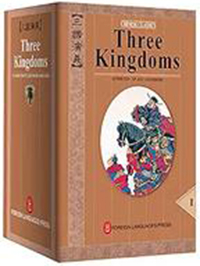
Get the Roberts translation of Three Kingdoms: A Historical Novel (published by Foreign Languages Press)
2000 reprint of complete version. Contains a 1999 introduction by Professor Shi Changyu, some illustrations, and endnotes in each volume. Produced in China.
Available as a four-volume paperback box set (ISBN 9787119005904, 2339 pages).
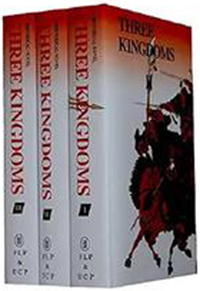
Get the Roberts translation of Three Kingdoms: A Historical Novel (published by Foreign Languages Press)
2011 reprint of complete version. Not sure exactly what's inside. Produced in China.
Available as a three-volume hardcover set (ISBN 9787119016665, 1690 pages).
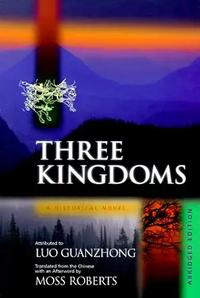
Get the Roberts translation of Three Kingdoms: A Historical Novel (published by University of California)
1999 abridged version. Out of print.
Available as a hardcover (ISBN 9780520215849, 504 pages).
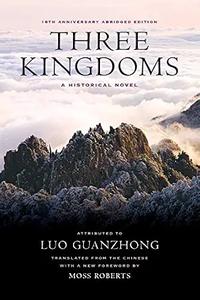
Get the Roberts translation of Three Kingdoms: A Historical Novel (published by University of California)
2014 abridged version. Contains a new Foreword. New cover design. Out of print.
Available as a paperback (ISBN 9780520282162, 512 pages).
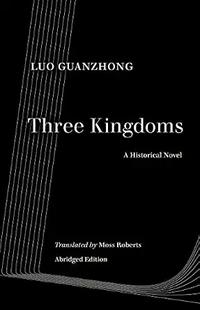
Get the Roberts translation of Three Kingdoms: A Historical Novel (published by University of California)
2020 abridged version. Contains the 2014 Foreword, the preface and acknowledgments of the abridged edition, the foreword to the unabridged edition, the afterword by Moss Roberts, a list of characters, and a chronology of events. No endnotes or footnotes.
Available as a paperback (ISBN 9780520344556, 478 pages).
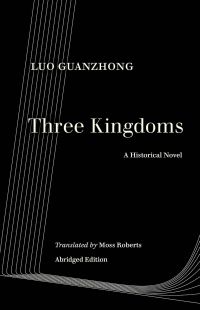
Get the Roberts translation of Three Kingdoms: A Historical Novel (published by University of California)
2020 abridged version. Contains the 2014 Foreword, the preface and acknowledgments of the abridged edition, the foreword to the unabridged edition, the afterword by Moss Roberts, a list of characters, and a chronology of events. No endnotes or footnotes.
Available as an ebook.
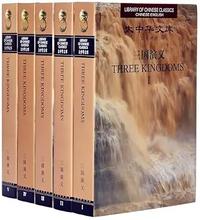
Get the Roberts translation of Three Kingdoms: A Historical Novel (published by Library of Chinese Classics)
Complete English-Chinese bilingual version. Produced in China.
Available as a five-volume hardcover set (ISBN 9787119024080, 3115 pages).
2014 · Sumei Yu · The Three Kingdoms
About Sumei Yu
Sumei Yu was a translator and professor. She was the first native Chinese speaker to translate Romance of the Three Kingdoms. Note that her family name, Yu, is typically written first.
» 2019 Obituary from Shangguan News, online at East China Normal University (in Chinese)
About the Sumei translation of Romance of the Three Kingdoms
Availability
A three-volume paperback set (and ebook) was published by Tuttle in 2014. A three-volume bilingual paperback set was published in China by Shanghai Foreign Language Education Press in 2017. Both are in print.
Opinions
Wuxia Wanderings: “Guide to Romance of the Three Kingdoms” by Lone Crane
“[T]here is more condensing and paraphrasing than in Brewitt-Taylor’s and Roberts’ translation. The biggest flaw… is the lack of supplementary materials. There is no introduction explaining the background of the novel or the background of the Three Kingdoms period. There are notes, but not near as many as in Roberts’ translation, and there is curiously not a word from the translator herself.”
East China Normal University Professor Zhao Gang Lectures on Yu Sumei’s Translation of The Romance of the Three Kingdoms
“The translator adopted the strategy of dynamic translation as the target audience is the contemporary public, which is fundamentally different from Moss Roberts’ translation which was aimed at university classroom teaching and academic research.”
IOSR Journal Of Humanities And Social Science: “A study on the English translation of Chinese Medical Idioms in two English versions of the Three Kingdoms” by Jian Zhang and Xiaorong Lai
“Abstract: The article compares and analyzes some representative translations of Chinese medical idioms in the two translations of The Three Kingdoms by Moss Roberts and Sumei Yu, finding that Roberts’ version to a certain extent, to rewrite the original idioms in medicine, dissimilation degree is higher, but not good for spreading the original meaning of Chinese medical idioms. Yu Sumei, as a Chinese, whose version of medical idioms is closer to the original meaning of the express in Chinese medicine. So, from the perspective of spreading Chinese medicine culture, Yu’s version is more outstanding.”
Controversy
According to this thesis, the authorship of Yu’s translation has been disputed, albeit seemingly only in China. The claim is that Yu’s translation was a version based on Brewitt-Taylor’s, not a new translation. The primary defense of Yu’s authorship seems to be that even if she was revising Brewitt-Taylor’s translation, she did enough work that it still counts as authorship of a new translation. In any case, the same publisher is selling both Yu’s translation and Brewitt-Taylor’s, both translators are deceased, and the Brewitt-Taylor translation is in the public domain as of 2021, so… the practical consequences, if any, seem minor at this point. Still, if Brewitt-Taylor’s translation was Yu’s starting point (this remains unclear!), the publisher should probably say that somewhere.
https://zhuanlan.zhihu.com/p/361426717 [translation by Google:]
According to the WeChat public account “Qiezi Qichi” (author: Wang Ke) , the complete English translation of *Romance of the Three Kingdoms* published by Tuttle Publishing, a US-based company known for printing books related to Asia, has recently been embroiled in a controversy over “extensive plagiarism.” The translator is Yu Sumei (1940-2019), and the translation was introduced to China in 2017 by Shanghai Foreign Language Education Press and included in the English-Chinese bilingual series of the Four Great Classical Novels. This has caused a huge stir—because the translator is Chinese ( claimed to be the first Chinese translation of *Romance of the Three Kingdoms*). There have been two previous complete English translations of *Romance of the Three Kingdoms*: one by Charles Henry Brewitt-Taylor (1857-1938), first published in 1925 , and the other by Moss Roberts (1946-), first published in 1994. Author Wang Ke pointed out in harsh terms: “This so-called ‘hidden master’ is actually a plagiarist who deceives the world and steals fame, and not very clever at all. This so-called new translation is at least 60-70% copied from the old Deng Luo [Brewitt-Taylor] translation.” A student of Yu explained in the comments section of the critical article that “Professor Yu had told him that it was a proofreading translation,” but this obviously cannot answer the question of “the translation has been printed under Professor Yu’s name for 7 years, and various commemorative and research activities have been held.”
https://www.whb.cn/zhuzhan/xinwen/20210827/421373.html [partial translation by Google:]
Yu Sumei’s translation of *Romance of the Three Kingdoms* is a collated edition, not a completely new translation in the strict sense. This is already stated by Ronald C. Iverson, the American editor responsible for reviewing the first edition published by Shanghai Foreign Language Education Press. However, the translation is attributed to Yu Sumei, which seems inconsistent with some people’s understanding of the translator’s identity. There are no industry regulations regarding what kind of translation work qualifies someone as a “translator.” […][I]t is reasonable to view Yu Sumei’s translation of “Romance of the Three Kingdoms” as not only a proofreading of Deng Luo’s [Brewitt-Taylor’s] translation, but also as a retranslation of a considerable number of parts, roughly estimated to be 30-40%. In addition, given that she is translating a classic like “Romance of the Three Kingdoms” that most people would not dare to touch, it is not only reasonable but also justifiable for Tuttle Publishing, the American publisher that owns the copyright of Deng Luo’s translation, to insist on crediting her.
First sentence of the Sumei translation of Romance of the Three Kingdoms
» See extracts to compare the translations of Romance of the Three KingdomsUnity succeeds division and division follows unity.
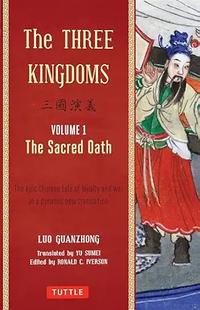
Get the Sumei translation of The Three Kingdoms (published by Tuttle)
Edited by Ronald C. Iverson. Volume 1 of 3. The Sacred Oath. Includes a list of characters. Has footnotes.
Available as a paperback (ISBN 9780804843935, 416 pages).
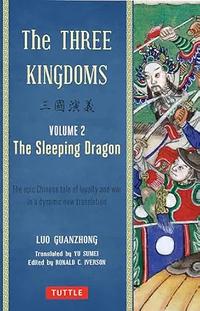
Get the Sumei translation of The Three Kingdoms (published by Tuttle)
Edited by Ronald C. Iverson. Volume 2 of 3. The Sleeping Dragon. Includes a list of characters. Has footnotes.
Available as a paperback (ISBN 9780804843942, 448 pages).
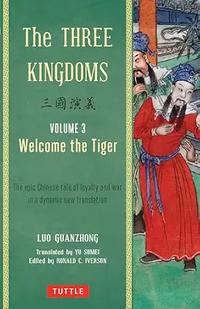
Get the Sumei translation of The Three Kingdoms (published by Tuttle)
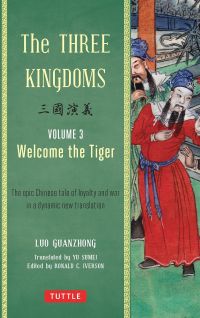
Edited by Ronald C. Iverson. Volume 3 of 3. Welcome The Tiger. Includes a list of characters. Has footnotes.
Available as a paperback (ISBN 9780804843959, 512 pages).
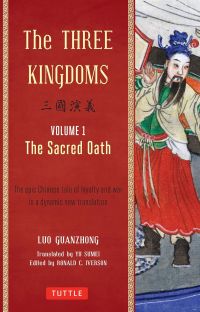
Get the Sumei translation of The Three Kingdoms (published by Tuttle)
Edited by Ronald C. Iverson. Volume 1 of 3. The Sacred Oath. Includes a list of characters. Has footnotes.
Available as an ebook.
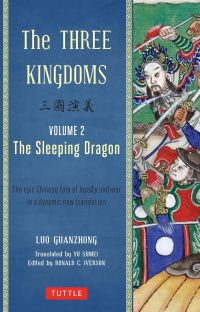
Get the Sumei translation of The Three Kingdoms (published by Tuttle)
Edited by Ronald C. Iverson. Volume 2 of 3. The Sleeping Dragon. Includes a list of characters. Has footnotes.
Available as an ebook.
Get the Sumei translation of The Three Kingdoms (published by Tuttle)
Edited by Ronald C. Iverson. Volume 3 of 3. Welcome The Tiger. Includes a list of characters. Has footnotes.
Available as an ebook.
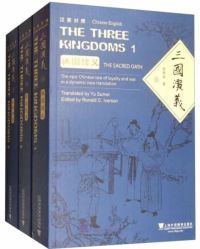
Get the Sumei translation of The Three Kingdoms (published by Shanghai Foreign Language Education Press)
Complete English-Chinese bilingual version. Produced in China.
Available as a three-volume paperback set (ISBN 9787544650359).
2018 · Martin Palmer · The Romance of the Three Kingdoms
About Martin Palmer
Martin Giles Palmer is a British translator and author on religious topics. He has also published translations of the Tao Te Ching and I Ching.
» 2015 China Daily interview with Martin Palmer
About the Palmer translation of Romance of the Three Kingdoms
Characteristics
The Palmer abridgment covers portions of every chapter (it has 120 chapters, like the complete versions, just shorter). It uses British spelling (e.g., “favoured”). It contains some illustrations of some of the characters.
It is written in present tense. Yes, the very beginning of the first chapter is in past tense as shown in the extract, but at the first mention of three brothers, Zhang Jue, Zhang Bao, and Zhang Liang, the tense shifts. The beginnings of other chapters use present tense as well. (I am not sure whether there are other sections written using past tense or not.) I imagine the intent was to make the story feel more immediate and alive; using present tense in fiction is increasingly trendy. If this style is not to your taste, avoid getting the Penguin version. (Not sure what a present tense narrative sounds like? Check out the preview at Google Books, which contains a bit of Chapter 8.)
From the introduction by the translator:
“The text in this book is about a third of the whole, and I have sought to ensure a flow of narrative with no breaks. In order to do this, I have simplified the background information, trimmed down the many, many long descriptions of battles (which are all remarkably similar) and tightened the narrative. As a result I hope you will be able to travel the length of the novel’s span in time, narrative and adventure without the risk of getting bogged down in minor details…. I have included just over a third of the original poems, including all those by great poets such as Cao Zhi (who was the actual son of Cao Cao and a renowned third-century poet) and of course Su Dong Po and Du Fu, as well as those anonymous poems which shed light on a key moment in the narrative. I am grateful to poet Jay Ramsay for working with me to turn my translations back into poetry.”
Opinions
Wuxia Wanderings: “Guide to Romance of the Three Kingdoms” by Lone Crane
“Palmer translated 1/3 of the original novel, according to his introduction, and because he chose to translate it in present-tense, it reads like a plot summary…. It does have a nice introduction explaining the work, and he states that major scenes are translated in full, but the rest is just a summary of what happens.”
First sentence of the Palmer translation of Romance of the Three Kingdoms
» See extracts to compare the translations of Romance of the Three KingdomsEmpires arise from chaos and empires collapse back into chaos.
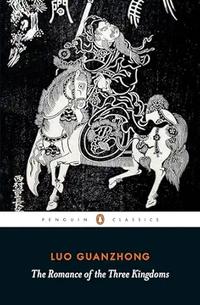
Get the Palmer translation of The Romance of the Three Kingdoms (published by Penguin)
Abridged. Includes a map, a list of characters, an introduction by Palmer, endnotes, and a chronology. 120 chapters. Includes some illustrations of important characters in the introduction.
Available as a paperback (ISBN 9780241332771, 672 pages).
Notes on the work and its translation
Romance of the Three Kingdoms: How did it get its English title?
For his English translation, Brewitt-Taylor chose the title “San Kuo, or Romance of the Three Kingdoms, an English version of 三國志演義.” 三國 is san kuo (or, in pinyin romanization, san guo), and it means “three kingdoms”. 志 is zhi, records, and 演義 is hard to translate, but I’m told it means something like “dramatization”. Brewitt-Taylor chose the word “romance” to signal this idea of dramatization, not to signal the idea of romantic love or romantic relationships, which are basically absent in this story of military brotherhood and political machinations.
The secondary meaning of “a romance” is “a Medieval tale of chivalry”, or a work of imaginative fiction more generally. In French, accordingly, the word “roman” is the word corresponding to “novel,” and many other European languages (e.g., German, Swedish, Czech, Turkish) also use a similar word; English and Spanish use a word based on “novel” meaning something “new.” Modern novels evolved from European “romances,” the pinnacle of the genre perhaps being Don Quixote.
Who wrote the original Romance of the Three Kingdoms?
Romance of the Three Kingdoms, like Water Margin, is attributed to Luo Guanzhong. This name may also be spelled “Lo Kuan-chung.” The family name is Luo.
Whether Luo Guanzhong actually wrote it is a matter of continuing debate among historians. The historical records on which it was based were written much earlier, by someone else.
But what is authorship, anyway, and does it matter?
From the introduction by Robert E. Hegel to the Tuttle Brewitt-Taylor translation:
“Could Lo Kuan-chung have written this first great Chinese novel? The answer can never be definitive, nor should we care, I believe. Authorship as we know it, is a relatively recent concept at both ends of the Eurasian landmass. Before then, ‘compiler’ might be the best description for many authors in many cultures. As we have seen, the novelist adapted material from an earlier lengthy, but crude, narrative as well as formal historical accounts of the period.”
Further exploration
Websites
https://kongming.net/
“Kongming’s Archives is dedicated to Luo Guanzhong’s novel, Romance of the Three Kingdoms, related games… and the history behind them.”
https://3kingdomspodcast.com/about-the-podcast/
“This podcast is my [John Zhu’s] attempt to tell the story of the classic Chinese novel Romance of the Three Kingdoms in a way that’s more accessible to an audience who did not grow up in the culture and society that it has permeated for hundreds of years. It’s kind of like an audiobook, but instead of just a straight reading of a translation, it’s conversational storytelling infused with occasional brief background information and history lessons to help give you the context you need to understand and appreciate this great work of classic Chinese literature.”
https://sanguo.substack.com/
A technical historical research project to construct a narrative history of the three kingdoms historical period. This project is on hiatus, but already has several dozen entries.
https://www.reddit.com/r/threekingdoms/
“A subreddit for those classy individuals who have a large fondness for the Three Kingdoms period of China and related content, including both the Romance and Record of the Three Kingdoms books, games, movies, and TV series.”
https://www.poisonpie.com/words/others/somewhat/threekingdoms/
A clump of webpages by author and engineering professor David J. Keffer that seems to be a holdover from the late 1990s. Has some good reference materials, such as a chapter by chapter summary/outline.
Adaptations
There are a lot of adaptations in other media, especially in Chinese and Japanese. I am not familiar with any of these, except one: When I moved to Singapore in 2008, lots of electronics stores were promoting their televisions using the two-part John Woo film Red Cliff , which I watched and summarized on my blog in 2017 (Red Cliff Part 1 blog post, Red Cliff Part 2 blog post). There’s a shortened combined version, but it’s better to watch the whole thing; get the “international” two-part version, not the “theatrical” version (see below).
Korean publisher JR Comics has produced a comic series, which I think is 20 volumes, adapted by Wei Dong Chen and illustrated by Xiao Long Liang. Here’s the Publisher’s Weekly interview about the launch of the series.
See below for a couple of other illustrated adaptations in English.
For more on Romance of the Three Kingdoms, its author, its historical and literary context, and/or its adaptations, consider the resources below.
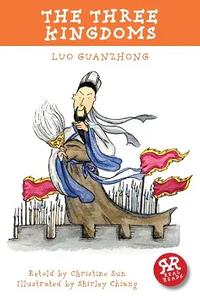
Get The Three Kingdoms by Real Reads
Children's adaptation by Christine Sun with illustrations by Shirley Chiang.
Available as a paperback (ISBN 9781906230357, 64 pages).
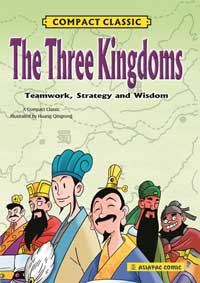
Get The Three Kingdoms: Teamwork, Strategy and Wisdom by Asiapac
Compact Classic comic adaptation with illustrations by Qingrong Huang.
Available as an ebook (ISBN 9789813170506, 163 pages).
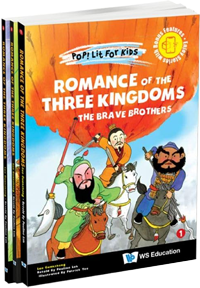
Get Romance of the Three Kingdoms by Pop! Lit for Kids (World Scientific)
Retellings by Pauline Loh with illustrations by Patrick Yee. Three volumes: The Brave Brothers, Wars and Heroes and Strategies and Ruses. Ebook also available.
Available as a set of three hardcovers (ISBN 9789811265167, 308 pages).
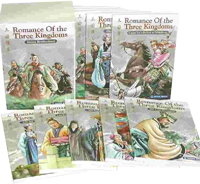
Get Romance of the Three Kingdoms by Asiapac
See the Asiapac page for more information on this comic series.
Available as a set of ten paperbacks (ISBN 9789812295019, 1540 pages).
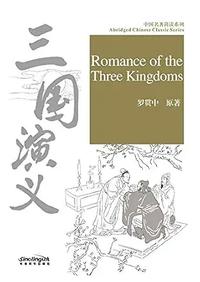
Get Abridged Chinese Classic Series: Romance of the Three Kingdoms by Sinolingua Press
This book is an abridged version of the novel and contains 21 stories that are each approximately 3,000 characters in length or shorter. All the stories are limited to the 2,500 characters required by HSK Level 5.
Available as a paperback (ISBN 9787513816083, 324 pages).
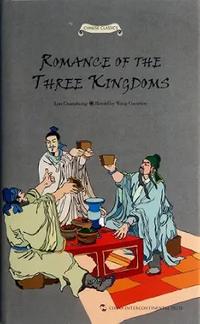
Get Romance of the Three Kingdoms by Guozhen Wang
A retelling in the China Intercontinental Press / Chinese Classics series.
Available as a paperback (ISBN 9787508522333, 320 pages).
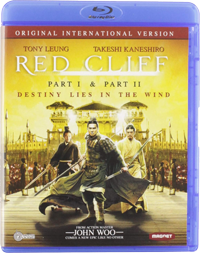
Get Red Cliff (International Version: Part I and II) by John Woo
Red Cliff (2008-2009) adapts one of the most celebrated episodes in Romance of the Three Kingdoms, roughly covering chapters 43–50 of the novel, and is widely regarded as the best cinematic entry point into the Three Kingdoms story. Runtime: 4 hours and 48 minutes.
Available as a set of 2 blu-ray discs.
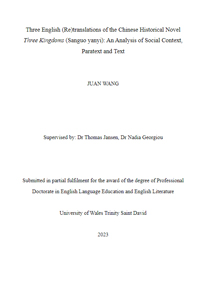
Get Three English (Re)translations of the Chinese Historical Novel Three Kingdoms (Sanguo yanyi): An Analysis of Social Context, Paratext and Text by Juan Wang
This 2023 doctoral thesis was very obviously written with the help of AI, which makes it exhausting to read (waaaay too much vocabulary like delve, meticulously, intricate, nuance, multifaceted etc.), but it's a great source of detail for background information about the publication of all three complete translations, and detailed comparisons of the translators' specific translation strategies and choices.
Available as a PDF.
Romance of the Three Kingdoms: Translation recommendations
Romance of the Three Kingdoms best translation?
As usual, the “best” translation depends on your specific preferences for consuming fiction.
If you want a free (public domain) translation, you can read an annotated edited pinyin version of the Brewitt-Taylor translation at Kongming.net.
If you want a scholarly translation, and you’re okay with buying a printed copy, get the complete Roberts translation, and be careful not to get the abridged Roberts translation by accident!
If you want a more accessible translation, or you only want an ebook, get the Yu translation from Tuttle.
If you want an abridged translation, and you don’t mind reading fiction in present tense, get the abridged Palmer version from Penguin. (Otherwise, get the abridged Roberts translation.)
Which one appeals to you most? Have you read any version of this epic, or do you know it from an adaptation? Let us know in the comments!
To sum up, here's what I recommend.
Free online ebook with modern spelling:
Get the Brewitt-Taylor translation of Romance of the Three Kingdoms (published by Kongming.net). Available as an online ebook. Learn more about the Brewitt-Taylor translation.
Complete, scholarly translation (volume 1):
Get the Roberts translation of Romance of the Three Kingdoms (published by University of California). Available as a paperback (ISBN 9780520224780, 552 pages). Learn more about the Roberts translation.
Complete, scholarly translation (volume 1):
Get the Roberts translation of Romance of the Three Kingdoms (published by University of California). Available as a paperback (ISBN 9780520225039, 555 pages). Learn more about the Roberts translation.
Can't decide? Compare extracts from the different versions of Romance of the Three Kingdoms.
I hope you find the reading worthwhile.
Help improve and support this site
Spotted an error or missing edition? Email me. I am grateful for corrections and additions, and I update pages whenever I can verify new information.
Have a question or recommendation? Leave a comment. Genuine comments are always welcome.
Want to hear about new posts? Subscribe to the mailing list. I send occasional emails when I publish substantial new material.
Found this guide useful? If you would like to support the research behind We Love Translations, you can buy me a coffee. Thank you.

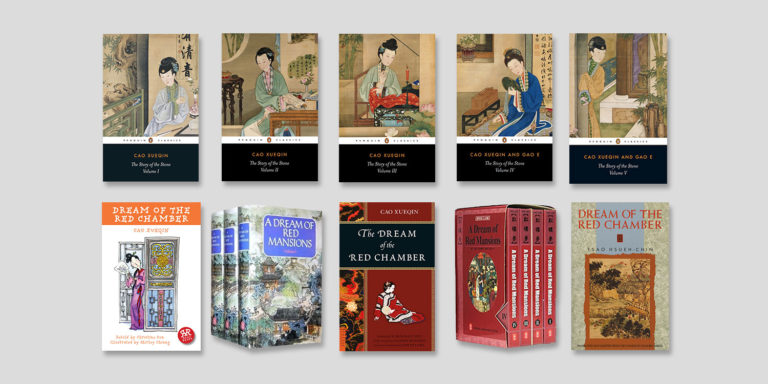
Get the complete modern translation in two parts. (This is part 1.)