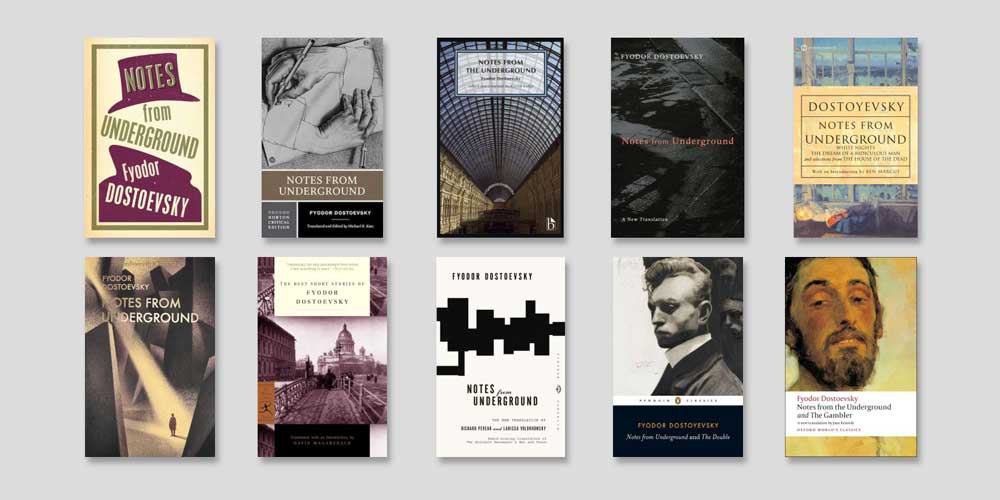
“Which English translation of Notes from Underground should I read?”
In his introduction to the Ginsburg translation published by Bantam, Donald Fanger says, “Notes from Underground has attracted many labels. Some have seen it as its author’s defense of individualism, others as a case history of neurosis, a work of high comedy, or a specimen of modern tragedy. Dostoyevsky’s text makes each of these interpretations plausible, but finally escapes them all. The best approach may be to put aside the question of what it means in order to consider what it is and how it conveys meaning. These ‘notes’ are a performance, part tirade, part memoir, by a nameless personage who claims to be writing for himself alone but who consistently manipulates the reader—of whom he is morbidly aware—to the point where there seems to be no judgment the reader can make which the writer has not already made himself…. Abrasive, unlovely, brilliant, insinuating, he commands our attention as a contemporary, posing problems as absorbing, elusive and endless as his Notes.”
This novella was serialized in Russian in 1864. It’s often published with one or more other short works by Dostoevsky in a single volume. (Publishing multiple complete works together is, like, the extreme opposite of serialization, where only one part of a single work is published at a time!)
So which translation should you read? There are over a dozen to choose from…
“Notes from Underground In English by Ira Nadel”
This 52-page PDF compares a few passages, outlines the history of the translation of this novel, and describes all the translations, focusing on the content of the supplementary materials in each edition.
Notes from Underground: Translations in English
There have been 17 English translations, and almost all of them are in print:
-
- 1913 – C. J. Hogarth
- 1918 – Constance Garnett
- 1955 – David Magarshack
- 1960 – Constance Garnett revised by Ralph E. Matlaw
- 1961 – Andrew R. MacAndrew (Signet)
- 1969 – Serge Shishkoff
- 1972 – Jessie Coulson (Penguin)
- 1974 – Mirra Ginsburg (Bantam)
- 1989 – Michael R. Katz (Norton)
- 1991 – Jane Kentish (Oxford)
- 1993 – Richard Pevear and Larissa Volokhonsky (Everyman, Vintage)
- 2006 – Hugh Aplin (Alma)
- 2009 – Ronald Wilks (Penguin)
- 2009 – Boris Jakim
- 2010 – Kyril Zinovieff and Jenny Hughes (Alma)
- 2012 – Natasha Randall
- 2014 – Kirsten Lodge
Notes from Underground: Why are there slightly different titles?
Some editions are called “Notes from Underground” and others are called “Notes from the Underground.” Russian doesn’t use articles like a/an/the.
In addition, the intended connotation is apparently difficult to convey in English.
From the Afterward by Andrew R. MacAndrew:
“[The] Russian title would be more accurately if less dramatically translated as Notes from a Hole in the Floor, i.e., from a mousehole.”
From the Translator’s note by Mirra Ginsburg:
“In addition to its metaphorical sense, which coincides with the English ‘underground,’ podpol’ye means, literally, the space ‘under the floor.’ Notes from Underground then, does not convey the full connotations of the Russian title—impossible to reproduce in English.”
“Notes from Underground In English” by Ira Nadel
“[In their introduction, Zinovieff and Hughes] state that the title of Notes is difficult to translate and has been mistranslated in English for over ninety years since Constance Garnett called it Notes from the Underground in 1918. The Russian means something else: literally, ‘Notes from Under the Floorboards.’ Nevertheless, the translators decide to keep the old title because of convention and recognition ‘but it is wrong’ (xi). But does an exact translation of the title matter they ask? Yes, because the connotations of ‘underground’ suggest something criminal, conspiratorial, revolutionary, not the space under the floorboards where rodents live and, according to folk legend, the space of devils and demons. The narrator of Notes is in fact ‘a little mouse ensconced under the floorboards of his St. Petersburg flat’ (xi)…. The ‘Translators’ Note’ begins again with the question of the title, citing Nabokov who suggested ‘Under the Floor.’ Others have suggested ‘Notes from the Cellar’ but such spaces are habitable by humans. Dostoevsky implies something less appealing to suggest space only for mice or demons.”
Notes from Underground: Why it’s high on the scale of untranslatability
From the Translator’s note by Mirra Ginsburg:
“Of all Russian writers, Dostoyevsky is probably one of the most resistant to translation into English. The difficulty stems not only from the character of Russian as compared with English, but from the manner in which Dostoyevsky used language, from the essential tenor of his writing, and the area of human experience he was concerned with.”
I don’t think anybody considers any of Dostoevsky’s work easy to translate, but for what it’s worth, Katz says this story was particularly difficult:
From “A Note on the Translation” by Michael R. Katz:
“[Notes from Underground]” remains one of the most challenging texts to translate in all of Russian literature, beginning with the first three lines of the work…. The style of the work makes it very difficult to translate. Its unusual syntax, its broken speech, its irony and sarcasm, and its passionate polemic with an implied interlocutor test the translator’s skills and patience.”
Notes from Underground: Translation comparison
Extracts have been included on a separate page to enable you to compare the translations of Notes from Underground.
Best translation of Notes from Underground: TL;DR
If you just want a quick-and-dirty recommendation, jump to the conclusion.
“How is the author’s name supposed to be spelled?”
Well, he was Russian, and Russians use the Cyrillic alphabet, not the Latin/Roman alphabet. The author’s name looks like this in Cyrillic:

There are multiple “English” transliterations:
- Fyodor Mikhailovich Dostoevsky
- Fyodor Mikhaylovich Dostoyevsky
- Fyódor Mikháylovich Dostoyévskiy
- etc.
Who was C.J. Hogarth?
Charles James Hogarth was a British translator. He translated works by Dostoevsky, Tolstoy, Gogol, Turgenev, and other Russian authors.
“Notes from Underground In English by Ira Nadel”
“Charles James Hogarth (1869 –1945) educated at Charterhouse, was a translator who made an early career publishing editions of Gogol’s Dead Souls, Turgenev’s Fathers and Sons, Gorky’s Through Russia and Goncharov’s Oblomov, plus Dostoevsky’s The Gambler, Poor Folk and Notes. He was sometimes criticized for his incomplete knowledge of Russian but rich imagination, although one critic claimed that he had provided Gogol with such an elaborate style as to make him unrecognizable.”
About the Hogarth translation of Notes from Underground
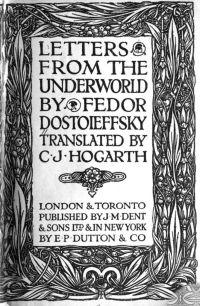
Title of book: Letters from the Underworld
Contains: “Letters from the Underworld”, “The Gentle Maiden”, and “The Landlady”
This was the first translation of all three stories into English.
Original publication: London & New York: J. M. Dent / E. P. Dutton. Author’s name spelled as Fedor Dostoieffsky.
Also includes a brief introduction by C.J. Hogarth
This translation uses British spelling.
This translation is in the public domain and there are scans of multiple Everyman’s Library reprint editions available online at Hathi Trust as well as Google Books (see below). I don’t know of a good transcription.
“Notes from Underground In English by Ira Nadel”
“In this late Victorian, moralistic introduction to Dostoevsky that omits any biographical or linguistic detail, the focus is on exposure to immoral behavior teaching
the reader right choices.”
Get the Hogarth translation of Notes from Underground
This edition is out of print. You may be able to find a second-hand copy.
The book is in the public domain, and scans are available online free (see below).
First sentences of the Hogarth translation of Notes from Underground
I am ill; I am full of spleen and repellent.
» See extracts to compare the translations of Notes from Underground

Get the Everyman's Library Hogarth translation of Letters from the Underworld
Also contains "The Gentle Maiden" and "The Landlady".
Available as an ebook.
Who was Constance Garnett?
Constance Garnett was a groundbreaking Edwardian translator of many works from Russian into English, including Dostoevsky’s Crime and Punishment, Brothers Karamazov, The Idiot, and The Possessed (Demons), and Tolstoy’s War and Peace and Anna Karenina.
Some critics, favoring, notably, Pevear and Volokhonsky, believe Garnett’s translations are out of date, inaccurate, and obsolete, while others revere them as classics. Your mileage may vary.
“Notes from Underground In English by Ira Nadel”
“One must also consider the status of the translator when evaluating the English editions. Garnett, for example, between 1892 and the mid-1920s, translated over seventy volumes of Russian literature. She was also the wife of the well-known critic and editor Edward Garnett. Conrad, Woolf and others praised her work.”
About the Garnett translation of Notes from Underground
Title of book: White Nights and Other Stories by Fyodor Dostoyevsky
Contains: “White Nights”, “Notes from Underground”, “A Faint Heart”, “A Christmas Tree and a Wedding”, “Polzunkov”, “A Little Hero”, and “Mr. Prohartchin”
Garnett’s translation of Notes from Underground is in the public domain, and there are many reprints. (Depending on the publisher, Garnett may or may not be explicitly credited; other stories may or may not be included; Garnett’s British spelling may or may not be Americanized.)
Moreover, there are updated versions that seek to remedy some of the original translation’s most obvious shortcomings. In particular, see below for information about the 1960 Garnett and Matlaw edition.
“Notes from Underground In English by Ira Nadel”
“[L]ater readers, notably Nabokov and Brodsky, criticized her work complaining that her translations were too demure and Victorian. When she did not understand
a word or phase, she omitted it.”
First sentences of the Garnett translation of Notes from Underground
I am a sick man. … I am a spiteful man. I am an unattractive man.
» See extracts to compare the translations of Notes from Underground
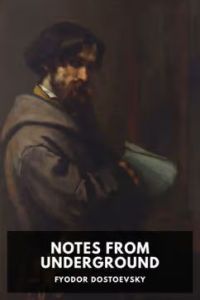
Get the Standard Ebooks Garnett translation of Notes from the Underground
44,336 words (2 hours 42 minutes). This is an improved version of Project Gutenberg 600.
Available as an ebook.
Get the Garnett translation of Notes from the Underground
Contains: “White Nights”, “Notes from Underground”, “A Faint Heart”, “A Christmas Tree and a Wedding”, “Polzunkov”, “A Little Hero”, and “Mr. Prohartchin”
Available as an ebook.
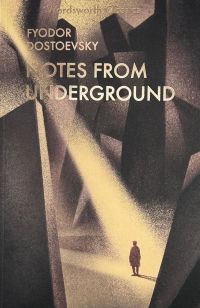
Get the Wordsworth Classics Garnett translation of Notes from the Underground
Introduction and Notes by David Rampton, Department of English, University of Ottowa. Also includes: A Christmas Tree and a Wedding, Bobok, and A Gentle Spirit.
Available as a paperback (ISBN 9781840225778, 720 pages).
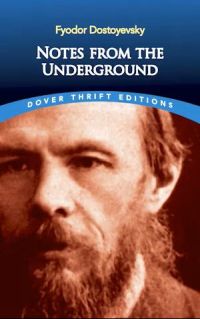
Get the Dover Thrift Editions Garnett translation of Notes from the Underground
Reprinted from White Nights and Other Stories, The Macmillan Company, New York, 1918. Ebook version also available.
Available as a paperback (ISBN 9780486270531, 96 pages).
Get the AmazonClassics Garnett translation of Notes from the Underground
Includes editorial revisions. Paperback also available.
Available as an ebook (ISBN 9781542099585).
Get the Hackett Classics Garnett translation of Notes from the Underground
Includes an introduction by Kevin Aho and Charles Guignon and a selected bibliography. According to "Notes from Underground In English by Ira Nadel": “[T]he text is a light revision of the Garnett translation replacing archaic terms or British idioms with contemporary American English.”
Available as a paperback (ISBN 9780872209053, 144 pages).
Get the Hackett Classics Garnett translation of Notes from the Underground
Includes an introduction by Kevin Aho and Charles Guignon and a selected bibliography. According to "Notes from Underground In English by Ira Nadel": “[T]he text is a light revision of the Garnett translation replacing archaic terms or British idioms with contemporary American English.”
Available as an ebook (ISBN 9781603842525).
Who was David Magarshack?
David Magarshack was a British fiction writer and who translated works by Dostoevsky, Tolstoy, Goncharov, Gogol, and Chekhov and wrote biographies of several Russian authors, including Dostoyevsky. He was born in Riga, Russia (a city in present-day Latvia), and moved to England in his 20s, eventually becoming a naturalized citizen.
In addition to Notes from Underground, Magarshack translated Crime and Punishment, The Devils (Demons), The Idiot, The Brothers Karamazov and a volume entitled “Dostoevsky’s Occasional Writings”.
“Notes from Underground In English by Ira Nadel”
“[E]arly twentieth century translators… tended to be émigrés, such as David Magarshack who arrived in England from Riga in 1920 and, after an unsuccessful attempt at journalism and then crime writing, turned to translations. For the Penguin Russian Classics series, he produced a number of Russian translations, notably Crime and Punishment and Notes from Underground. Magarshack’s translations were expressed in relaxed language but responsive to the textual complexities of Dostoevsky, matters of repetition, the intonation of obsession and what Nabokov called Dostoevsky’s “vulgar soapbox eloquence” [Nabokov 1981: 118]. One important aspect of Magarshack’s work is that it was for him a way of earning a living: for his first translation, he received an advance of £200 plus royalties of seven and a half percent.”
About the Magarshack translation of Notes from Underground
Title of book: The Best Short Stories of Fyodor Dostoevsky
Contains: “White Nights”, “The Honest Thief”, “The Christmas Tree and a Wedding”, “The Peasant Marey”, “Notes from the Underground”, “A Gentle Creature”, and “The Dream of a Ridiculous Man”
Also includes: A biographical note, an introduction, commentary, and a reading group guide.
This translation uses British spelling.
Previously printed in collections titled Great Short Works of Fyodor Dostoevsky and Best Stories of Fyodor Dostoevsky.
First sentences of the Magarshack translation of Notes from Underground
I am a sick man . . . . I am a spiteful man. No, I am not a pleasant man at all.
» See extracts to compare the translations of Notes from Underground
Get the Modern Library Magarshack translation of Notes from the Underground
The Best Short Stories of Fyodor Dostoevsky. Contains: White Nights, The Honest Thief, The Christmas Tree and a Wedding, The Peasant Marey, Notes from the Underground, A Gentle Creature, and the Dream of a Ridiculous Man. Includes a biographical note, introduction by David Magarshack, commentary by Stefan Zweig and Andre Gide, and reading group guide.
Available as a paperback (ISBN 9780375756887, 320 pages).
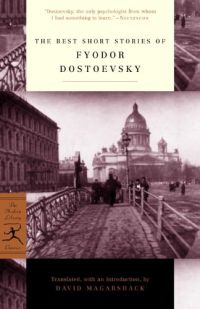
Get the Modern Library Magarshack translation of Notes from the Underground
The Best Short Stories of Fyodor Dostoevsky. Contains: White Nights, The Honest Thief, The Christmas Tree and a Wedding, The Peasant Marey, Notes from the Underground, A Gentle Creature, and the Dream of a Ridiculous Man. Includes a biographical note, introduction by David Magarshack, commentary by Stefan Zweig and Andre Gide, and reading group guide.
Available as an ebook (ISBN 9780307824080).
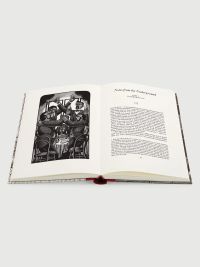
Get the The Folio Society Magarshack translation of Notes from the Underground
Illustrated by Harry Brockway. Introduced By Joyce Carol Oates.
Available as a slipcased hardcover.
Who were Constance Garnett and Ralph E. Matlaw?
See above for information on Constance Garnett.
Ralph E. Matlaw was a professor at Harvard, Princeton, and the University of Chicago and the editor or translator of multiple works in Russian.
» New York Times: Obituary of Ralph Matlaw
About the Garnett and Matlaw translation of Notes from Underground
Title of book: Notes from Underground, the Grand Inquisitor
Contains: “Notes from Underground” and “The Grand Inquisitor”
Also includes: an introduction and 4 appendixes (Chernyshevsky: Excerpts from What Is to Be Done?, Dostoevsky: Excerpts from Winter Notes on Summer Impressions and Excerpts from Dostoevsky’s Letters, Shchedrin: The Swallows, and Dostoevsky: Mr. Shchedrin, or, Schism among the Nihilists)
From the Translator’s Note by Ralph E. Matlaw:
“The Constance Garnett versions of Notes from Underground and “The Grand Inquisitor” have been thoroughly revised. Some changes were made for accuracy and consistency; others so that the text might approximate Dostoevsky’s idiosyncratic style.”
First sentences of the Garnett and Matlaw translation of Notes from Underground
I am a sick man . . . I am a spiteful man. I am an unpleasant man.
» See extracts to compare the translations of Notes from Underground
Get the Plume Matlaw translation of Notes from Underground
Notes from Underground, the Grand Inquisitor. Introduction by Ralph E. Matlaw. Includes "relevant works by Chernyshevsky, Shchedrin and Dostoevsky".
Available as a paperback (ISBN 9780452285583, 272 pages).
Get the Plume Matlaw translation of Notes from Underground
Notes from Underground, the Grand Inquisitor. Introduction by Ralph E. Matlaw.
Available as an ebook (ISBN 9781101666234).
Who was Andrew R. MacAndrew?
Andrew R. MacAndrew was a professor at the University of Virginia and translator of plays and novels in Russian, including The Brothers Karamazov and The Devils (Demons).
About the MacAndrew translation of Notes from Underground
Title of book: Notes from Underground
Contains: “Notes from Underground”, “White Nights”, “The Dream of a Ridiculous Man” and selections from “The House of the Dead”. (Selections from “The House of the Dead”: Baklushkin’s Story, Akulka’s Husband, In the Hospital.)
Also includes: an afterword by Andrew R. MacAndrew, an introduction by Ben Marcus, and a selected bibliography.
This translation uses American spelling.
“Notes from Underground In English by Ira Nadel”
“Among all the introductions or afterwords in these English translations, only MacAndrew engages with the Soviet response to Dostoevsky’s writing.”
First sentences of the MacAndrew translation of Notes from Underground
I’m a sick man . . . a mean man. There’s nothing attractive about me.
» See extracts to compare the translations of Notes from Underground
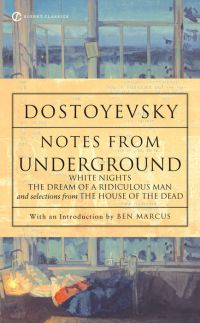
Get the Signet Classics MacAndrew translation of Notes from Underground
Includes White Nights, The Dream of a Ridiculous Man and slelections from The House of the Dead. Afterword by Andrew R. MacAndrew. Introduction by Ben Marcus.
Available as a mass-market paperback (ISBN 9780451529558, 256 pages).
Who was/is Serge Shishkoff?
As far as I can tell, Serge Shishkoff was a Russian language lecturer at the University of Michigan.
About the Shishkoff translation of Notes from Underground
Title of book: Notes from Underground
Contains: Notes from Underground and related materials (no other stories)
Contains an introduction by editor Robert G. Durgy, Pennsylvania State University, a translator’s note by Serge Shishkoff, 6 essays of criticism and commentary, and a bibliography.
Essays: Notes from Underground by Konstantin Mochulsky; Nihilism and Notes from Underground by Joseph Frank; Structure and Integration in Notes from Underground by Ralph E. Matlaw; Monologue Speech of the Hero, and Narrative discourse in the Stories of Dostoevsky—Notes from Underground by M.M. Bakhtin; Dostoevsky’s Notes from Underground by Isadore Traschen; and Dostoevsky’s Metaphor of the “Underground” by Monroe C. Beardsley.
This translation uses American spelling.
From the Introduction by Robert G. Durgy:
“The critical articles on Notes from Underground collected in this edition, though they represent various areas of twentieth-century Dostoevsky scholarship and criticism, largely follow a consistent point of view. That is, I have attempted to present here not only that type of Dostoevsky criticism which is concerned with the peculiar ideological meaning of the work and its relationship to the author’s ideological development, but which also responds to two popular misconceptions that have long preoccupied Dostoevsky’s critics: the first, that Dostoevsky’s characters are ‘merely’ mouthpieces for his own, personal ideas; the second—an outgrowth of the first—that Dostoevsky was a ‘careless’ writer, pouring forth his ideas with a ‘shocking’ lack of artistic form.”
From the Translator’s note by Serge Shishkoff:
“The chief problem of any literary translation lies not in transposing the meaning of what is said from one language to another, but in duplicating the style in which it is said…. The narrator of Notes is supposed to be an educated man who is speaking, or rather writing, informally. For this reason Dostoevsky endowed him with very colorful speech that contains, along with the sophisticated vocabulary needed to convey the complex ideas found in Notes, a great number of colloquial expressions, and even some slang. Furthermore, the narrator’s speech changes as his mood changes…. In attempting to make my translation as accurate as possible, I have avoided omitting, changing, or adding anything at all. I have even tried to duplicate the few grammatical and syntactical errors that Dostoevsky made his narrator commit…. Dostoevsky’s paragraphing appears capricious, and some translators have felt compelled to alter it. The basic principle of breaking a text into paragraphs, however, is the same in Russian and in English, and Dostoevsky’s ‘capriciousness’ in paragraphing is intentional—he uses it as a device to achieve certain effects in the same way as he uses the division into chapters. I have, therefore, kept Dostoevsky’s paragraphing throughout.”
“Notes from Underground In English by Ira Nadel”
“This substantial edition offers an extensive introduction, a useful note by the translator and six important essays…. The ‘Translator’s Note’ is the clearest presentation among English translators of the challenges and pitfalls of translating Dostoevsky and Notes from Underground.”
Get the Shishkoff translation of Notes from Underground
Originally published in 1969 in New York by Thomas Y. Crowell Company as part of The Crowell Critical Library series. ISBN: 0690588216, 262 pages.
This edition is out of print. You may be able to find a second-hand copy.
Reissued in 1982 by University Press of America. ISBN 081912415X, 262 pages.
This edition is out of print. You may be able to find a second-hand copy.
First sentences of the Shishkoff translation of Notes from Underground
I am a sick man . . . I am a nasty man. A truly unattractive man.
» See extracts to compare the translations of Notes from Underground
Who was Jessie Coulson?
Jessie Coulson was a British lexicographer who worked on the Oxford English Dictionary and complied a Russian-English dictionary and a translator of Russian works by Dostoevsky, Turgenev, Gorky, and Chekhov.
About the Coulson translation of Notes from Underground
Title of book: Notes from Underground and The Double
Contains: “Notes from Underground” and “The Double”
Depending on the edition, this translation may also contain a brief biography of Dostoevsky, an introduction by Jessie Coulson, and a chronology by David McDuff (added in 2003).
This translation uses British spelling.
First sentences of the Coulson translation of Notes from Underground
I am a sick man…. I am an angry man. I am an unattractive man.
» See extracts to compare the translations of Notes from Underground
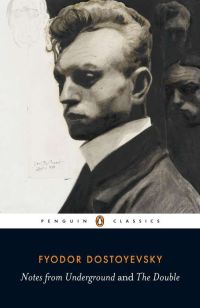
Get the Penguin Classics Coulson translation of Notes from Underground
Notes from Underground and the Double. Introduction by Jessie Coulson. 1972.
Available as a paperback (ISBN 9780140442526, 288 pages).
Get the Penguin Classics Coulson translation of Notes from Underground
Notes from Underground and the Double. Introduction by Jessie Coulson. 1972.
Available as an ebook.
Who was Mirra Ginsburg?
Mirra Ginsburg was a Russian-American writer and translator. Among her translations are Bulgakov’s Fatal Eggs, Yevgeny Zamyatin’s We, and Mikhail Bulgakov’s The Master and Margarita.
» Mirra Ginsburg (Jewish Women’s Archive)
» Mirra Ginsburg (Encyclopedia of Science Fiction)
The Rare Book and Manuscript Library at Columbia University in the City of New York has a collection of Mirra Ginsburg’s papers.
About the Ginsburg translation of Notes from Underground
Title of book: Notes from Underground
Contains: Notes from Underground
Also includes an introduction by Donald Fanger, a note on the translation, and a total of 23 endnotes.
The decorative subtitle on an early printing says, “The Impassioned Confessions of a Solitary Man”.
This translation uses American spelling.
From the Translator’s note by Mirra Ginsburg:
“In style, Notes from Underground, despite its title, is a spoken, not a written book. The breath is therefore all the more important. I broke up the extremely long paragraphs, which often obscure the complexity of meanings, into shorter ones wherever I felt that clarity demanded it, wherever I felt the speaker would have to pause.”
“Notes from Underground In English” by Ira Nadel
“Fanger’s introduction is one of the most critically insightful among the current set of English translations.”
First sentences of the Ginsburg translation of Notes from Underground
I am a sick man. . . . I am a spiteful man. An unattractive man.
» See extracts to compare the translations of Notes from Underground
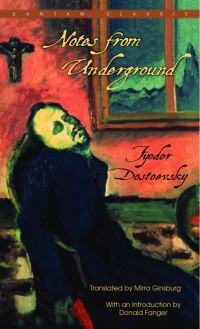
Get the Bantam Classics Ginsburg translation of Notes from Underground
Introduction by Donald Fanger.
Available as a mass-market paperback (ISBN 9780553211443, 176 pages).
Who is Michael R. Katz?
Michael Katz is an Emeritus Professor of Russian and East European Studies and the translator of over a dozen Russian novels, including Crime and Punishment, The Brothers Karamazov, and Devils (Demons).
About the Katz translation of Notes from Underground
Title of book: Notes from Underground
Contains: Notes from Underground
Norton has published a version (in The Norton Library series) with just the novella, and another version (in the Norton Critical Editions series) with critical essays. The first Norton Critical Edition was published in 1989, and the second Norton Critical Edition was published in 2000.
From “A Note on the Translation” by Michael R. Katz in the Norton Library edition:
“Notes from Underground… remains one of the most challenging texts to translate in all of Russian literature, beginning with the first three lines of the work. I have previously translated these lines as: ‘I am a sick man…. I am a spiteful man. I am an unattractive man.’ A former student at Middlebury College [(Jesse Bennett)], after hearing my lament about the complexity of that opening, suggested the following smart, succinct alternative: ‘I’m a sick man. A spiteful man. Repulsive.’ I have adopted his version for this Norton Library edition.”
Dostoevsky Studies, New Series: “A Brief Note on the Translation of the Opening Lines of Dostoevsky’s Notes from Underground” by Michael R. Katz
“His elegant solution abandoned the repetition of pronoun and noun, and instead aimed to replicate the foregrounding of the adjective in English. He also chose a stronger synonym for the third epithet. His version is as follows: I’m a sick man. A spiteful man. Repulsive. His name is Jesse Bennett; he hails from Kailua Kona, Hawaii and he graduated from Middlebury College in 2011. This experience demonstrates, yet again, the collaborative nature of translation.”
This translation uses American spelling.
First sentences of the Katz translation of Notes from Underground
I am a sick man. . . . I am a spiteful man. I am a most unpleasant man.
» See extracts to compare the translations of Notes from Underground
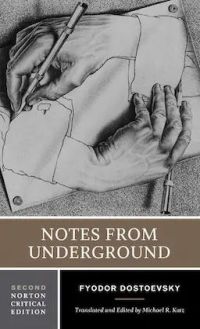
Get the Norton Critical Editions Katz translation of Notes from Underground
2nd Edition. Includes the novella, 6 backgrounds and sources, 8 responses, 11 critical essays, a chronology, and selected bibliography.
Available as a paperback (ISBN 9780393976120, 272 pages).
Get the The Norton Library Katz translation of Notes from Underground
Includes an introduction, note on the translation, chronology.
Available as a paperback (ISBN 9780393870862, 176 pages).
Get the The Norton Library Katz translation of Notes from Underground
Includes an introduction, note on the translation, chronology.
Available as an ebook (ISBN 9780393870664).
Who is Jane Kentish?
Oxford University Press says: “Jane Kentish works as a lecturer in Byzantine art and as a translator. She has translated Netochka Nezvanova by Dostoevsky and Tolstoy’s A Confession and Other Religious Writings.” She has also lectured in early Russian history and art at the University of Sussex.
About the Kentish translation of Notes from Underground
Title of book: Notes from the Underground and The Gambler
Contains: “Notes from the Underground” and “The Gambler”
Also includes a brief bio of Dostoevsky, an introduction by Malcolm Jones, a (one-sentence) note on the translation, a select bibliography, a chronology, and explanatory endnotes by Malcolm Jones.
This translation uses British spelling.
First sentences of the Kentish translation of Notes from Underground
I am a sick man … I’m a spiteful man. I’m an unattractive man.
» See extracts to compare the translations of Notes from Underground
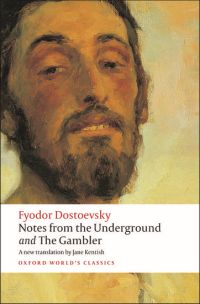
Get the Oxford Kentish translation of Notes from the Underground
Notes from the Underground, and The Gambler. Introduction by Malcolm Jones.
Available as a paperback (ISBN 9780199536382, 320 pages).
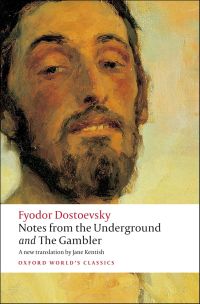
Get the Oxford Kentish translation of Notes from the Underground
Notes from the Underground, and The Gambler. Introduction by Malcolm Jones.
Available as an ebook (ISBN 9780191505805).
Who are Richard Pevear and Larissa Volokhonsky?
Richard Pevear and Larissa Volokhonsky are the American/Russian husband-and-wife team who have produced bestselling but divisive translations of many Russian classics, including Crime and Punishment, The Brothers Karamazov, The Idiot, Demons, The Master and Margarita, Anna Karenina, and War and Peace. Separately, Pevear has also translated works in French, Italian, Spanish, and Greek, including The Three Musketeers.
About the Pevear and Volokhonsky translation of Notes from Underground
Title of book: Notes from Underground
Contains: Notes from Underground
Also includes an introduction by Richard Pevear, a select bibliography, a chronology, and endnotes.
This translation uses American spelling.
From the Introduction by Richard Pevear:
“There is… one tradition of mistranslation attached to Notes from Underground that rasises something more than a question of ‘mere tone.’ The second sentence of the book, Ya zloy chelovek, has most often been rendered as ‘I am a spiteful man.’ Zloy is indeed at the root of the Russian word for ‘spiteful’ (zlobynyi), but it is a much broader and deeper word, meaning ‘wicked,’ ‘bad,’ ‘evil.’ The wicked witch in Russian folktales is zlaya ved’ma (zlaya being the faminine of zloy). The opposite of zloy is dobryi, ‘good,’ as in ‘good fairy’ (dobraya feya). This opposition is of great importance for Notes from Underground; indeed it frames the book, from ‘I am a wicked man’ at the start to the outburst close to the end: ‘The won’t let me… I can’t be … good!” We can talk forever about the inevitable loss of nuances in translating from Russian into English (or from any language into any other), but the translation of zloy as ‘spiteful’ instead of ‘wicked’ is not inevitable, nor is it a matter of nuance.”
“Notes from Underground In English” by Ira Nadel
“With its introduction, ‘Chronology,’ and notes, this useful translation by two distinguished translators, who also did The Brothers Karamazov, Crime and Punishment, Demons, and The Idiot, remains a valuable version, although it is almost thirty years old…. A three-page section ends the introduction focusing on the style,
language and natural challenges of translating Notes. The editors examine in detail Dostoevsky’s reliance on blunt and even crude terms, maintained in the translation by Pevear and Volokhonsky to sustain the tone of the original.”
First sentences of the Pevear and Volokhonsky translation of Notes from Underground
I am a sick man . . . I am a wicked man. An unattractive man.
» See extracts to compare the translations of Notes from Underground
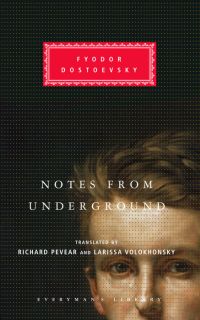
Get the Everyman's Library Pevear and Volokhonsky translation of Notes from Underground
Introduction by Richard Pevear.
Available as a hardcover (ISBN 9781400041916, 160 pages).
Get the Vintage Classics Pevear and Volokhonsky translation of Notes from Underground
Available as a paperback (ISBN 9780679734529, 176 pages).
Get the Vintage Classics Pevear and Volokhonsky translation of Notes from Underground
Available as an ebook (ISBN 9780307784643).
Who is Hugh Aplin?
Alma Books says: “Hugh Aplin worked at the Universities of Leeds and St Andrews before taking up his current post as Head of Russian at Westminster School, London. His previous translations are too many to mention, but include books by Chekhov, Gogol, Dostoevsky, Turgenev, Zamyatin, Bulgakov, Tolstoy, Bunin and, more recently, Gorky.”
About the Aplin translation of Notes from Underground
Title: Notes from the Underground.
Contains: Notes from the Underground.
Includes a foreword by Will Self.
This translation presumably uses British spelling.
Get the Aplin translation of Notes from Underground
Published by UK publisher Hesperus Press. ISBN 9781843911265, 150 pages.
This edition is out of print. You may be able to find a second-hand copy.
First sentences of the Aplin translation of Notes from Underground
I’m a sick man… I’m a malicious man. An unattractive man, I am.
» See extracts to compare the translations of Notes from Underground
Who is Ronald Wilks?
Penguin Random House says, “Ronald Wilks studied Russian language and literature at Trinity College, Cambridge, after training as a Naval interpreter, and later Russian literature at London University, where he received his PhD in 1972.”
Among his translations from Russian to English are works by Gorky, Saltykov-Shchedrin, Tolstoy, and many works by Chekhov.
About the Wilks translation of Notes from Underground
Title of book: Notes from Underground and The Double
Contains: “Notes from Underground” and “The Double”
Also includes a brief bio of Dostoevsky, a 39-page introduction by Robert Louis Jackson titled “Vision in Darkness”, a (one-sentence) note on the text, a table of ranks, endnotes, a chronology, and a list for further reading.
This translation uses British spelling.
First sentences of the Wilks translation of Notes from Underground
I’m a sick man . . . I’m a spiteful man. I’m an unattractive man.
» See extracts to compare the translations of Notes from Underground
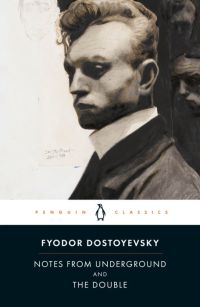
Get the Penguin Classics Wilks translation of Notes from Underground
Notes from Underground and the Double. Introduction by Robert Louis Jackson.
Available as a paperback (ISBN 9780140455120, 352 pages).
Get the Penguin Classics Wilks translation of Notes from Underground
Notes from Underground and the Double. Introduction by Robert Louis Jackson.
Available as an ebook (ISBN 9780141904092).
Who was Boris Jakim?
The publisher says: “Boris Jakim (1949–2024) was renowned for his translations of Russian religious thought into English. His published translations include works by Fyodor Dostoevsky, Sergius Bulgakov, Pavel Florensky, and Vladimir Solovyov.”
About the Jakim translation of Notes from Underground
Title of book: Notes from Underground
Contains: Notes from Underground
Includes a 17-page introduction by Robert Bird with suggestions for further reading, explanatory footnotes, and a translator’s preface.
Probably uses American spelling.
From the translator’s preface:
“Let me caution the reader: This translation uses coarser language than any previous one. In fact, I use a well-known four-letter word which I hope does not offend readers…. When [Notes from Underground] was first published (in 1864), the book as — philosophically and even terminologically — shocking, and my use of a four-letter word is an effort to regain some of the book’s original shock value, thus producing a fresh translation for our ruder times.”
First sentences of the Jakim translation of Notes from Underground
I’m a sick man. . . . I’m an evil man. I’m an unattractive man.
» See extracts to compare the translations of Notes from Underground
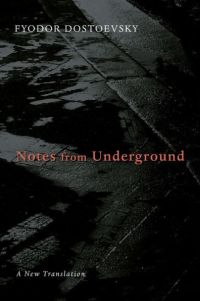
Get the Eerdmans Jakim translation of Notes from Underground
Includes an introduction by Robert Bird and a translator's preface.
Available as a paperback (ISBN 9780802845702, 152 pages).
Get the Eerdmans Jakim translation of Notes from Underground
Includes an introduction by Robert Bird and a translator's preface.
Available as an ebook (ISBN 9781467438308).
Who are Kyril Zinovieff and Jenny Hughes?
» Bio of Kyril Zinovieff at Alma Books
» Bio of Jenny Hughes at Alma Books
About the Zinovieff and Hughes translation of Notes from Underground
Title of book: Notes from Underground
Contains: Notes from Underground
Also contains an introduction, a translators’ note, a note on the text, endnotes, extra material on Dostoevsky’s life and works, and a select bibliography.
Probably uses British spelling.
“Notes from Underground In English” by Ira Nadel
“The annotations which follow the text proper (116 –120) are helpful but not extensive…. The so-called ‘Extra Material‘ at the end of the edition includes a detailed and extensive twelve-page biography, and a separate eleven-page commentary on Dostoevsky’s works…. After these critical comments is a one-page selected bibliography with ten titles and then the opening of Notes reprinted in Russian (149 –151). ”
First sentences of the Zinovieff and Hughes translation of Notes from Underground
I ’m a sick man… a spiteful man… an unattractive man, that’s what I am.
» See extracts to compare the translations of Notes from Underground
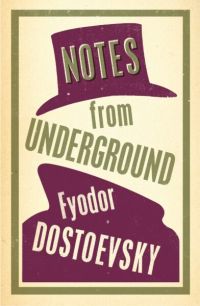
Get the Alma Classics Zinovieff and Hughes translation of Notes from Underground
Includes an introduction, translators' note, note on the text, endnotes, extra material about Dostoevsky's life and works, and a select bibliography.
Available as a paperback (ISBN 9781847493743, 160 pages).
Who is Natasha Randall?
“Natasha Randall is a writer and literary translator. Her translations include We by Yevgeny Zamyatin and A Hero of Our Time by Mikhail Lermontov. Her writing has appeared in the Times Literary Supplement, New York Times, Los Angeles Book Review and more.”
About the Randall translation of Notes from Underground
Title of book: Notes from Underground
Contains: Notes from Underground
Includes an introduction by DBC Pierre.
This translation probably uses British spelling.
First sentences of the Randall translation of Notes from Underground
I am a sick person . . . A spiteful one. An unattractive person, too.
» See extracts to compare the translations of Notes from Underground
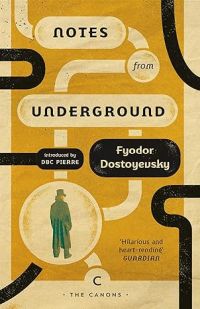
Get the Canongate Canons Randall translation of Notes from Underground
Available as a paperback (ISBN 9781786899002, 160 pages).
Get the Canongate Canons Randall translation of Notes from Underground
Available as an ebook (ISBN 9780857861283, 160 pages).
Who is Kirsten Lodge?
According to the publisher, “Kirsten Lodge is Assistant Professor of Comparative and World Literature and Humanities at Midwestern State University, Wichita Falls, Texas.”
“Notes from Underground In English” by Ira Nadel
“Kirsten Lodge is a professor of Comparative and World Literature in the American mid-west whose first degree was from Prague, before studying in Finland and finally
Columbia University in New York where she completed a PhD in Russian and Czech language and literature.”
About the Lodge translation of Notes from Underground
Title of book: Notes from the Underground
Contains: Notes from the Underground
From the publisher’s description: “As well as the full text of the work itself and an informative introduction, this edition provides background materials that offer personal and intellectual context for the work. These materials (also newly translated) include writings from some of the thinkers against whom Dostoevsky positioned himself; excerpts from Dostoevsky’s personal letters and his earlier published works; and a substantial selection of relevant illustrations and photographs.”
Also includes explanatory footnotes.
This translation uses American spelling.
“Notes from Underground In English by Ira Nadel”
“Following the text proper is a lengthy section entitled ‘In Context’ (125 –159), after which are a series of useful photographs of Dostoevsky, his brother, Chernyshevksy, the Crystal Palace, Nevsky Prospekt and St. Isaac’s Square. The ‘In Context’ portion includes a passage from Fourier, poems by Nekrasov, excerpts from What Is to Be Done?, additional writings by Dostoevsky and, finally, the ‘Critical Reception’ of the book with two commentaries from 1883 and 1891. This is a compact yet expansive, accessible edition.”
First sentences of the Lodge translation of Notes from Underground
I am a sick man … I am a spiteful man. I am an unattractive man.
» See extracts to compare the translations of Notes from Underground
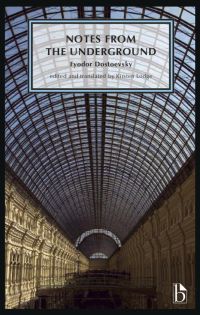
Get the Broadview Press Lodge translation of Notes from the Underground
Ebook also available.
Available as a paperback (ISBN 9781554812219, 176 pages).
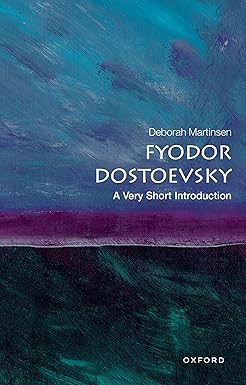
Get Fyodor Dostoevsky: A Very Short Introduction by Deborah Martinsen
A concise, accessible introduction.
Available as a paperback (ISBN 9780198864332, 160 pages).
Notes from Underground: Best translation?
There are over a dozen in-print translations to choose from! If you want help narrowing it down, here are four possible choices:
- If you’re an American and/or a P&V avoider, try the Katz That’s the one that appeals to me most based on the extracts from Chapter 1.
- Among the British translations, I think I like Penguin’s Coulson translation the best, based on the extracts from Chapter 1.
- If you’re a Pevear and Volokhonsky fan, that will be the obvious choice. (If you don’t know whether you are or not, check whether their style sounds good to you before you commit.)
- And, of course, if you just want a free ebook or a cheap reprint, you can easily get a copy of the Garnett translation.
Already have a favorite? Let us know which one and why in the comments!