
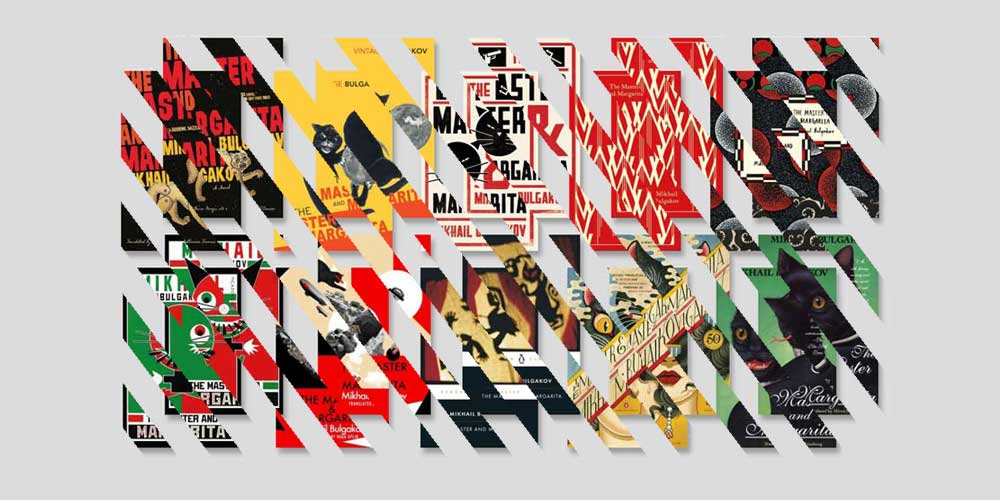
This page is a companion to: What’s the best translation of The Master and Margarita?
Below are extracts from 6 different English translations of The Master and Margarita by Mikhail Bulgakov, shown in a random fixed order.
Use the side‑by‑side links to choose two translations for comparison in the comparison section further down the page. (If you're on a mobile phone, they won't really be side by side, but they'll be together at the bottom of the list.)
At the hour of the hot spring sunset two citizens appeared at the Patriarch’s Ponds. One of them, approximately forty years old, dressed in a grey summer suit, was short, dark-haired, plump, bald, and carried his respectable fedora hat in his hand. His neatly shaven face was adorned with black horn-rimmed glasses of a supernatural size. The other, a broad-shouldered young man with tousled reddish hair, his checkered cap cocked back on his head, was wearing a cowboy shirt, wrinkled white trousers and black sneakers.
The first was none other than Mikhail Alexandrovich Berlioz, editor of a fat literary journal and chairman of the board of one of the major Moscow literary associations, called Massolit for short, and his young companion was the poet Ivan Nikolaevich Ponyrev, who wrote under the pseudonym of Homeless.
Once in the shade of the barely greening lindens, the writers dashed first thing to a brightly painted stand with the sign: ‘Beer and Soft Drinks.’
Ah, yes, note must be made of the first oddity of this dreadful May evening. There was not a single person to be seen, not only by the stand, but also along the whole walk parallel to Malaya Bronnaya Street. At that hour when it seemed no longer possible to breathe, when the sun, having scorched Moscow, was collapsing in a dry haze somewhere beyond Sadovoye Ring, no one came under the lindens, no one sat on a bench, the walk was empty.
‘Give us seltzer,’ Berlioz asked.
‘There is no seltzer,’ the woman in the stand said, and for some reason became offended.
Once upon an unusually hot hour of sunset in spring, two gentlemen appeared at Patriarch’s Ponds in Moscow. The first sported a gray summer suit and was short, plump, and bald. He carried his respectable fedora in his hand, and black horn-rimmed spectacles of supernatural proportions adorned his clean-shaven face. The second — a broad-shouldered young man with curly reddish hair — wore a cowboy shirt, craggy white trousers, black sneakers, and a checkered cap cocked to the back of his head.
The first was none other than Mikhail Alexandrovich Berlioz, chairman of the board of one of Moscow’s largest literary organizations, known by the acronym MASSOLIT, and editor of a thick literary journal. His young companion was the poet Ivan Nikolayevich Ponyrev, who wrote under the pen name of Homeless.
Upon reaching the shade of the freshly budding lindens, the writers first dashed towards a brightly painted booth bearing the sign: ‘Beer and Sodas’.
By the way, it is worthwhile to note the first strange thing about that horrible May afternoon. Not a single human being was to be found in the vicinity of the booth, or, indeed in the entire alley that ran parallel to Malaya Bronnaya Street. At an hour when it seemed almost impossible to breathe, when the sun, scorching Moscow, was plunging into the dry haze somewhere beyond the Sadovoye Ring Road, no one sought shelter in the shade of the lindens, no one sat down on the benches. Empty was the alley.
‘Mineral water,’ Berlioz requested.
‘We don’t have any,’ the woman in the booth replied, taking offense for some reason.
At the hour of the hot spring sunset at Patriarch’s Ponds two citizens appeared. The first of them – some forty years old and dressed in a nice grey summer suit – was short, well fed and bald, he carried his respectable pork-pie hat in his hand, and had a neatly shaved face adorned by spectacles of supernatural proportions in black horn frames. The second – a broad-shouldered, gingery, shock-headed young man with a checked cloth cap cocked towards the back of his head – was wearing a cowboy shirt, crumpled white trousers and black soft shoes.
The first was none other than Mikhail Alexandrovich Berlioz, the editor of a thick literary journal and chairman of the board of one of Moscow’s biggest literary associations, known in abbreviation as MASSOLIT, while his young companion was the poet Ivan Nikolayevich Ponyrev, who wrote under the pseudonym Bezdomny.
Entering the shade of the lime trees that were just becoming green, the writers first and foremost hurried towards a colourfully painted little booth with the inscription “Beer and Minerals”.
Yes, the first strange thing about that terrible May evening should be noted. Not just by the booth, but along the entire tree-lined avenue running parallel to Malaya Bronnaya Street, not a single person was about. At that hour, when people no longer even seemed to have the strength to breathe, when the sun, having heated Moscow up to an unbearable degree, was toppling in a dry mist somewhere down beyond the Garden Ring Road, nobody had come along here under the lime trees, nobody had sat down on a bench, the avenue was empty.
“Narzan, please,” requested Berlioz.
“There’s no Narzan,” replied the woman in the booth, and for some reason took umbrage.
At the sunset hour of one warm spring day two men were to be seen at Patriarch’s Ponds. The first of them – aged about forty, dressed in a greyish summer suit – was short, dark-haired, well-fed and bald. He carried his decorous pork-pie hat by the brim and his neatly shaven face was embellished by black horn-rimmed spectacles of preternatural dimensions. The other, a broad-shouldered young man with curly reddish hair and a check cap pushed back to the nape of his neck, was wearing a tartan shirt, chewed white trousers and black sneakers.
The first was none other than Mikhail Alexandrovich Berlioz, editor of a highbrow literary magazine and chairman of the management committee of one of the biggest Moscow literary clubs, known by its abbreviation as MASSOLIT; his young companion was the poet Ivan Nikolayich Poniryov who wrote under the pseudonym of Bezdomny.
Reaching the shade of the budding lime trees, the two writers went straight to a gaily-painted kiosk labelled ‘Beer and Minerals’.
There was an oddness about that terrible day in May which is worth recording: not only at the kiosk but along the whole avenue parallel to Malaya Bronnaya Street there was not a person to be seen. It was the hour of the day when people feel too exhausted to breathe, when Moscow glows in a dry haze as the sun disappears behind the Sadovaya Boulevard – yet no one had come out for a walk under the limes, no one was sitting on a bench, the avenue was empty.
‘A glass of lemonade, please,’ said Berlioz.
‘There isn’t any,’ replied the woman in the kiosk. For some reason the request seemed to offend her.
At the hour of sunset, on a hot spring day, two citizens appeared in the Patriarchs’ Ponds Park. One, about forty, in a gray summer suit, was short, plump, dark-haired and partly bald. He carried his respectable pancake-shaped hat in his hand, and his clean-shaven face was adorned by a pair of supernaturally large eyeglasses in a black frame. The other was a broad-shouldered young man with a mop of shaggy red hair, in a plaid cap pushed well back on his head, a checked cowboy shirt, crumpled white trousers, and black sneakers.
The first was none other than Mikhail Alexandrovich Berlioz, editor of an important literary journal and chairman of the board of one of the largest literary associations in Moscow, known by its initials as MASSOLIT. His young companion was the poet Ivan Nikolayevich Ponyrev, who wrote under the pen name of Homeless.
When they had reached the shade of the linden trees, which were just turning green, the literary gentlemen hurried toward the brightly painted stall with the sign
BEER AND SOFT DRINKS
Oh, yes, we must take note of the first strange thing about that dreadful May evening. Not a soul was to be seen around—not only at the stall, but anywhere along the entire avenue, running parallel to Malaya Bronnaya. At that hour, when it no longer seemed possible to breathe, when the sun was tumbling in a dry haze somewhere behind Sadovoye Circle, leaving Moscow scorched and gasping, nobody came to cool off under the lindens, to sit down on a bench. The avenue was deserted.
“Give us some Narzan,” said Berlioz.
“We have no Narzan,” answered the woman behind the stall in an offended tone.
One hot spring evening, just as the sun was going down, two men appeared at Patriarch’s Ponds. One of them-fortyish, wearing a gray summer suit-was short, dark-haired, bald on top, paunchy, and held his proper fedora in his hand; black hornrimmed glasses of supernatural pro- portions adorned his well-shaven face. The other one a broad- shouldered, reddish-haired, shaggy young man with a checked cap cocked on the back of his head—was wearing a cowboy shirt, crumpled white trousers, and black sneakers.
The first man was none other than Mikhail Alexandrovich Berlioz, editor of a literary magazine and chairman of the board of one of Moscow’s largest literary associations, known by its acronym, MASSOLIT, and his young companion was the poet Ivan Nikolayevich Ponyryov, who wrote under the pen name Bezdomny.
After reaching the shade of the newly budding linden trees, the writers made a beeline for the colorfully painted refreshment stand bearing the sign: BEER AND COLD DRINKS.
And here it is worth noting the first strange thing about that terrible May evening. Absolutely no one was to be seen, not only by the refreshment stand, but all along the tree-lined path that ran parallel to Malaya Bronnaya Street. At a time when no one, it seemed, had the strength to breathe, when the sun had left Moscow scorched to a crisp and was col- lapsing in a dry haze somewhere behind the Sadovoye Ring, no one came out to walk under the lindens, or to sit down on a bench, and the path was deserted.
“Give me some Narzan water,” said Berlioz.
“There isn’t any,” replied the woman at the refreshment stand, taking umbrage for some reason.
Однажды весною, в час небывало жаркого заката, в Москве, на Патриарших прудах, появились два гражданина. Первый из них, одетый в летнюю серенькую пару, был маленького роста, упитан, лыс, свою приличную шляпу пирожком нес в руке, а на хорошо выбритом лице его помещались сверхъестественных размеров очки в черной роговой оправе. Второй — плечистый, рыжеватый, вихрастый молодой человек в заломленной на затылок клетчатой кепке — был в ковбойке, жеваных белых брюках и в черных тапочках.
Первый был не кто иной, как Михаил Александрович Берлиоз, председатель правления одной из крупнейших московских литературных ассоциаций, сокращенно именуемой МАССОЛИТ, и редактор толстого художественного журнала, а молодой спутник его — поэт Иван Николаевич Понырев, пишущий под псевдонимом Бездомный.
Попав в тень чуть зеленеющих лип, писатели первым долгом бросились к пестро раскрашенной будочке с надписью “Пиво и воды”.
Да, следует отметить первую странность этого страшного майского вечера. Не только у будочки, но и во всей аллее, параллельной Малой Бронной улице, не оказалось ни одного человека. В тот час, когда уж, кажется, и сил не было дышать, когда солнце, раскалив Москву, в сухом тумане валилось куда-то за Садовое кольцо, — никто не пришел под липы, никто не сел на скамейку, пуста была аллея.
— Дайте нарзану, — попросил Берлиоз.
— Нарзану нету, — ответила женщина в будочке и почему-то обиделась.
[Google translation of this text:] One spring afternoon, at the hour of an unusually hot sunset, two citizens appeared at Patriarch’s Ponds in Moscow. The first, dressed in a light grey summer suit, was short, stout, and bald; he carried his respectable pork-pie hat in his hand, and his clean-shaven face was adorned with spectacles of supernatural size in black horn-rimmed frames. The second—a broad-shouldered, reddish-haired young man with a cowlick and a checked cap tilted to the back of his head—wore a cowboy shirt, rumpled white trousers, and black canvas shoes.
The first was none other than Mikhail Alexandrovich Berlioz, chairman of the board of one of Moscow’s largest literary associations—known by the acronym MASSOLIT—and editor of a thick literary journal; his young companion was the poet Ivan Nikolayevich Ponyrev, who wrote under the pen name Bezdomny.
Upon reaching the shade of the linden trees, which were just beginning to turn green, the writers made a beeline for a brightly painted kiosk bearing the sign “Beer and Soft Drinks.”
Yes, the first oddity of that dreadful May evening must be noted. There was not a soul to be seen—not just by the kiosk, but along the entire avenue running parallel to Malaya Bronnaya Street. At that hour, when it seemed impossible even to breathe, and the sun—having scorched Moscow—was sinking in a dry haze somewhere beyond the Garden Ring, no one came to the linden trees, no one sat on the benches; the avenue was deserted.
“Give me some Narzan,” Berlioz requested.
“No Narzan,” replied the woman in the kiosk, taking offense for some reason.
Side-by-side comparison
Choose any two translations above; they will appear here side by side.