“Which English translation of Night should I read?”
TL;DR? If you just want a quick summary, jump to the conclusion.
The memoir Night was originally written and published by Elie Wiesel, a Jewish Romanian-born American Holocaust survivor, in Yiddish. Subsequently, it was adapted by the author and published in French. In its English versions, like The Diary of Anne Frank, it has been used in classrooms by hundreds of thousands of students. In 2006, it was brought to the attention of millions of adult readers when Oprah chose it for her book club.
In January 2026, the late author was featured in the American Masters documentary Elie Wiesel: Soul on Fire, which premiered on Holocaust Remembrance Day (January 27), a day that marks the liberation of the Auschwitz-Birkenau camp in 1945.
Night: Translations in English
There have been 2 English translations of Night; the earlier one is out of print.
Night: Reviews and Opinions
New York Times: “When Evil Closed In: Review of Night” by Gertrude Samuels (November 13, 1960)
“[Wiesel’s] slim volume of terrifying power is the documentary of a boy — himself — who survived the ‘Night’ that destroyed his parents and baby sister, but lost his God.”
Saturday Review: “Memory of Torment” by Itzhak Ivry (December 17, 1960)
“Mr. Wiesel writes in short, staccato sentences, in the simplest words, and in a relentless, self-denying effort to tell the whole truth as he saw and felt it, moment by moment, day by day…. His book deserves to be read by everyone who is deeply concerned about the future of civilization.”
Commentary: “The Literature of the Holocaust” by A. Alvarez (November 1964)
“As a human document, Night is almost unbearably painful, and certainly beyond criticism. But like The Terezín Requiem and dozens of other equally sincere, equally distressing books, it is a failure as a work of art…. [because the feelings are] so fiercely present in the barest recital of the facts that any attempt to elaborate, underline, or explain them seems like wild overstatement.”
The New Republic: “A Thousand Darknesses” by Ruth Franklin (March 20, 2006)
“Night is the most devastating account of the Holocaust that I have ever read. It is devastating first because of its simplicity…. There is no extraneous detail, no analysis, no speculation. There is only a story: Eliezer’s account of what happened, spoken in his voice…. Like any memoir, Night must balance between absolute fidelity to the events and the making of literature. Its poetic austerity comes at a cost to the literal truth. This cost, it must be said, does not detract in the least way from Night‘s validity as a Holocaust testimonial…. But it is worth recognizing that such a cost exists, if only to remind ourselves that no memoir can be at once an unerring representation of reality and a genuine artistic achievement…. Wiesel recognizes the memoirist’s dual obligation–to the truth, certainly, but also to tell his story in the most interesting, most memorable, and most meaningful way possible. Like the translator who occasionally veers from the grammar of an individual phrase for the sake of the quality of the whole work, the memoirist too must have the liberty to shape his raw materials into a work of art.”
Forward: “Why ‘Night’ Will Be Remembered as Elie Wiesel’s Greatest Work” by Benjamin Ivry (July 3, 2016)
“[Wiesel’s] contribution to further understanding of the Holocaust, even among readers who thought they already knew about it, will continue to grow. That will be the principal legacy of Elie Wiesel.”
Night: How did it get its English title?
The book was published in 1956 in Yiddish in Argentina under the title “Un di velt hot geshvign” (And the World Remained Silent) and in 1958 in a French version adapted by Wiesel himself, which he titled “La Nuit” (Night). The French version served as the basis for both English translations; no authorized direct translation of the Yiddish text is available in English.
Night: Who is François Mauriac?
François Mauriac wrote the foreword. A French writer whom Wiesel met while living in Paris, Mauriac encouraged Wiesel to publish his memoir in French and helped find a publisher for it.
Night: Translation comparison
Extracts have been included below to help you to compare the translations of Night.
Night: Other info and resources
For some related links, biographical info, and listings of the two follow-up novels completing the “Night” trilogy, jump to Other Info and Resources.
Who is Stella Rodway?
Biographical and professional details are scarce. Stella Rodway translated René Goscinny and Jean-Jacques Sempé’s children’s classic Le Petit Nicolas from French to English.
About the Rodway translation of Night
Publication history: It was translated from the 1958 French version, La Nuit, and published by Hill and Wang in New York and MacGibbon and Kee in London. Rodway also translated the foreword by François Mauriac from French to English.
Availability: The Rodway translation is now out of print. Second-hand copies are available, including a handful of copies of the rare first American edition and first British edition.
Extract from the Rodway translation of Night
First ~250 words:
They called him Moché the Beadle, as though he had never had a surname in his life. He was a man of all work at a Hasidic synagogue. The Jews of Sighet— that little town in Transylvania where I spent my childhood — were very fond of him. He was very poor and lived humbly. Generally my fellow townspeople, though they would help the poor, were not particularly fond of them. Moché the Beadle was the exception. Nobody ever felt embarrassed by him. Nobody ever felt encumbered by his presence. He was a past master in the art of making himself insignificant, of seeming invisible.
Physically he was as awkward as a clown. He made people smile, with his waiflike timidity. I loved his great, dreaming eyes, their gaze lost in the distance. He spoke little. He used to sing, or, rather, to chant. Such snatches as you could hear told of the suffering of the divinity, of the Exile of Providence, who, according to the cabbala, awaits his deliverance in that of man.
I got to know him toward the end of 1941. I was twelve. I believed profoundly. During the day I studied the Talmud, and at night I ran to the synagogue to weep over the destruction of the Temple.
One day I asked my father to find me a master to guide me in my studies of the cabbala.
“You’re too young for that. Maimonides said it was only at thirty that one had the right to venture into the perilous world of mysticism. You must first study the basic subjects within your own understanding.”
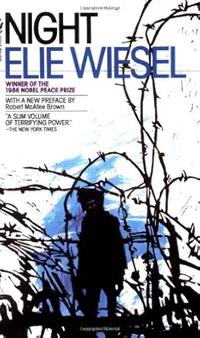
Get the Bantam Rodway translation of Night
1982. Out of print.
Available as a mass-market paperback (ISBN 9780553272536, 109 pages).
Who was Marion Wiesel?
Marion Rose Wiesel (Mary Renate Erster) was Elie Wiesel’s wife. An Austrian-born American, she too was a Jewish Holocaust survivor. As a trusted literary partner, she translated over a dozen of her husband’s books from French into English. Moreover, she participated alongside her husband in humanitarian and political activism, with him establishing the Elie Wiesel Foundation and serving on the council of the United States Holocaust Memorial Museum.
» NYT Obituary of Marion Wiesel
About the Wiesel translation of Night
It includes a new preface by Elie Wiesel and the text of his Nobel Peace Prize acceptance speech.
From the preface by Elie Wiesel:
“Why this new translation, since the earlier one has been around for forty-five years? […] [B]ack then, I was an unknown writer who was just getting started. My English was far from good. When my British publisher told me that he had found a translator, I was pleased. I later read the translation and it seemed all right. I never reread it. Since then, many of my other works have been translated by Marion, my wife, who knows my voice and how to transmit it better than anyone else…. I am convinced that the readers will appreciate her work. In fact, as a result of her rigorous editing, I was able to correct and revise a number of important details.”
Extract from the Wiesel translation of Night
First ~250 words:
They called him Moishe the Beadle, as if his entire life he had never had a surname. He was the jack-of-all- trades in a Hasidic house of prayer, a shtibl. The Jews of Sighet—the little town in Transylvania where I spent my childhood—were fond of him. He was poor and lived in utter penury. As a rule, our townspeople, while they did help the needy, did not particularly like them. Moishe the Beadle was the exception. He stayed out of people’s way. His presence bothered no one. He had mastered the art of rendering himself insignificant, invisible.
Physically, he was as awkward as a clown. His waiflike shyness made people smile. As for me, I liked his wide, dreamy eyes, gazing off into the distance. He spoke little. He sang, or rather he chanted, and the few snatches I caught here and there spoke of divine suffering, of the Shekhinah in Exile, where, according to Kabbalah, it awaits its redemption linked to that of man.
I met him in 1941. I was almost thirteen and deeply observant. By day I studied Talmud and by night I would run to the synagogue to weep over the destruction of the Temple.
One day I asked my father to find me a master who could guide me in my studies of Kabbalah. “You are too young for that. Maimonides tells us that one must be thirty before venturing into the world of mysticism, a world fraught with peril. First you must study the basic subjects, those you are able to comprehend.”
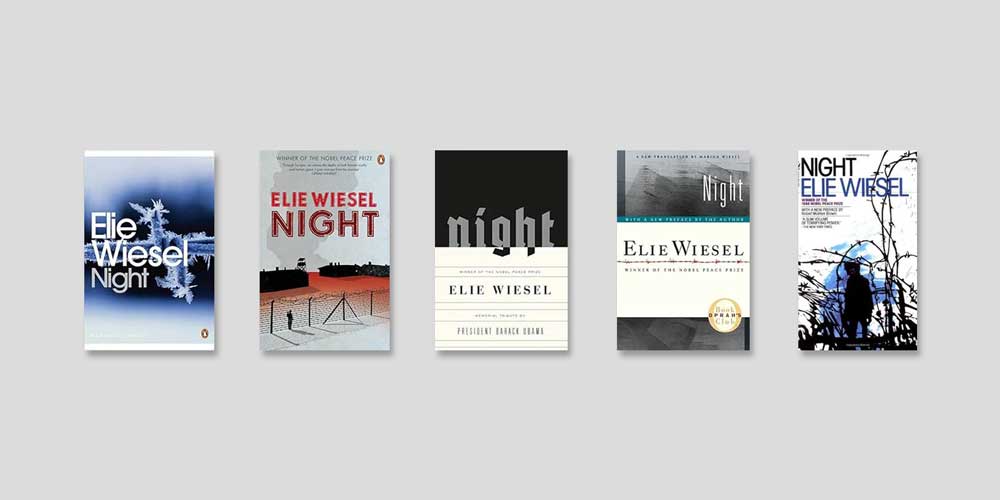
Get the Penguin Modern Classics Wiesel translation of Night
2006
Available as a paperback (ISBN 9780140189896, 144 pages).
Get the Penguin UK Wiesel translation of Night
2006
Available as a paperback (ISBN 9780141038995, 144 pages).
Get the Hill and Wang Wiesel translation of Night
2006
Available as a paperback (ISBN 9780374500016, 144 pages).

Get the Hill and Wang Wiesel translation of Night
2006
Available as an ebook (ISBN 9781466805361).
Get the Hill and Wang Wiesel translation of Night
2006
Available as a mass-market paperback (ISBN 9780374534752, 144 pages).
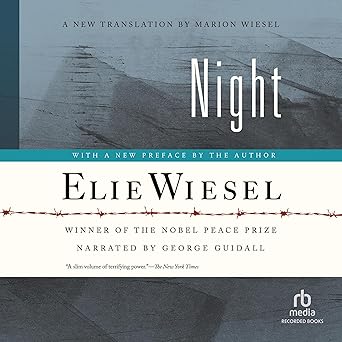
Get the Recorded Books Wiesel translation of Night
2006. Unabridged. 4 h 17 m. Narrated by George Guidall.
Available as an audiobook.
Get the Hill and Wang Wiesel translation of Night
2006. Out of print.
Available as a hardcover (ISBN 9780374399979).
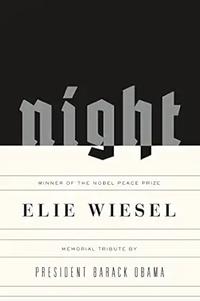
Get the Hill and Wang Wiesel translation of Night
2017. "A memorial edition of Elie Wiesel’s seminal memoir of surviving the Nazi death camps, with tributes by President Obama and Samantha Power." Also includes: "unpublished text of a speech that Wiesel delivered before the United Nations General Assembly on the sixtieth anniversary of the liberation of Auschwitz, entitled 'Will the World Ever Know.'”
Available as a hardcover (ISBN 9780374221997, 176 pages).
Get the Hill and Wang Wiesel translation of Night
2017. "A memorial edition of Elie Wiesel’s seminal memoir of surviving the Nazi death camps, with tributes by President Obama and Samantha Power." Also includes: "unpublished text of a speech that Wiesel delivered before the United Nations General Assembly on the sixtieth anniversary of the liberation of Auschwitz, entitled 'Will the World Ever Know.'”
Available as an ebook (ISBN 9780374717261).
About Night
Elie Wiesel Foundation resources related to Night
Elie Wiesel: Soul on Fire
American Masters PBS documentary
Exploring Night as Literature, Bearing Witness to History
A lesson plan on Night provided by the United States Holocaust Memorial Museum
Search for Easton Press editions on Abebooks
Several different out-of-print editions of Night
Search for 2018 Folio Society edition on Abebooks
Blue cloth binding with slipcase
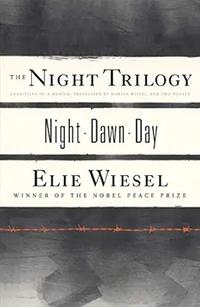
Get The Night Trilogy: Night, Dawn, Day by Elie Wiesel
"Consisting of a memoir translated by Marion Wiesel, and two novels."
Available as a paperback (ISBN 9780809073641, 352 pages).
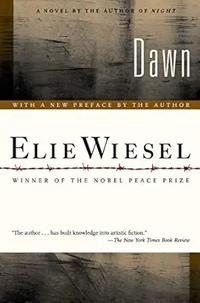
Get Dawn by Elie Wiesel
A novel, follow-up to Night. Ebook also available (ISBN 9781466821163).
Available as a paperback (ISBN 9780809037728, 81 pages).
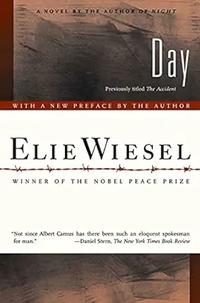
Get Day by Elie Wiesel
A novel, follow-up to Night, Dawn. Ebook also available (ISBN 9781466821170). Also known as "The Accident".
Available as a paperback (ISBN 9780809023097, 109 pages).
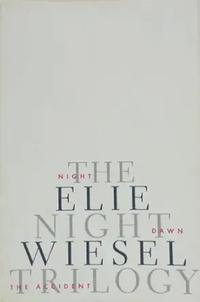
Get The Night Trilogy: Night, Dawn, The Accident by Elie Wiesel
1987/1988. Night translated by Stella Rodway. Out of print.
Available as a paperback (ISBN 9780374521400, 318 pages).
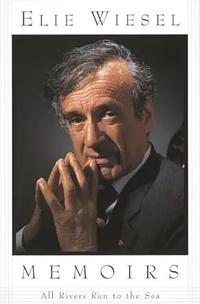
Get All Rivers Run to the Sea: Memoirs by Elie Wiesel
1996 reprint of 1995 hardcover text. Volume 1 of 2-volume autobiography.
Available as a paperback (ISBN 9780805210286, 432 pages).
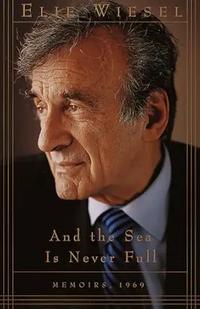
Get And the Sea Is Never Full: Memoirs 1969-- by Elie Wiesel
2000 reprint of 1999 hardcover text. Volume 2 of 2-volume autobiography.
Available as a paperback (ISBN 9780805210293, 448 pages).
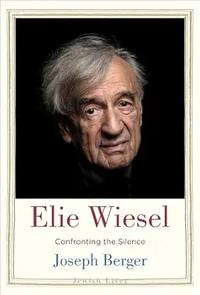
Get Elie Wiesel: Confronting the Silence by Joseph Berger
2023 biography written by a NYT reporter and published by Yale University Press.
Available as (ISBN 9780300228984, 360 pages).
Night best translation?
The 1960 translation by Stella Rodway is out of print. Although it is no longer commercially produced for sale, it has always been considered a faithful and accurate rendering of the French text.
» See info and links to get a second-hand copy of the Rodway translation in hardcover or paperback
The 2006 translation by Marion Wiesel is now considered the definitive translation of the memoir. It incorporates revisions made according to the author’s input, including some changes made to reflect the earlier Yiddish text, and contains a new preface written by the author.
Either version will transmit the impact of Wiesel’s testimony.