
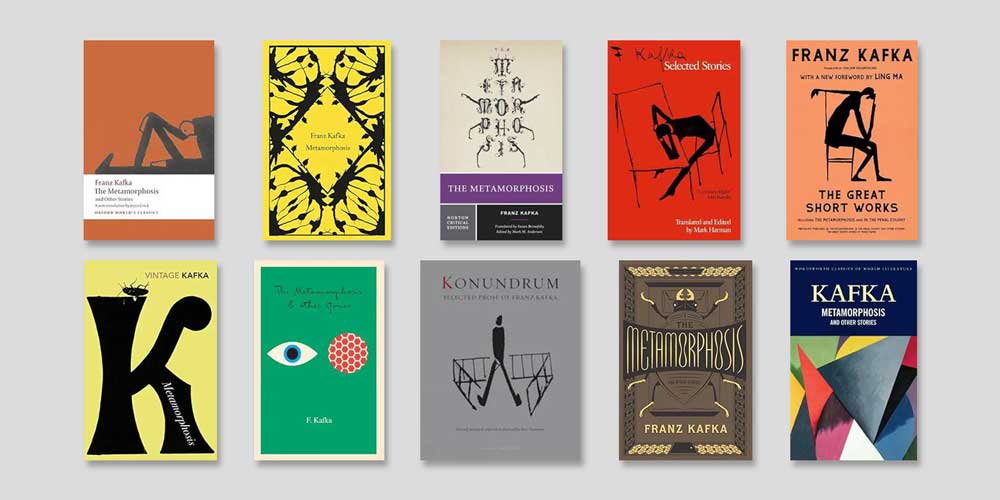
“Which English translation of The Metamorphosis should I read?”
TL;DR? If you just want a quick-and-dirty recommendation, jump to the conclusion.
If you just want to compare extracts, there’s now a dedicated page for that!
The Metamorphosis, originally published in German in 1915 in Austria-Hungary (now the Czech Republic), is a relatively short work of fiction—it might be considered a long short story or a novella rather than a novel; thus it is often published together with other short works rather than in a separate volume.
How many short stories did Kafka write?
How many Kafka stories would be in a “complete” collection? Well, it depends on how you count. Some of Kafka’s works were published after his death; arguably he hadn’t finished writing them (and arguably didn’t want them published). Should we exclude those? Well, Kafka voiced disapproval even of some of the works he himself chose to publish, so Kafka is maybe not the authority on what Kafka wrote that’s worth reading! Anyway, that’s what his friend Max Brod decided, which is why we have any posthumous Kafka works at all.
From the introduction by Gabriel Josipovici to the Everyman’s Library edition of the Muir translation:
“[Kafka] only published a very small number of works in his lifetime…. [I]t will always be a matter of personal decision as to which bits of the notebooks and diaries one chooses to regard as finished stories.”
From Underwood’s Translator’s preface:
Kafka wrote to his friend Max Brod, “[as] quoted in the Afterword to the first edition of The Trial, to the effect that, ‘of everything I have written, only the Judgement, Stoker, Metamorphosis, Penal Colony, and Country Doctor books and the Fasting-artist story are valid’.”
A Country Doctor is a collection containing The New Advocate, A Country Doctor, Up in the Gallery, An Old Manuscript, Before the Law, Jackals and Arabs, A Visit to a Mine, The Next Village, A Message from the Emperor, The Cares of a Family Man, Eleven Sons, A Fratricide, A Dream, and A Report to an Academy.
Kafka’s statement excludes the following works published during his life or with his authorization: Meditation (containing Children on a Country Road, The Trees, Clothes, Excursion into the Mountains, Rejection, The Street Window, The Tradesman, Absent-minded Window-gazing, The Way Home, Passers-by, On the Tram, Reflections for Gentlemen-Jockeys, The Wish to be a Red Indian, Unhappiness, Bachelor’s Ill Luck, Unmasking a Confidence Trickster, The Sudden Walk, and Resolutions), Conversation with the Supplicant, Conversation with the Drunk, The Aeroplanes at Brescia, The Bucket Rider, First Sorrow, A Little Woman, and Josephine the Singer, or the Mouse Folk.
Kafka famously asked Brod to burn his manuscripts; Brod did not comply with this wish.
Teach Privacy: “Franz Kafka’s Last Wishes and the Kafka Myths” by Daniel Solove
“I find myself greatly torn over the issue. Respecting the privacy and final wishes of the author is a very important value, but there is also enormous social benefit from society’s having an author’s papers. Imagine if Kafka’s wishes had been granted. Nobody would know of The Trial or The Castle, two of the greatest works of literature ever penned.”
The Metamorphosis: Translations in English
There have been 23 English translations, of which most came after the original German text entered the public domain in 1995 (according to European copyright convention, 70 years after Kafka’s death in 1924):
- 1936-1938 – Eugene and Maria Jolas
- 1937 – A.L. Lloyd
- 1948 – Willa and Edwin Muir
- 1972 – Stanley Corngold
- 1981 – J.A. Underwood
- 1992 – Malcolm Pasley
- 1993 – Joachim Neugroschel
- 1996 – Stanley Appelbaum (Dover)
- 1996 – Donna Freed (Barnes & Noble)
- 1999 – Ian Courtenay Johnston (independent)
- 2002 – David Wyllie (independent)
- 2002 – Richard Stokes (Hesperus)
- 2005 – M.A. Roberts (Prestwick)
- 2007 – Michael Hofmann (Penguin)
- 2009 – Joyce Crick (Oxford)
- 2009 – William Aaltonen (Arcturus)
- 2011 – John R. Williams (Wordsworth)
- 2014 – Christopher Moncrieff (Alma)
- 2014 – Susan Bernofsky (Norton)
- 2016 – Peter Wortsman (Archipelago)
- 2017 – Katja Pelzer (Sterling)
- 2021 – Tim Chilcott (independent)
- 2024 – Mark Harman (Harvard)
If 23 seems like a lot, well, there are at least 33 translations into Spanish, according to “Canonical Translation and Retranslation: The Example of Franz Kafka’s Metamorphosis in Spain”!
Arts Fuse: “Book Interview: A New Take on Kafka — A Conversation with Peter Wortsman” by Bill Marx
Bill Marx says: “There have been, by my modest count, well over two dozen renditions of this story into English.”
The above list of 23 translations doesn’t include (a) a digital interlinear translation or (b) the Reppin translation from Czech (both listed below under other resources). There is also (c) a self-published translation by Philip Lundberg titled Kafka Unleashed. Including these three, I know of 26 translations in total. Let us know in the comments if you have any more to add!
The Metamorphosis: Why is it hard to translate?
The critically important two-word phrase ungeheuren Ungeziefer, meant to indicate what Gregor has transformed into, has always been a challenge for translators.
Northern Virginia Community College: “Translation: What difference does it make? The Metamorphosis by Franz Kafka” by Victoria Poulakis
“Let’s consider first the different adjectives chosen by the translators — gigantic, giant, enormous, monstrous — to translate the original German word, ungeheuren. The first three of these words — gigantic, giant, enormous — relate to size; they tell us that Gregor has become an extremely large insect. But the fourth — monstrous — is different; it describes something horrifying that doesn’t have to be very large. The dilemma for the translators is that the original German word can mean both things at the same time — very large and horrifying — but since English lacks an equivalent word, the translators have been forced to choose between these somewhat different meanings.
“Another difference involves the translators’ choices of words to describe Gregor’s transformed state — insect, bug, and vermin. The original German word — Ungeziefer — is literally translated as vermin. However, this word isn’t commonly used in English, so some translators prefer to use words like bug or insect which will be more easily understood by their readers. Also, since the word vermin can describe any loathsome creature, not just an insect, using this word doesn’t describe exactly what Gregor has become. The disadvantage of words like bug or insect, however, is that they don’t convey the sense of disgust that’s implicit in the word vermin. A bug or insect can be harmless, perhaps even beautiful like a butterfly. Certainly this meaning doesn’t apply to Gregor Samsa, but the reader has no way of knowing this at the beginning of the story. And this kind of misunderstanding is even more likely to occur since the word metamorphosis in the story’s title is often associated with a butterfly.
“An added complication familiar to most translators is that the word vermin has particular historical significance lacking in the words bug and insect. In the region where Kafka lived, Jewish people were often referred to, in times of persecution by anti-Semites, as Ungeziefer, or vermin. Since Kafka was himself Jewish, he was undoubtedly aware of this derogatory meaning of the word Ungeziefer — but there’s no way of knowing if he intended this meaning to apply to Gregor Samsa. Translators who feel he did intend to suggest it are more likely to use the word vermin in their translations; those who feel it’s not an intended meaning may choose more easily-understood words like bug or insect. There’s no way of deciding conclusively which is the better choice. Translators have to weigh the pros and cons of the words they choose, recognizing that it’s impossible to convey all levels of possible meanings in the words originally used by the story’s author.”
The Metamorphosis: Should the title even be ‘The Metamorphosis’?
Literary Hub: “The Case for Renaming Kafka’s Metamorphosis as The Transformation” by Mark Harman
The author of the article published his translation as The Transformation in 2024. Here, he explains why. “[T]he task of translating Kafka’s seemingly straightforward titles can be tricky. One need only think of Der Process (“The Trial” or “The Process”) and Das Schloss (“The Castle” or “The Lock”). Whereas Kafka can toy with several meanings, the translator must choose one. Was my decision to entitle Kafka’s bug story The Transformation “brash, if not brassy,” as the writer Joy Williams asserts in the May 2024 issue of Harper’s Magazine? Surely not. It was Kafka himself, who, having translated a section of Ovid’s Metamorphoses at his rigorous Prague secondary school, did not call the bug story Die Metamorphose but rather Die Verwandlung.”
For what it’s worth, I discovered the Wortman translation, titled Transformed, relatively late in my research process. The generative AI tool Perplexity, which I use for preliminary web research (not writing!) and also for generating WordPress code and Photoshop scripts, didn’t list his translation among the others. When I asked Perplexity to list all the English titles of The Metamorphosis, it just gave me (The) Metamorphosis and (The) Transformation. I said, “I think you’re missing one.” Then Perplexity descended into an unexpectedly lengthy and repetitive spiral of self-doubt, which I think is hilarious. You can experience the hilarity yourself by skimming this PDF.
From the introduction by Jason Baker to the Barnes & Noble Donna Freed translation:
“[Kafka’s] literary puzzles resemble the unreal landscapes and structures of M. C. Escher’s drawings and lithographs. Actually, Escher’s imagery offers a useful way to visualize Kafka’s literature. As if leading the reader up and down endless staircases of logic, Kafka focuses on multiple dualities at once, all of which crisscross in three dimensions. Rather than a linear argument, Kafka writes a spiral one, which often makes readers dizzy, if not seasick. Interestingly, metamorphosis was one of Escher’s favorite subjects, and three of his most famous woodcuts share this title with Kafka’s novella.”
Radio Prague International: “Translator Mark Harman: Kafka’s imagination anticipated the world in which we live” by Ian Willoughby
“[T]he original English title give in it by the Muirs was not The Metamorphosis; they called it Transformation. It was only in subsequent editions that they then switched to The Metamorphosis. Why did they do that? It could be, as Borges suggested in the case of the Spanish translation, La metamorfosis, that the Spanish translator chose it because of the prestige of the French translation. The French translation went with La Métamorphose, so it’s possible that the Muirs reversed their initial decision because of the decision by the French translator. It’s difficult to change something that is so established and embedded in English by now. But I think it’s important, not only because of the greater accuracy of The Transformation – what I hope from this book is that it will somehow show that transformation is a central concept in the web of metaphors through which the biographical Kafka contemplated his lived experience, and in his creative process as a writer.”
From the introduction by translator John R. Williams:
“I have given the alternative, but unauthorised, sub-title ‘The Transformation of Gregor Samsa.’ ‘Metamorphosis’ is a term freighted with biological, even entomological associations; and while this might seem particularly appropriate for the transformation of a human being into an insect, Kafka [did not choose] the usual German term for the biological process, Metamorphose.”
Today I learned: The name “Kafka” itself can be translated!
From the Foreword to Explain to Me Some Stories of Kafka, edited by Angel Flores
“In Czech the word kafka means jackdaw (corvus monedula), a bird belonging to the raven family. Kafka’s forefathers adopted Kafka as their surname in compliance with a decree of the Austrian emperor Joseph Il in 1788 requiring all the Jews of his realm to choose names, since the old system of appellation (such as Chaim-son-of-Jacob) seemed obsolete and inadequate.”
The Metamorphosis: Translation comparison
This time, the extracts have been included on a separate extract comparison page to enable blind comparison!
The Metamorphosis: Other info and resources
For listings of Kafka biographies and adaptations of Metamorphosis, etc., jump to Other Info and Resources.
Who were Eugene and Maria Jolas?
John George Eugène Jolas and Maria McDonald Jolas founded the avant-garde literary magazine transition: a quarterly review [suitably spelled with a lowercase T]. Eugene was a writer, translator, editor, poet, journalist, and literary critic. Maria was a translator and assisted her husband in the running of the magazine. Both were supporters and friends of James Joyce. They were born in the US but lived for many years in Paris. Eugene translated the novel Berlin Alexanderplatz by Alfred Doblin from German into English.
» Britannica Biography: Eugene and Maria Jolas
You can learn more about the literary magazine in the 1975 book Transition: The history of a literary era, 1927-1938 by Dougald McMillan.
About the Jolas translation of The Metamorphosis
A serialized translation of Metamorphosis by Eugene and Maria Jolas appears in three issues of transition: No. 25 (Fall 1936), No. 26 (Winter 1937), and No. 27 (Apr.-May 1938). It does not appear to have been reprinted in one piece, so if you want to read it, it seems you’ll have to chase down copies of all three of these issues of transition. It helps to know who did the cover illustration. No. 25 has a cover by Joan Miro; No. 26 has a cover by Marcel Duchamp; No. 27 is the tenth anniversary edition; the cover is by Kandinsky. No. 27 seems particularly hard to find. (This ebay listing has all three issues, plus No. 24!)
Archives at Yale: M Jolas Biography
“Maria Jolas collaborated actively with her husband on transition, first as secretary, then more and more as translator: her contributions include work by Léon-Paul Fargue, Philippe Soupault, Raymond Roussel, André Breton, Robert Desnos, Roger Vitrac, Bernard Faÿ, and Jean Paulhan. In 1928, the Jolases together published Le nègre qui chante, an anthology of spirituals, and in 1936-1938, they translated Franz Kafka’s Metamorphosis.”
The Guardian: “Kafka’s Metamorphosis: 100 thoughts for 100 years” by Richard T. Kelly
“The Scottish poet-translator Edwin Muir and his wife Willa gave English readers the Kafka they knew and loved for decades. Metamorphosis, though, was first rendered in English by Eugene Jolas across three issues of the journal Transitions from 1936 to 1938.”
First sentence of the Jolas translation of The Metamorphosis
When Gregor Samsa awoke one morning from troubled dreams, he found himself changed into an enormous bug.
Who was A.L. Lloyd?
Albert “Bert” Lancaster Lloyd was an English folklorist and folk singer.
About the Lloyd translation of The Metamorphosis
This translation uses British spelling.
National Library of Scotland: “A. L. Lloyd, folklorist and early translator of Kafka”
“Lloyd’s translation of ‘The Metamorphosis’ made little impact and went quickly out of print. A translation of the same text by Scottish married couple Edwin and Willa Muir became the standard English edition and Lloyd’s version fell into obscurity. It is a diligent and readable translation and fairly close to the Muir’s more successful version…. Lloyd is unusual among translators in using vermin [in the famous first sentence].”
The Guardian: “Kafka’s Metamorphosis: 100 thoughts for 100 years” by Richard T. Kelly
“This is an edited version of Richard T Kelly’s preface to the 2015 edition of Metamorphosis by Franz Kafka (translated by AL Lloyd), published by Faber Finds.”
The original hardcover edition is rare.
First sentence of the Lloyd translation of The Metamorphosis
As Gregor Samsa awoke one morning from a troubled dream, he found himself changed in his bed to some monstrous kind of vermin.
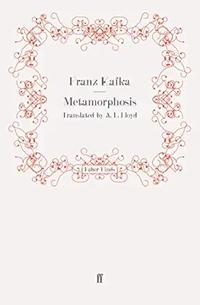
Get the Faber Lloyd translation of The Metamorphosis
Previously out of print for over sixty years! Republished in 2008/2009.
Available as a paperback (ISBN 9780571246663, 98 pages).
Who were Willa and Edwin Muir?
Willa Muir and her husband Edwin Muir were both Scottish writers and translators. Willa Muir wrote novels and essays, and Edwin wrote novels and poetry. Willa now gets most of the credit for their translations of Kafka.
World Literature Today: “Retranslating Kafka” by Michelle Johnson
“Willa Muir’s archive was especially moving—she clearly felt she had been elided from literary history and gets increasingly despondent in her journals about her legacy. She claimed, privately, that she in fact did most of the work on the Kafka translations but felt the literary world was too sexist to believe it.”
For more information, see their Wikipedia pages (Willa, Edwin) or the biography by Margery Palmer McCulloch, Edwin and Willa Muir: A Literary Marriage.
About the Muir translation of The Metamorphosis
Literary Hub: “The Case for Renaming Kafka’s Metamorphosis as The Transformation” by Mark Harman
“Although it is commonly assumed that the pioneering Muirs, who introduced most of Kafka’s works to English-speakers, were the first translators of Die Verwandlung, they were in fact preceded by A. L. Lloyd… who entitled the story The Metamorphosis in 1937. Twelve years later, however, the Muirs’ publishers Secker and Warburg billed their translation of Kafka’s stories as the ‘definitive edition’ on the cover of the book, and proclaimed on the flap that ‘The Metamorphosis (Parton Press, 1937) is now The Transformation.’ Yet in subsequent editions, the Muirs, or perhaps their publishers, rejected that suitably plain title and replaced it with the storied but off-key Metamorphosis.”
As far as I can tell, the first time the Muirs’ translation appeared in a collection was in 1948, in The Penal Colony: Stories and Short Pieces, published by Schocken Books.
Volumes from various publishers titled “The Complete Stories”, edited by Nahum N. Glatzer, contain the Schocken/Muir translations.
National Library of Scotland: “Willa and Edwin Muir bring Franz Kafka to the English speaking world”
“Today the Muir’s translations of Kafka are no longer regarded as the standard English language editions. Some see them as dated and flawed in their fidelity to the German text. This is as much due to the complex history of Kafka’s works as any failing on the part of Willa and Edwin.”
Literary Hub: “The Case for Renaming Kafka’s Metamorphosis as The Transformation” by Mark Harman
“[T]he influence of [Kafka’s] elegant and long-canonical early translators Willa and Edwin Muir still looms large.”
From Underwood’s Translator’s preface:
“It would be odd if I did not presume to have improved to some extent upon the way in which Willa and Edwin Muir rendered these stories, but no one will ever challenge the part they played in introducing Kafka’s work to the English-speaking world—certainly not one who has them to thank for his own first encounter with Kafka.”
LitHub: “The Special Challenges of Attempting a New Translation of Kafka” by Mark Harman
“Anyone who attempts a new translation of Kafka owes a great debt to the work of Willa and Edwin Muir, who created the remarkably elegant, and, for the better part of the twentieth-century, canonical English-language translations of Kafka. As first translators, the Muirs needed to introduce their unsettling author to English-speaking readers and creatively adapted some of Kafka’s stylistic idiosyncrasies. We latter-day translators of this now classic modern writer are perhaps a little freer to stretch English in our inevitably less than successful attempts to echo Kafka’s austere music, his singular voice, and his rhythmic accumulation of logically sequenced detail.”
The New Yorker: “The Impossibility of Translating Franz Kafka” by Cyntha Ozick
“At the time of his death, the bulk of his writing was still unpublished. His famous directive (famously unheeded) to Max Brod to destroy his manuscripts—they were to be ‘burned unread’—could not have foreseen their canonization, or the near canonization of their translators. For almost seventy years, the work of Willa and Edwin Muir, a Scottish couple self-taught in German, has represented Kafka in English; the mystical Kafka we are long familiar with—and whom the Muirs derived from Max Brod—reflects their voice and vision. It was they who gave us Amerika, The Trial, The Castle, and nine-tenths of the stories. And it is because the Muirs toiled to communicate the incommunicable that Kafka, even in English, stands indisputably among the few truly indelible writers of the twentieth century—those writers who have no literary progeny, who are sui generis and cannot be echoed or envied.”
The Guardian: “Kafka’s Metamorphosis and its mutations in translation” by WB Gooderham
“[T]he prose can seem a trifle stilted… and the dialogue antiquated.”
First sentence of the Muir translation of The Metamorphosis
As Gregor Samsa awoke one morning from uneasy dreams he found himself transformed in his bed into a gigantic insect.
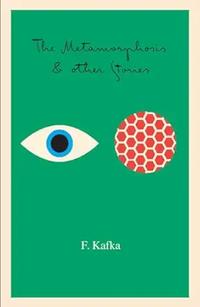
Get the Schocken Muir translation of The Transformation / The Metamorphosis
"The Metamorphosis and Other Stories" includes "Conversation with the Supplicant, Meditation, The Judgment, The Metamorphosis, A Country Doctor, In the Penal Colony, A Hunger Artist, and an Appendix in four parts.
Available as a paperback (ISBN 9780805210576, 320 pages).
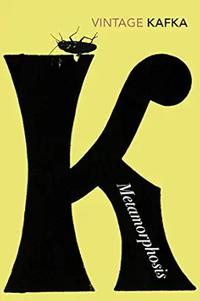
Get the Vintage Muir translation of The Transformation / The Metamorphosis
"Metamorphosis and Other Stories". Introduction by Adam Thirlwell. Also includes: The Great Wall of China, Investigations of a Dog, The Burrow, In the Penal Settlement, The Giant Mole.
Available as a paperback (ISBN 9780749399535, 240 pages).
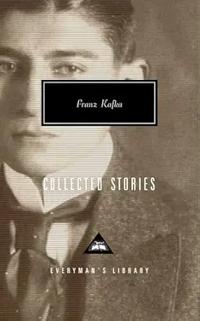
Get the Everyman's Library Muir translation of The Transformation / The Metamorphosis
Collected Stories of Franz Kafka. Contains: Meditation; The Judgment; The Stoker; The Metamorphosis; In the Penal Colony; A Country Doctor; A Hunger Artist; and "Stories Unpublished in Kafka's Lifetime". Introduction by Gabriel Josipovici. Also includes a note on the text, a select bibliography, and a chronology.
Available as a hardcover (ISBN 9780679423034, 568 pages).
Who is Stanley Corngold?
Stanley Alan Corngold is an American academic in German and comparative literature, and has published multiple works on Kafka.
>> Profile of Stanley Corngold at Princeton University
About the Corngold translation of The Metamorphosis
Note that the 2006 Norton Critical edition of Kafka’s Selected Stories translated and edited by Stanley Corngold (ISBN 9780393924794) does NOT contain The Metamorphosis. Corngold’s translation of The Metamorphosis was published as a separate Norton Critical edition, as shown below.
From the Preface by Stanley Corngold in the Modern Library edition:
“The translation is based on the authoritative text of Die Verwandlung prepared by Dr. Hans-Gerd Koch at the Research Center for German Exile Literature at the University of Wuppertal, in Germany. Dr. Koch, along with several colleagues, directed the publication of the so-called Manuscript Version of Kafka’s complete works; and he kindly made the text of The Metamorphosis available to me before it appeared in print.”
From the Introduction by Stanley Corngold in the Bantam edition:
“Kafka was an amateur of etymology and very likely aware of the original sense of those haunting ‘un-‘ words, ‘ungeheueres Ungeziefer’ (‘monstrous vermin’), into which Gregor is transformed. ‘Ungeheuer’ connotes the creature who has no place in the family; ‘Ungeziefer,’ the unclean animal unsuited for sacrifice, the creature without a place in God’s order. Hence, the apparent realism with which Kafka describes the vermin should not conjure for the reader an insect of some definite kind.”
The Guardian: “Kafka’s Metamorphosis and its mutations in translation” by WB Gooderham
“Corngold’s was not my favourite translation. In his introduction he states his intention as trying ‘to follow Kafka’s actual idiom’, which does not always equate with an easy read.”
From the preface by Stanley Corngold to the Norton Critical Edition (1996):
“’A real book,’ Kafka wrote, ‘must be the axe for the frozen sea in us,’ stressing the redemptive opportunity the shock might finally provide. It is to be hoped that the present translation of The Metamorphosis, which tries to follow Kafka’s actual idiom more closely than previous translations, produces something of this effect.”
First sentence of the Corngold translation of The Metamorphosis
When Gregor Samsa woke up one morning from unsettling dreams, he found himself changed in his bed into a monstrous vermin.
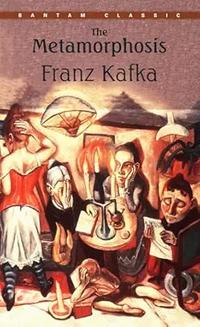
Get the Bantam Corngold translation of The Metamorphosis
Includes an introduction by Stanley Corngold, the text of the novel, a note on the text, explanatory endnotes, some documents, critical essays (by Wilhelm Emrich, Ralph Freedman, Edward Honig, Max Bense, Hellmuth Kaiser, Peter Dow Webster, Walter H. Sokel, Friedrich Beissner, and Helmut Richter), and a selected bibliography.
Available as a mass-market paperback (ISBN 9780553213690, 224 pages).
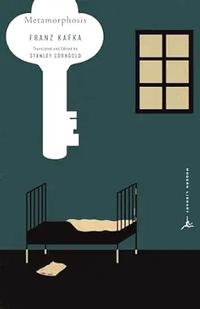
Get the Modern Library Corngold translation of The Metamorphosis
Contains a Preface and Introduction by Stanley Corngold, a chronology of Franz Kafka’s Life, the text of the novel, backgrounds (“From ‘Wedding Preparation sin the Country’” and “Letters and Diaries”), 7 critical essays (by W.H. Auden, Philip Roth, Walter Benjamin, Stanley Corngold, Iris Bruce, Eric Santner, and John Zilcosky), recommendations for further reading, and endnotes.
Available as a paperback (ISBN 9780812985146, 368 pages).
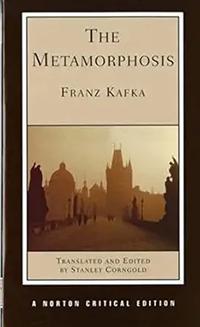
Get the Norton Corngold translation of The Metamorphosis
This is the old Norton Critical Edition and is out of print. Includes a list of illustrations, a preface, a translator's note, a chronology and a selected bibliography. Related texts and critical essays.
Available as a paperback (ISBN 9780393967975, 210 pages).
Who was J.A. Underwood?
Jim Underwood was a British translator who spoke French and German.
» The Guardian: Obituary of Jim Underwood
About the Underwood translation of The Metamorphosis
This translation uses British spelling.
This version gives me the impression of being out of print, but it’s not… it’s just… distributed more thoroughly in the UK than in the US.
From Underwood’s Translator’s preface:
“What I have to answer is the obvious question, ‘Why a new translation of Kafka (since all these stories are currently available in translations by Willa and Edwin Muir and some in translations by other people)?’ The answer is quite simply, in this instance, ‘Because a new translator was asked to do the job.’ […] A translator’s rule of thumb might be to seek to carry as much of the original across to the reader of the target language as is compatible with an equivalent level of readability. Try to carry too much and the vessel founders; jettison too much and you are cheating the consignee…. I make no apology for Anglicizing the first names Georg, Gregor, Grete, Josef, and Josefine (they are people, not foreigners) or for retaining most of Kafka’s occasionally idiosyncratic punctuation.”
Endorsed by Martin Amis on the front cover: “Acquire this necessary book.”
First sentence of the Underwood translation of The Metamorphosis
Gregory Samsa woke from uneasy dreams one morning to find himself changed into a giant bug.
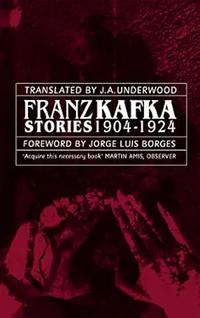
Get the Little Brown Underwood translation of The Metamorphosis
"Franz Kafka Stories 1904-1924". Foreword by Jorge Luis Borges. Includes a translator's preface. Also includes Looking to See, The Judgement, The Stoker, In the Penal Colony, A Country Doctor, and A Fasting-Artist.
Available as a paperback (ISBN 9780349106595, 271 pages).
Who was Malcolm Pasley?
Sir John Malcolm Sabine Pasley was a British scholar of German literature known for his work on Kafka’s writings at Oxford.
Penguin’s bio in his edition says: “Malcolm Pasley was born in 1926 and educated at Sherborne School and Trinity College, Oxford. He is an Emeritus Fellow of Magdalen College, Oxford, where he was Tutor in German. As a member of the board entrusted with the text-critical edition of Kafka’s works, diaries and letters, he has edited The Castle (1982), The Trial (1990) and the travel-diaries in the volume Diaries (1990). His other recent publications on Kafka include Max Brod / Franz Kafka: A Friendship (two volumes, 1987 and 1989).”
» British Academy: Obituary of Malcolm Pasley
About the Pasley translation of The Metamorphosis
This translation uses British spelling.
Penguin says, regarding The Great Wall of China and Other Short Works, translated and edited by Malcolm Pasley, published posthumously: “Malcolm Pasley’s translations are distinctive in that they illuminate Kafka’s life as well as his art by presenting the works in the sequence in which they were written. Unlike other editions popularly available, this one has been prepared directly from the author’s manuscripts. This volume contains the major short works left by Kafka, including Blumfeld, an Elderly Bachelor, The Great Wall of China and Investigations of a Dog, together with The Collected Aphorisms and He: Aphorisms from the 1920 Diary.”
First sentence of the Pasley translation of The Metamorphosis
When Gregor Samsa awoke one morning from troubled dreams he found himself transformed in his bed into a monstrous insect.
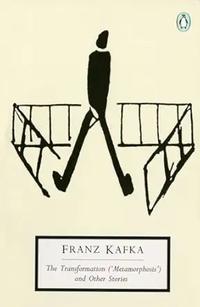
Get the Penguin Pasley translation of The Transformation / The Metamorphosis
"The Transformation (Metamorphosis) and Other Stories: Works Published During Kafka's Lifetime". Contains an editor's preface and notes. Includes The Aeroplanes at Brescia, Meditation, The Judgment, The Stoker, In the Penal Colony, A Country Doctor, The Coal-Scuttle Rider, A Fasting-Artist. Out of print.
Available as a paperback (ISBN 9780140184785, 256 pages).
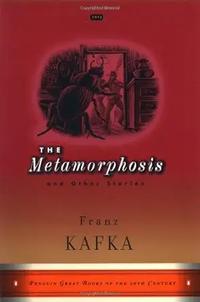
Get the Penguin Pasley translation of The Transformation / The Metamorphosis
"The Metamorphosis and Other Stories". Contains Meditation, The Judgment, The Stoker, The Metamorphosis, In the Penal Colony, A Country Doctor, The Coal-Scuttle Rider, A Fasting-Artist. Out of print.
Available as a paperback (ISBN 9780140283365, 224 pages).
Who was Joachim Neugroschel?
Joachim Neugroschel was a prolific literary translator who translated works by Kafka, Thomas Mann, Hermann Hesse, Marcel Proust, Alexandre Dumas, and others.
About the Neugroschel translation of The Metamorphosis
Previously published as The Metamorphosis, In the Penal Colony, and Other Stories: The Great Short Works of Franz Kafka.
Studies in Short Fiction: “Review of The Metamorphosis and Other Stories” by Mark A. Bernheim
“[A] noted translator of Yiddish and other Jewish literature, Joachim Neugroschel, succeeds in focusing on Kafka’s idiosyncratic Prague German of the early twentieth century to put the short works in the context of a vanished cultural world. Neugroschel is himself very famous for his work with mystical Jewish literature and folklore, and is one of the leading experts in east European Jewish culture.”
Eclectica: “An Interview with Joachim Neugroschel” by Elizabeth P. Glixman
“EG: What if Kafka was around today and he knew English, what would he think of your translation of Metamorphosis? JN: He would find it excellent. I’ve captured the flavor and the quivering of his voice. He would be very grateful to me.” Well, okay then.
The Guardian: “Kafka’s Metamorphosis and its mutations in translation” by WB Gooderham
“[O]ne of the most readable translations.”
First sentence of the Neugroschel translation of The Metamorphosis
One morning, upon awakening from agitated dreams, Gregor Samsa found himself, in his bed. transformed into a monstrous vermin.
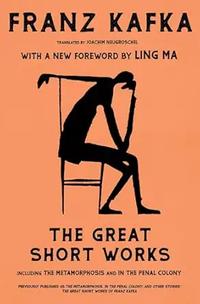
Get the Schocken Neugroschel translation of The Metamorphosis
"The Great Short Works" (previously published as "The Metamorphosis, In The Penal Colony, and Other Stories: The Great Short Works of Franz Kafka"). New foreword by Ling Ma. Introduction by Joachim Neugroschel. Also includes: The Early Stories (Conversation with the Worshiper, Conversation with the Drunk, Great Noise), Contemplation, The Judgment, The Stoker, In the Penal Colony, A Country Doctor, First Sorrow, and The Hunger Artist.
Available as a paperback (ISBN 9780684800707, 352 pages).
Who is Stanley Appelbaum?
The standard publisher bio included in product descriptions of some Dover books says:
“Stanley Appelbaum served for decades as Dover’s Editor in Chief until his retirement in 1996. He continues to work as a selector, compiler, editor, and translator of literature in a remarkable range of languages that includes Spanish, Italian, French, German, and Russian.”
About the Appelbaum translation of The Metamorphosis
From the Note to the Appelbaum translation:
“These new translations, in idiomatic modern American English, attempt to be more complete and correct than the old British versions, in which outright errors sometimes cloud the meaning to a serious degree, slight omissions occur, idioms are misunderstood, and Kafka’s humor is often negated by pallid paraphrases of wording that is very sprightly in the original German.”
First sentence of the Appelbaum translation of The Metamorphosis
When Gregor Samsa awoke from troubled dreams one morning, he found that he had been transformed in his bed into an enormous bug.
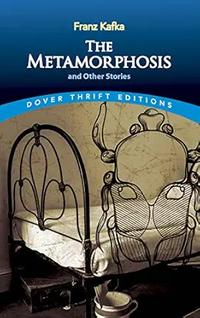
Get the Dover Appelbaum translation of The Metamorphosis
"The Metamorphosis and Other Stories" also includes The Judgment, In the Penal Colony, A Country Doctor, and A Report to an Academy. Ebook also available (ISBN 9780486132631).
Available as a paperback (ISBN 9780486290300, 96 pages).
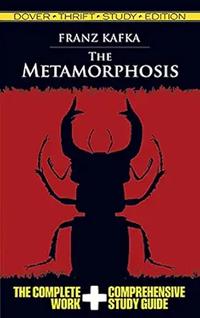
Get the Dover Thrift Study Edition Appelbaum translation of The Metamorphosis
Contains the novel's complete and unabridged text, plus a comprehensive study guide that includes: chapter-by-chapter summaries, explanations and discussions of the plot, question-and-answer sections, a kafka biography, a list of characters and more. Ebook also available (ISBN 9780486112688).
Available as a paperback (ISBN 9780486475714, 128 pages).
Who is Donna Freed?
Donna Freed is an American writer and translator.
» Biography of Donna Freed at Muswell Press
She is the author of Duplicity: My Mothers’ Secrets:
“When her adoptive mother died in 2009 Donna Freed set out to track down her birth mother. What she discovered was truly shocking, she was the daughter of a pair of infamous con artists, at the heart of one of the biggest true crime stories to grip the USA in the 1960s.”
About the Freed translation of The Metamorphosis
Sorry, information is scarce for this out-of-print edition. If you have a copy, let us know your thoughts in the comments!
First sentence of the Freed translation of The Metamorphosis
As Gregor Samsa awoke from unsettling dreams one morning, he found himself transformed in his bed into a monstrous vermin.
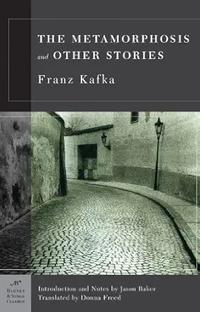
Get the Barnes & Noble Freed translation of The Metamorphosis
"The Metamorphosis and Other Stories" also includes The Judgment, The Stoker, A Country Doctor, In the Penal Colony, A Hunger Artist, An Old Leave, A message from the Emperor, Before the Law, Josephine the Singer or the Mouse People. Includes an introduction by Jason Baker and an afterword by Donna Freed. Out of print.
Available as a paperback (ISBN 9781593080297, 224 pages).
Who is Ian Johnston?
Ian Courtenay Johnston is a retired professor, author, and translator who has translated from Greek, Latin, German, and French into English. See his website for a list of free resources he created for teachers and students.
About the Johnston translation of The Metamorphosis
This translation uses British spelling.
None of the English translations of The Metamorphosis are old enough to have passed naturally into the public domain. However, Ian Johnston apparently released his 1999 translation online (which is not the same as releasing it into the public domain), with the result that, despite his copyright notice, which insists that commercial use requires written permission from him, you can throw a rock in any direction and hit five different versions of his translation for sale. Versions from a couple of the more reputable publishers are listed below.
» Read The Metamorphosis, translated by Ian Johnston, for free at Ian Johnston’s website.
First sentence of the Johnston translation of The Metamorphosis
One morning, as Gregor Samsa was waking up from anxious dreams, he discovered that in bed he had been changed into a monstrous verminous bug.
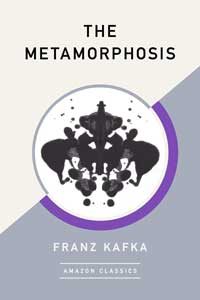

Get the Amazon Classics Johnston translation of The Metamorphosis
Paperback and audio also available.
Available as an ebook.
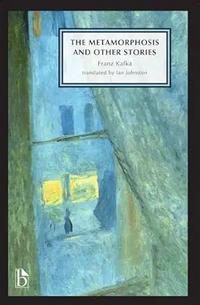
Get the Broadview Press Johnston translation of The Metamorphosis
"The Metamorphosis and Other Stories" also contains Before the Law, A Report for an Academy, An Imperial Message, In the Penal Colony, A Hunger Artist. This version includes acknowledgments, an introduction by Paul Johnson Byrne, and four appendixes containing 12 texts for context. Ebook also available (ISBN 9781770485327).
Available as a paperback (ISBN 9781554812240, 168 pages).
Get the Original Johnston translation of The Metamorphosis
The Metamorphosis
Available as a webpage.
Who is David Wyllie?
David Wyllie seems to be a self-employed British translator, offering translation to English from Czech, French, and German.
About the Wyllie translation of The Metamorphosis
This translation uses British spelling.
This is a copyrighted text that’s being treated somewhat as if it’s in the public domain.
First sentence of the Wyllie translation of The Metamorphosis
One morning, when Gregor Samsa woke from troubled dreams, he found himself transformed in his bed into a horrible vermin.
Get the Project Gutenberg Wyllie translation of Metamorphosis
This text is freely available, but actually also still under copyright. (???)
Available as an ebook.
Who is Richard Stokes?
He is a professor at the Royal Academy of Music in London and an expert on German songs. He has also translated The Trial and other Kafka writings for Alma.
About the Stokes translation of The Metamorphosis
Sorry, information is scarce for this out-of-print edition. If you have a copy, let us know your thoughts in the comments!
First sentence of the Stokes translation of The Metamorphosis
When Gregor Samsa woke one morning from uneasy dreams he found himself transformed in his bed into a monstrous insect.
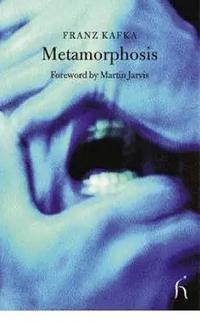
Get the Hesperus Stokes translation of Metamorphosis
Foreword by Martin Jarvis. Out of print.
Available as a paperback (ISBN 9781843910145, 112 pages).
About the Roberts translation of The Metamorphosis
This is an educational edition in the Prestwick house “Literary Touchstone Classic” series.
» See sample pages showcasing study aids.
From the note by M.A. Roberts:
“This new translation of The Metamorphosis relies on the original German text, published in 1915 by Kurt Wolff. We felt that a new translation was necessary because various English versions we examined seemed to take liberties with the text, were too simply written, or lacked Kafka’s offbeat humor, most of which actually does translate well. Additionally, many of Kafka’s sentences tend to be quite long, with convoluted syntax and punctuation. To remain faithful to the German text, this Prestwick House translation makes every effort to follow Kafka’s actual style and word choice as closely as possible, while still creating an artful English rendition.”
First sentence of the Roberts translation of The Metamorphosis
As Gregor Samsa awoke one morning out of restless dreams, he found himself in bed, transformed into a gargantuan pest.
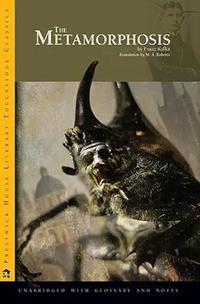
Get the Prestwick House Roberts translation of The Metamorphosis
Contains notes, "reading pointers for sharper insights", a glossary, and vocabulary. There are marginal explanatory notes.
Available as a paperback (ISBN 9781580495813, 80 pages).
Who is Michael Hofmann?
Michael Hofmann is an Anglo-German writer, poet, translator, literary critic, and professor.
» University of Florida: Michael Hofmann
BOMB: “Deep language, the ‘silver’ figures of literature, and reader as pit canary” by Keenan McCracken
McCracken says Hofmann is “the preeminent translator of German literature, not to mention a brilliant critic and poet.” Hofmann: “It’s like paper, scissors, stone…. Poetry is primary—it’s what I did first. But translation bulks up the oeuvre like nothing else! And it’s what I’m mostly known for…. Meanwhile, reviewing is the socio-historical thing, the public thing…. So all three have something. It’s the most wonderful trinity.”
Los Angeles Review of Books: “Multilingual Wordsmiths, Part 2: Michael Hofmann in an Age of Increasing Insufficiency” by Liesl Schillinger
Hofmann: “I always felt unfairly privileged as a translator, because people knew me either from the newspapers as a reviewer or through my poems. I think I tend to be noticed a bit more than if I was just Joe-translator, and that makes me a feel a little bit guilty.”
About the Hofmann translation of The Metamorphosis
This translation uses British spelling.
The Guardian: “Interpreting the nightmare: Review of Metamorphosis and Other Stories” by Nicholas Lezard
“Hofmann is very good at his job – conscientiously reproducing the ‘dry and papery’ version of the language that is Prague German, preferring to risk sounding ever so slightly archaic at times rather than introduce modish anachronisms. The risk is small, for Kafka was, deliberately and with supreme and typical diffidence, not a stylist; in the face of what he wrote about, a style would have been a distraction, even an annulment.”
The Guardian: “Interview with Michael Hofmann” by Philip Oltermann
“‘My translations are more egotistical than the run of translations,’ [Hofmann] says. ‘I sort of fear saying this, but these things are also about me. Or at least in a technical sense they are about me, because however ideally self-effacing the translator is, the words are always going to be supplied by them anyway, so why not it be me? Why not supply dirty words that interest me?’ One of his guiding principles for translating, he says, is to avoid the obvious word, even if it is the literal equivalent of the original….In the second paragraph of Hofmann’s version of Metamorphosis, Gregor Samsa doesn’t ask ‘What happened to me?’ (Was ist mit mir geschehen?), but ‘What’s the matter with me?’. He liked the phrase, he says, because it sounds like someone having trouble getting up after a heavy night.’ ‘Nobody will notice, but you have taken a step back from the original. You have given yourself a little bit of self-esteem, a little bit of originality, a little bit of boldness. Then the whole thing will appear automotive: look, it’s running on English rather than limping after the German.’”
BOMB: “Deep language, the ‘silver’ figures of literature, and reader as pit canary” by Keenan McCracken
Hofmann says: “I started taking on translations to eke out the weeks and months of no poems. Then it very quickly got away from me. I originally proposed to do maybe a book or two a year. Very soon, I was doing much more. And then, who am I to do Kafka? A rude Russian once said to me, ‘poor Kafka.’ Actually, lucky Kafka, but he wasn’t to know that!” On the act of translating a book: “Faithful is a pretense at virtue. It’s like producing your passport at a frontier. Ideally you wouldn’t be there at all, but at least you’re able to identify yourself and say what the purpose of your visit is. I think ‘faithful’ is as overrated a category with regard to translation as ‘mistake’ is. Translating isn’t really about either of those.” On the supposed existence of synonyms: “An eccentric schoolmaster told us there were no synonyms in English except ‘gorse’ and ‘furze.’ In a similar way, I could stand here and tell you there are no equivalents among languages, except for numbers, and maybe not even those. Is ‘vingt-et-un’ the same as ‘twenty-one’? Or what about ‘quatre-vingt-dix’ for ‘ninety’? Only up to a point. Their composition, their associations, are different.”
Los Angeles Review of Books: “Multilingual Wordsmiths, Part 2: Michael Hofmann in an Age of Increasing Insufficiency” by Liesl Schillinger
“Q: Have you translated works that have previous translations, and if so, do you have any firm policy on looking at prior translations? A: Yes — that is about as exposed as you can feel in literature. It is almost impossible that you would know a book and love it, and then a new translation would come along, and you would think, ‘Oh, this is even better!’ That must be extremely rare. It is really difficult offering a new translation; there are readers like you and me who are just always going to prefer Constance Garnett. When I have retranslated, it’s either been work I didn’t know had been translated before, like Koeppen’s Death in Rome; or it’s been Kafka, of whom there are many other versions.” “Q: What is the difference between a poor translation and a good one? A: A poor translation reads like a dead text — a foreign, alien text. A good translation provides an experience; it is alive, it quivers. That is the goal I’ve set myself.” “Q: What effect would you say online translating engines have on translation? A: Hurting, I think. I guess I’m a linguistic conservative, and I feel most things relating to language and expression are getting worse, and I think machines and gadgets are not helping. I think one is a craftsman, and a person does better work than any machine.”
Asymptote: “An interview with Michael Hofmann” by Henry Ace Knight
“I think I was always pretty selective. Whatever the contracts say, I like to think I’m not ‘labor for hire.’ I never learned to park my opinions outside like a pair of shoes—I kept my likes and dislikes. There are things that interest me, and things that interest me less. To translate a book is an immense effort of affection…. I hardly ever think about readers, only about books; if something’s in a book it will sooner or later be found by someone. That’s as far as I’ll go. If you see the virtue in a piece of writing, and the virtue is really there as described, then surely everyone can be made to see it eventually. Perhaps Americans will one day discover the pleasures of understatement.”
From the introduction by Michael Hofmann:
“It is German that made possible his effects and set his limits…. It is a hard thing to do what I’ve had to do here, to translate with an author and against a language. I have tried to stop myself from ‘inhabiting’ Kafka, not least for my own peace of mind; at the same time, I didn’t want to signal too much ‘strangeness’. I want the reader to have a sense of his writing as something perfectly ordinary, and even in a sense, organically grown. It is related, finally, that when some of these stories were read aloud, people – including Kafka, reading them – fell about laughing. He is not sombre, not grim, but often very funny. I would be glad if some sense of that were to come through, even in English.”
The Guardian: “Kafka’s Metamorphosis and its mutations in translation” by WB Gooderham
“While Kafka purists may recoil in horror at the insect-specific Gregor [i.e., a cockroach], more troubling for me are slangy colloquialisms.”
First sentence of the Hofmann translation of The Metamorphosis
When Gregor Samsa awoke one morning from troubled dreams, he found himself changed into a monstrous cockroach in his bed.
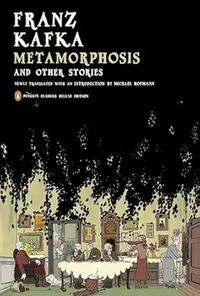
Get the Penguin Classics Deluxe Hofmann translation of Metamorphosis
"Metamorphosis and Other Stories" also includes: Meditation; The Judgement; The Stoker; The Aeroplanes at Brescia. Introduction by Michael Hofmann
Available as a paperback (ISBN 9780143105244, 320 pages).
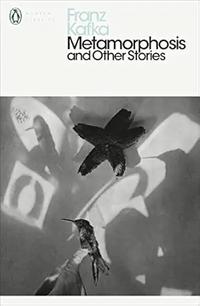
Get the Penguin Modern Classics Hofmann translation of Metamorphosis
"Metamorphosis and Other Stories" also includes Meditation, The Judgment, The Stoker, The Aeroplanes at Brescia.
Available as a paperback (ISBN 9780241436240, 272 pages).
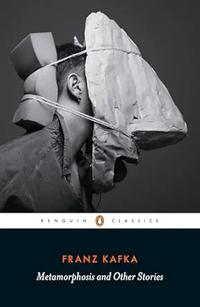
Get the Penguin Classics Hofmann translation of Metamorphosis
"Metamorphosis and Other Stories" also includes Contemplation, The Judgment, The Stoker, In The Penal Colony, A Country Doctor, A Hunger-Artist. Includes an introduction by Hofmann, a note on the texts, and an appendix.
Available as a paperback (ISBN 9780241372555, 272 pages).
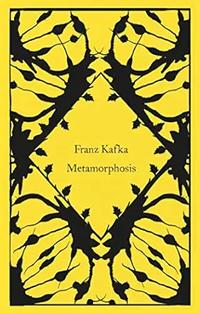
Get the Little Clothbound Classics Hofmann translation of Metamorphosis
Small size! 4.72 x 0.75 x 6.57 inches. Cover by Coralie Bickford-Smith.
Available as a hardcover (ISBN 9780241573730, 144 pages).
Who was Joyce Crick?
Joyce Crick was a British scholar and translator of German literature who taught at University College London. She translated Freud’s Interpretations of Dreams and fairytales by the Brothers Grimm for Oxford University Press.
» Guardian obituary of Joyce Crick
About the Crick translation of The Metamorphosis
This translation uses British spelling.
From Note on the Translation by Joyce Crick
“For readers of a classic written in a language not their own, the translator has always got there before them, filtering, selecting, dithering, finally having to decide — because deciding is what the job consists in — between seemingly fine options, when better judgement tells one that none of them, in principle and by the facts of the case, will be the right, true one…. I made one decision very early: to try to render Kafka’s exceedingly complex syntax as closely as possible. This often meant going further than English syntax can naturally accommodate…. The problem for the translator [with regard to vocabulary] is one of self-abnegation, of having to choose the neutral word and resist the temptation of gratuitous colour, especially when Kafka’s situations are often so absurd as to seem to invite it: the family hullabaloo when Gregor breaks out is more properly just a commotion, and the literary pleasure not one of expressiveness but of ironical contrast between sober style and wild event.”
From the Oxford Classics Note on the Translation by Joyce Crick
“[Kafka’s] texts above all challenge the reader to a search for meaning, but at the same time are so constructed as to frustrate any single interpretation, inviting several, often incompatible, often only briefly sustainable readings, while the translator’s decision for one fixed option can close off the possibility of all the others. So a note on the translation in this case turns into a note on the attempt to deal with indeterminacies, mutually exclusive alternatives, intractabilities.”
The Guardian: “Kafka’s Metamorphosis and its mutations in translation” by WB Gooderham
“This edition contains a fascinating introduction by Ritchie Robertson, offering Buddhist, Freudian and expressionist readings of the text.”
Society of Young Publishers: “Oxford Reads Kafka: A Metamorphosis in Your Hands”
“2024 isn’t just any year for Franz Kafka fans. The literary giant is being celebrated in grand style. The hundred-year anniversary of his untimely death has been embraced with particular fervour by the University of Oxford…. the limited edition [Oxford Reads] re-imprint of Kafka’s The Metamorphosis [translated by Joyce Crick] has stolen the show…. What truly sets this edition apart is its role in fostering a broader engagement with Kafka’s work. Every Oxford student, both undergraduate and postgraduate, and members of university staff, received a copy…. The imprint was not limited to the university’s walls. Copies were distributed to schools and libraries across Oxfordshire…. In this special but unifying publication, we can see how a book excites a community, how a limited edition imprint becomes a collective and collaborative exploration.”
First sentence of the Crick translation of The Metamorphosis
As Gregor Samsa woke one morning from uneasy dreams, he found himself transformed into some kind of monstrous vermin.
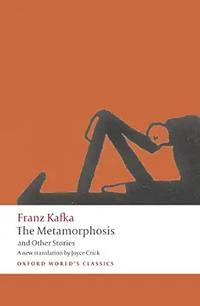
Get the Oxford Crick translation of The Metamorphosis
"The Metamorphosis and Other Stories." With an introduction and explanatory endnotes by Ritchie Robertson. Includes a biographical preface, a note on the text, a note on the translation, a select bibliography, and a chronology. Also includes Meditation, The Judgment, In The Penal Colony, and Letter to His Father.
Available as a paperback (ISBN 9780199238552, 208 pages).
Who is William Aaltonen?
William Aaltonen is also known as Will Aaltonen Pearson, William Pearson, and Will Pearson. He is a ghostwriter, television writer and journalist, and translator.
» The Official Website of Author William Pearson
About the Aaltonen translation of The Metamorphosis
This translation uses British spelling.
From the introduction by William Aaltonen:
“Any translator coming to Kafka’s work sees at once that it is written in clear and concise language whose economy is a clever artistic counterpoint to the subtlety of its underlying themes. Sticking to this plain elegance without taking too many liberties with the original has been the overriding objective of this translation, but the close reader will find that there are a few well-intentioned minor departures.”
First sentence of the Aaltonen translation of The Metamorphosis
When Gregor Samsa woke one morning from troubled dreams, he found that he had been transformed – in his bed – into a kind of giant bug.
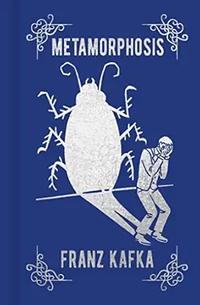
Get the Arcturus Gilded Pocket Edition Aaltonen translation of Metamorphosis
Includes an introduction.
Available as a hardcover (ISBN 9781398830370, 96 pages).
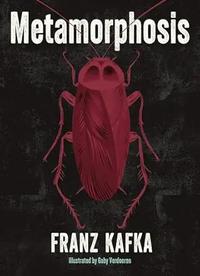
Get the Arcturus Illustrated Classics Aaltonen translation of Metamorphosis
Includes full-color illustrations by Gaby Verdooren.
Available as a hardcover (ISBN 9781398843547, 96 pages).
Who is/was John R. Williams?
John R. Williams, a British literary academic, is known for his work on Goethe.
About the Williams translation of The Metamorphosis
The Guardian: “Kafka’s Metamorphosis and its mutations in translation” by WB Gooderham
“Williams is a taker-outer, unafraid to break up some of Kafka’s long, unwieldy sentences into shorter, more manageable units where necessary.”
First sentence of the Williams translation of The Metamorphosis
One morning Gregor Samsa woke in his bed from uneasy dreams and found he had turned into a huge verminous insect.
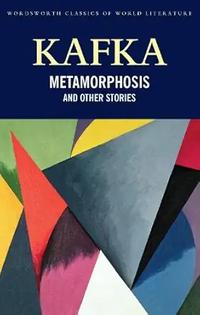
Get the Wordsworth Williams translation of Metamorphosis
"The Metamorphosis & Other Stories". Also includes In the Penal Colony, The Judgement, Letter to My Father, A Hybrid, A Message from the Emperor, On Metaphors, A Commentary, A Little Fable. Includes an introduction by John R. Williams, suggestions for further reading, and endnotes. Published in 2011.
Available as a paperback (ISBN 9781840226720, 158 pages).
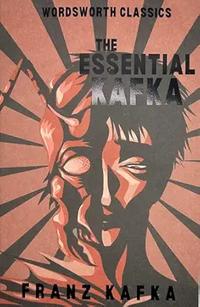
Get the Wordsworth Williams translation of Metamorphosis
"The Essential Kafka". Expansion of earlier Wordsworth collection. Published in 2014. Contains an introduction by John R. Williams, translator's note, suggestions for further reading, The Trial, The Castle, Metamorphosis [subtitled the Transformation of Gregor Samsa], In the Penal Colony, The judgment, Letter to my Father, A Hybrid, A Message from the Emperor, On Metaphors, A Commentary, A Little Fable, explanatory endnotes.
Available as a paperback (ISBN 9781840227260, 640 pages).
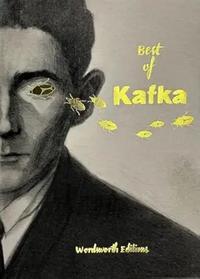
Get the Wordsworth Collectors Williams translation of Metamorphosis
"Best of Kafka". Published in 2024. Seems to contain the same content as Wordsworth's "Essential Kafka", based on a customer's photos posted on Amazon; the title page even says "Essential Kafka". There are a lot more pages, though…
Available as a hardcover (ISBN 9781840228434, 976 pages).
Who is Christopher Moncrieff?
Christopher Moncrieff is a poet and a translator of French, German, and Romanian literature. He has also translated Madame Bovary by Gustave Flaubert.
» Website of Christopher Moncrieff
About the Moncrieff translation of The Metamorphosis
This translation uses British spelling.
The Guardian: “Kafka’s Metamorphosis and its mutations in translation” by WB Gooderham
“No introduction – which is a pity as this is by far the most idiosyncratic translation and it would have been interesting to know the reasoning behind some of Moncrieff’s more florid decisions.”
Wonderful Words 101: “Review of The Metamorphosis and Other Stories”
“I consider this version of Kafka’s works to be more accessible in terms of language; Christopher Moncrieff has done a great job in using contemporary words and accessible sentence structures compared to the other translations (there are still a number of convoluted passages, but that is due to Kafka’s original detailed, elaborate writing).”
First sentence of the Moncrieff translation of The Metamorphosis
One morning, as Gregor Samsa woke from a fitful, dream-filled sleep, he found that he had changed into an enormous bedbug.
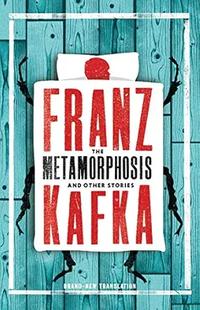
Get the Alma Moncrieff translation of The Metamorphosis
"The Metamorphosis and Other Stories" includes ‘Children on a Country Road’, ‘Exposing a Confidence Trickster’, ‘An Impromptu Walk’, ‘Resolutions’, ‘A Trip to the Mountains’, ‘The Plight of a Bachelor’, ‘The Shopkeeper’, ‘Gazing Distractedly out of the Window’, ‘Walking Home’, ‘Men Running Past’, ‘The Passenger’, ‘Dresses’, ‘Mutual Rejection’, ‘For the Consideration of Gentleman Jockeys’, ‘A Window onto the Street’, ‘Oh to Be a Red Indian’, ‘Trees’, ‘An Unhappy Being’, ‘The Sentence’, ‘The Metamorphosis’, ‘The Penal Colony’, ‘The New Barrister’, ‘A Country Doctor’, ‘Up in the Gods’, ‘An Old Manuscript’, ‘The Door of Justice’, ‘Jackals and Arabs’, ‘A Visit to the Mine’, ‘The Next Village’, ‘A Message from the Emperor’, ‘The Concerns of a Father’, ‘Eleven Sons’, ‘Fratricide’, ‘A Dream’, ‘A Report for and Academy’, ‘First Sorrow’, ‘The Little Woman’, ‘The Hunger Artist’, ‘Josephine the Singer or the Mousefolk’, ‘The Great Wall of China’, ‘The Bridge’, ‘The Truth about Sancho Panza’, ‘The City Coat of Arms’, ‘Poseidon’, ‘The Silence of the Sirens’. Also contains a note on the text.
Available as a paperback (ISBN 9781847493521, 224 pages).
Who is Susan Bernofsky?
Susan Bernofsky is an American author, a professor at Columbia University, and a translator of works in German, including a forthcoming translation of The Magic Mountain by Thomas Mann.
» Translationista (a blog by Susan Bernofsky)
» Translationista on Twitter/X
Pew Center: “Susan Bernofsky on Artists as Translators”
“Our modern notion of what a literary translation is (i.e. a piece of writing closely corresponding in content, style, structure, tone, etc. to its original) may seem to us intuitive and obvious, but in fact this model isn’t much more than 200 years old in literary circles. While an insistence on lexical accuracy was always a key feature of Bible translation, it was long the norm in the case of literary texts for authors to translate the work of other authors with an extremely free hand…. Nowadays we translate quite differently, at least much of the time, or at least we try to. But the possibility of the existence of a truly ‘faithful, accurate’ translation tends to be much overstated. Every act of translation is of necessity an interpretative act; every translator worth her salt is by definition a writer, and translations bear the mark of their translators to a far greater extent than the layperson might assume.”
There are so many interviews with Bernofsky!
- https://www.antenna.works/you-are-the-conduit-to-the-book-an-interview-with-translator-susan-bernofsky/
- https://www.catranslation.org/feature/an-interview-with-susan-bernofsky/
- https://cupblog.org/2013/05/09/interview-with-susan-bernofsky/
- https://ndpublishing.wordpress.com/2009/10/01/interview-with-new-directions-translator-susan-bernofsky/
- http://thefanzine.com/queen-of-translation-the-susan-bernofsky-interview/
- https://www.rochester.edu/College/translation/threepercent/2009/07/10/interview-with-susan-bernofsky/
- https://worldliteraturetoday.org/sites/default/files/2013/July/translationinterviewfullfinal2.pdf
- https://www.full-stop.net/2014/05/14/interviews/the-editors/susan-bernofsky/
- https://wordswithoutborders.org/read/article/2013-04/interview-with-susan-bernofsky/
About the Bernofsky translation of The Metamorphosis
Don’t read the introduction by David Cronenberg, director of The Fly, before reading the story.
From the preface to the Norton Critical Edition:
“This edition of The Metamorphosis attempts to make sense of Kafka’s story as well as to acknowledge the impossibility of ever completely succeeding. Susan Bernofsky’s new translation gives us a more contemporary, American sense of Kafka’s text than the version that first brought it to English-speaking readers and remained in copyright for over six decades. Her version, like any translation, is also an interpretation, carried out rigorously through diction, syntax, rhythm, and sound.”
New Yorker: “On Translating Kafka’s The Metamorphosis” by Susan Bernofsky
The New Yorker essay was adapted from the translator’s afterword. “In my translation, Gregor is transformed into ‘some sort of monstrous insect’ with ‘some sort of’ added to blur the borders of the somewhat too specific ‘insect’; I think Kafka wanted us to see Gregor’s new body and condition with the same hazy focus with which Gregor himself discovers them.”
Translationista: “Translating Kafka’s Metamorphosis” by Susan Bernofsky
“Kafka’s German is stunning. It’s deceptively straightforward, and this is how he manages to pull off the feat of making utterly implausible occurrences (young man wakes up one morning as a giant bug – WTF?) seem somehow possible and real, at least psychologically real. He’s a master of suspended disbelief…. Originally my translation was commissioned as part of a new Norton Critical Edition of The Metamorphosis designed for classroom use, but since it takes a while to put together the accompanying articles for an edition of this sort (Kafka scholar Mark Anderson’s doing that), and the translation was meanwhile finished, Norton decided to publish the novella as a stand-alone volume first.”
The Guardian: “Kafka’s Metamorphosis and its mutations in translation” by WB Gooderham
“[O]ccasionally a tad verbose… [but] eminently readable.”
The Hedgehog Review: “The Kafka Challenge: Translating the Inimitable” by Paul Reitter
Compares Bernofsky’s translation with Harman’s.
World Literature Today: “Book review of The Metamorphosis by Franz Kafka” by George Henson
“Occasional clumsiness is only one of this translation’s peccadilloes. At the end of the day, translation is about making choices, and at times Bernofsky’s choices are anachronistic…. While Bernofsky’s prose can be a pleasure to read, the liberties she sometimes takes with her translations distract from its beauty.”
The Wichita Eagle: “New translation of ‘The Metamorphosis’ shows why we need Franz Kafka” by Arlice Davenport
“Susan Bernofsky’s new, exacting translation shows just how ingenious the structure of the book is, and just how difficult it is to render Kafka’s German into English. She succeeds brilliantly, however, with a vivid fidelity to Kafka’s vision, driving home the way he makes us at once sympathetic to his anti-hero, Gregor Samsa, and repulsed by him.”
The Stranger: “Now Less Kafkaesque: A New Translation Gives Voice to Kafka’s Cry for Help” by Paul Constant
“Susan Bernofsky has, in 118 pages, made [Kafka] feel as approachable as he’s ever felt…. Bernofsky’s translation [interprets] The Metamorphosis as the story of depression. More, it’s a personal story of depression, told by a gifted author who is heartbreakingly familiar with depression but is from a time that doesn’t have the vocabulary to recognize depression as a genuine illness. This isn’t a unique reading—it’s generally accepted, now, that Kafka suffered from clinical depression.”
Orion: “‘The Metamorphosis’ Transforms with This Charming Translation” by Sumnath Prabhaker
“Susan Bernofsky: Kafka sees Gregor Samsa as a stand-in for himself (for his love-terror-hate relationship with his father, for his own self-loathing)… Ungeziefer is a horrible insult to throw at a human being, and to that extent, “cockroach” isn’t the worst equivalent. Still, Kafka could have specifically called Gregor a cockroach in German, but he chose not to.”
Bookforum: “Review of The Metamorphosis” by Andrew Hulktrans
“This welcome new edition of The Metamorphosis was translated by Susan Bernofsky in a smoother, less Germanic, more contemporary voice than the Muir version most Anglophone readers remember from school, and is introduced by the master of biological horror, director David Cronenberg.”
The Rumpus Interview with Gregory Rabassa by Susan Bernofsky
Bernofsky: So since you know German, you can probably tell me how to translate the first sentence of Kafka, which I’m having trouble with at the moment.
Rabassa: Oh that’s the famous: “Als Gregor Samsa…”
Bernofsky: “…eines Morgens aus unruhigen Träumen erwachte, fand er sich in seinem Bett zu einem ungeheueren Ungeziefer verwandelt.” I’m having a heck of a time with that.
Rabassa: Well don’t say “cockroach.” New Yorkers all say he’s a giant cockroach because that’s the insect of record in New York. It’s a monstrous vermin, but we don’t use vermin in that kind of way.
Bernofsky: No. I need this nonexistent word in English.
Rabassa: You maybe have to work in the slang. When you call somebody a vermin, it’s “you cockroach,” but it can’t be “cockroach”—that’s too specific.
Bernofsky: My fallback is “insect,” but it’s certainly not a perfect solution.
Rabassa: No, it has to have a negative, disgusting touch. If only it were an animal, it would be swine, but the German like swine so…
The inclusion of Bernofsky’s name on the spine of the book beside Kafka’s launched an interesting Reddit thread about whether translators are sufficiently recognized for their work.
First sentence of the Bernofsky translation of The Metamorphosis
When Gregor Samsa woke one morning from troubled dreams, he found himself transformed right there in his bed into some sort of monstrous insect.
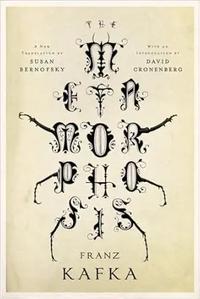
Get the Norton Bernofsky translation of The Metamorphosis
Introduction by David Cronenberg. Afterword by Susan Bernofsky.
Available as a paperback (ISBN 9780393347098, 128 pages).
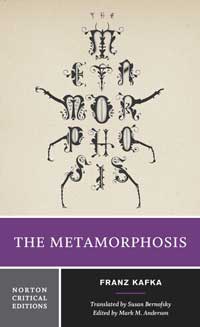
Get the Norton Bernofsky translation of The Metamorphosis
Norton critical edition. Includes a translator’s note; introductory materials and explanatory footnotes by Mark M. Anderson; 3 illustrations; related texts by Kafka, Leopold von Sacher-Masoch, Friedrich Nietzsche, and Rainer Maria Rilke, among others; 8 critical essays by Günther Anders, Walter H. Sokel, Nina Pelikan Straus, Mark M. Anderson, Elizabeth Boa, Carolin Duttlinger, Kári Driscoll, and Dan Miron; a chronology and a selected bibliography.
Available as a paperback (ISBN 9780393923209, 240 pages).
Who is Peter Wortsman?
Peter Wortsman is an author, travel writer, playwright, and poet and a translator of works in German.
About the Wortsman translation of The Metamorphosis
Public Books: “Kafka Transformed” by Saskia Elizabeth Ziolkowsky
“Wortsman’s Konundrum stands out among Kafka collections for its editorial practices, even more than for its translation choices. Whereas other collections variously aim to be comprehensive, to represent only the most vital works, to respect the writer’s express wishes or early publication history, Wortsman’s collection is driven by more personal choices. Drawing from all of Kafka’s writings, Konundrum includes selections not only from his short fiction, but also from his letters, notes, diaries, and aphorisms…. [Wortsman] pulls elements from the author’s diaries, notes, and letters, gives them a title, and presents them as essays or stories, leaving it up to the reader to decide what they are exactly…. More recently, these very short compositions have become objects of study in their own right. The growing tendency to concentrate on just Kafka’s short works represents not only a shift in criticism of this one writer, but in literary studies more generally.”
Specifically, Konundrum: Selected Prose of Franz Kafka contains:
Kafka content: Words Are Miserable Miners of Meaning, Letter to Ernst Rowohlt, Reflections, Concerning Parables, Children on the Country Road, The Spinning Top, The Street-Side Window, At Night, Unhappiness, Clothes Make the Man, On the Inability to Write, I Can Also Laugh, The Need to Be Alone, So I Sat at My Stately Desk, A Writer’s Quandary, Give It Up!, Eleven Sons, Paris Outing, The Bridge, The Trees, The Truth About Sancho Panza, The Silence of the Sirens, Prometheus, Poseidon, The Municipal Coat of Arms, A Message from the Emperor, The Next Village Over, First Sorrow, The Hunger Artist, Josephine, Our Meistersinger, or the Music of Mice, Investigations of a Dog, A Hybrid, A Report to an Academy, Transformed, In the Penal Colony, From The Burrow, Selected Aphorisms, Selected Last Conversation Shreds.
Backmatter: Notes, In the Caves of the Unconscious: K Is for Kafka (An Afterword), The Back of Words (A Translator’s Postscript), Acknowledgments.
LA Review of Books: “Kafka: An End or a Beginning?“ by Morten Høi Jensen
“The translator Peter Wortsman’s excellent and bracing new selection of Kafka’s stories, Konundrum: Selected Prose of Franz Kafka (published by Archipelago Books), brings the author’s peculiar rhetoric to glorious life. It reminds us that delight is a central element in our response to his work — to its mingling of truth and illusion, to the relationship between an extraordinary situation and the ‘analytical precision’ with which it is described. As with other modern translations of Kafka, in particular Michael Hofmann’s, here we are afforded a Kafka less somber than the religious and existential allegorist of yore.”
The Brooklyn Rail: “Kafka’s Konundrum: Narcissism, Self-Surveillance, and Unreality” by Christine Cheon
“Peter Wortsman’s latest English translation—which he simply titles ‘Transformed,’ feels downright fresh. Konundrum: Selected Prose of Franz Kafka promises to lure a new generation of casual readers, if not jaded scholars—for its streamlined, playful prose (which still manages to stay faithful to Kafka’s German syntax), as well as its contemporary concerns and sensibilities.”
Arts Fuse: “Book Interview: A New Take on Kafka — A Conversation with Peter Wortsman” by Bill Marx
Wortsman says: “For a translator engaged with the German tradition, to tickle clear English out of Kafka’s enigmatic texts is one of the most formidable challenges and greatest delights of the craft…. The greatest challenge in evoking Kafka’s actuarial accounting of the unthinkable is to capture that squelched mirth on the edge of hilarity…. As to my new rendering of ‘Die Vewandlung,’ heretofore commonly translated into English as ‘The Metamorphosis,’ I sought, in the spirit of the author, to deflate the highfalutin, Greek-rooted English title, too precious, it seemed to me, for the crass reality of a traveling salesman reduced to a monstrous bug.”
First sentence of the Wortsman translation of The Metamorphosis
Waking one morning from restless dreams, Gregor Samsa found himself transformed in his bed into a monstrous bug.
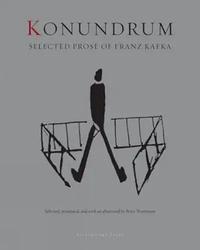
Get the Archipelago Wortsman translation of Transformed
"Konundrum: Selected Prose of Franz Kafka".
Available as a paperback (ISBN 9780914671510, 384 pages).
Who is Katja Pelzer?
Katja Pelzer is a translator from German to English and has also translated Siddhartha by Hermann Hesse.
About the Pelzer translation of The Metamorphosis
Her translation has been published by Sterling, Union Square, and Barnes and Noble (BNN, B&N, Barnes & Noble). The one in print now seems to be the Sterling edition, though her name isn’t in the metadata on the Amazon page.
First sentence of the Pelzer translation of The Metamorphosis
As Gregor Samsa awoke one morning from restless dreams, he found himself transformed in his bed into a monstrous insect.
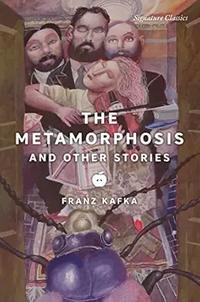
Get the Sterling Pelzer translation of The Metamorphosis
"The Metamorphosis and Other Stories" also includes Before the Law, The Judgment, The Stoker, In the Penal Colony, A Country Doctor, A Hunger Artist, A Report to an Academy, Children on the Country Road, Outing in the Mountains, A Message from the Emperor, The Window to the Street, Unmasking a Con Man, Resolutions, The Bachelor's Misery, The Businessman, Absentminded Gazing, The New Advocate, The Bassersby, The Passenger, In the Gallery, The Rejection, For Gentlemen Riders to Think About, The Sudden Stroll, Wish to Become a Red Indian, Jackals and Arabs, Unhappiness, The Way Home, An Old Manuscript, Clothing, A Visit to the Mine, The Next Village, The Cares of a Household Father, The Trees, Eleven Sons, A Fratricide, First Sorrow, A Dream.
Available as a paperback (ISBN 9781435172302, 224 pages).
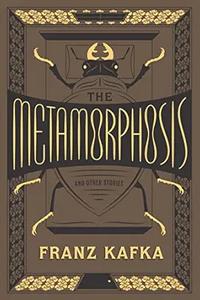
Get the Sterling Pelzer translation of The Metamorphosis
"The Metamorphosis and Other Stories" also includes Before the Law, The Judgment, The Stoker, In the Penal Colony, A Country Doctor, A Hunger Artist, A Report to an Academy, Children on the Country Road, Outing in the Mountains, A Message from the Emperor, The Window to the Street, Unmasking a Con Man, Resolutions, The Bachelor's Misery, The Businessman, Absentminded Gazing, The New Advocate, The Bassersby, The Passenger, In the Gallery, The Rejection, For Gentlemen Riders to Think About, The Sudden Stroll, Wish to Become a Red Indian, Jackals and Arabs, Unhappiness, The Way Home, An Old Manuscript, Clothing, A Visit to the Mine, The Next Village, The Cares of a Household Father, The Trees, Eleven Sons, A Fratricide, First Sorrow, A Dream.
Available as a flexibound book (ISBN 9781435165052, 207 pages).
Who is Tim Chilcott?
Tim Chilcott is a British retired university teacher specializing in English Romanticism.
» Tim Chilcott Literary Translations
About the Chilcott translation of The Metamorphosis
This is a self-published typeset PDF of a parallel-text translation (German text on the left, English text on the right). It is free for non-profit use.
Tim Chilcott Literary Translations: About the Translator
“Copyright is owned for all the material on this site. However, in the spirit of co-operation and mutuality that all translation embraces, I am pleased to give permission for the translations and accompanying material on the site to be copied, on condition only that the customary appropriate acknowledgements are made, and that the copying is not undertaken for profit.”
First sentence of the Chilcott translation of The Metamorphosis
One morning, after troubling dreams, Gregor Samsa woke up in bed to find that he had changed into some monstrous kind of insect.
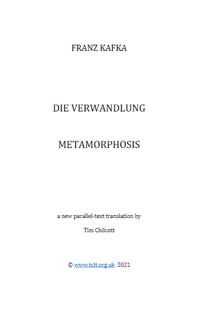
Get the Chilcott translation of Metamorphosis
Includes an introduction by Tim Chilcott, a chronology, hyperlinked endnotes, and further reading and links.
Available as a PDF.
Who is Mark Harman?
Mark Harman is an Irish-American translator and emeritus professor of German and English. He has also translated The Castle.
» LinkedIn page of Mark Harman
About the Harman translation of The Metamorphosis
LitHub: “The Special Challenges of Attempting a New Translation of Kafka” by Mark Harman
“In translating the stories in Selected Stories, I have resisted the temptation to make the English more vivid, expressive, and colorful than Kafka’s plain and understated German. That plainness was a deliberate choice, a rejection of the ‘high-flown stuff’ (almost none of which has survived) that he wrote as a youth while he still was, as he put it, ‘mad about grand phrases.’ […] My translation generally follows the German critical editions, which have removed the stylistic varnish, as it were, added by Max Brod, Kafka’s close friend, posthumous editor, and first biographer.”
LitHub: “The Special Challenges of Attempting a New Translation of Kafka” by Mark Harman
“A translator’s effort to recreate the disparate effects of these styles is at least partly foredoomed by the distance between languages, even those so closely related as are English and German. Take, for instance, syntax: Kafka, and indeed German literary convention, is famously partial to long sentences, which I have tried to mimic, even though they challenge contemporary English-language preferences…. Another challenge for the translator is how to render little words informally known as ‘flavoring particles,’ which carry a range of possible meanings, such as wohl (perhaps, probably, indeed) and doch (however, but, indeed, after all). Whereas careless writers of German sprinkle such words into their writing with abandon, Kafka deploys them with characteristic precision and so the translator needs to figure out from the context which of the multiple meanings of those little words makes the most sense.”
Literate Podcast: “Episode 4: The Metamorphosis by Franz Kafka” by Erica Lombard and Alicia Broggi
“Dr. Mark Harman, who is an acclaimed translator of Kafka and Professor Emeritus at Elizabethtown College, talks about the challenges and pleasures of rendering Kafka’s German into English prose.”
The Harvard Crimson: “Learning the Language of Franz Kafka: Inside Mark Harman’s Translation“ by LeMonie K. Hutt
“Quoting Schleiermacher, Harman explained that the foreignization method ‘leaves the author in peace’ by bringing the reader closer to the original text, while the domestication method ‘leaves the reader in peace.’ By distinguishing between these two approaches, Harman offered the audience a unique glimpse into how translators grapple with the balance between fidelity to the original and accessibility for modern readers. However, Harman… suggested that a nuanced balance between the two can lead to a more authentic and resonant translation.”
The Guardian: “Kafka: Selected Stories” by John Banville
“Harman’s long and absorbing introduction is one of the most concise, perceptive and measured accounts of Kafka and his work to have appeared since Reiner Stach’s magnificent three-volume biography, published in Shelley Frisch’s English translation between 2005 and 2016. This year is the centenary of Kafka’s death, and Selected Stories is one of a number of books published to mark the event. The translations are surely definitive – Harman’s grasp of the German language is as comprehensive as was the Czech-born Kafka’s – but the prime value of the book is in the annotation. Every nuance of language is flagged, every cross-reference is followed up, every subtle shade of humour is highlighted. This is academic work as it should be done, in faithful service to the text and to its readers.”
The Daily Pennsylvanian: “Kelly Writers House hosts author of new Franz Kafka translation for discussion, book-signing” by Mariacristina Calcagno
“’One of my goals in [previously] translating two novels of Kafka and [Selected Stories] has been to craft readable English, while retaining at least some of the subterranean strangeness of his German,’ Harman said at the event, adding that he aims to ‘bring out the visceral quality in Kafka’s writing.’ […] ‘What is special is that Mark knows Kafka extremely well … and he understands this mixture of horror and humor that is so particular in Kafka,’ Rabaté added.”
Forward: “A masterful new Kafka book will bring you closer to the writer than ever before” by Aviya Kushner
“I admit I was skeptical about what turned out to be the best book I have read this year. When I first heard about this new translation of Kafka’s stories, I wondered whether it was even necessary. Good translations into English exist… [but] it’s clear that there is far more to say…. From its very first sentence, Kafka: Selected Stories, edited and translated by Mark Harman, dispelled all my doubts. Harman’s translation moved me deep into Kafka’s world, bringing to life Kafka’s friends, girlfriends, parents, sisters, and most of all, his concerns as a writer and as a Jew in a way no other book I have ever read has…. [Harman] brings the reader super-close to Kafka’s original German with notes that explain what might seem like minor moments in translation that are in fact essential in the German…. I guarantee that even if you have read a ton about Kafka, this 60-page introduction will reveal something about Kafka you never knew before.”
The Hedgehog Review: “The Kafka Challenge: Translating the Inimitable” by Paul Reitter
Compares Bernofsky’s translation with Harman’s.
First sentence of the Harman translation of The Metamorphosis
One morning when Gregor Samsa awoke in his bed from restless dreams he found himself transformed into a monstrous insect.
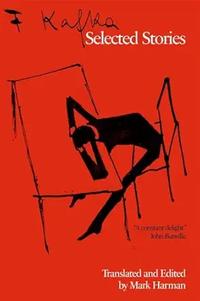
Get the Harvard Belknap Harman translation of The Transformation
Selected Stories. Includes a list of abbreviations, a note on the translation and the selection, an introduction, endnotes, suggestions for further reading, illustration credits for XX illustrations, acknowledgments, and the following stories: Wish to Become an Indian AND The Trees, The Judgment, The Transformation (The Metamorphosis), In the Penal Colony, A Country Doctor, An Imperial Message, The New Lawyer, Before the Law, The Concern of a Family Man, A Report for an Academy, A Crossbreed, A Hunger Artist, Poseidon, Little Fable, A Commentary.
Available as a hardcover (ISBN 9780674737983, 304 pages).
https://www.gutenberg.org/ebooks/22367
Original German text of Kafka’s Die Verwandlung. First sentence:
Als Gregor Samsa eines Morgens aus unruhigen Träumen erwachte, fand er sich in seinem Bett zu einem ungeheueren Ungeziefer verwandelt.
https://interlinearbooks.com/german/
This is an ebook version of The Metamorphosis that has the literal English translation provided beneath each German word. Translation is performed by humans using software and translations are edited. (Looks like an awesome tool for learning and exploration! This e-translation is not free.)
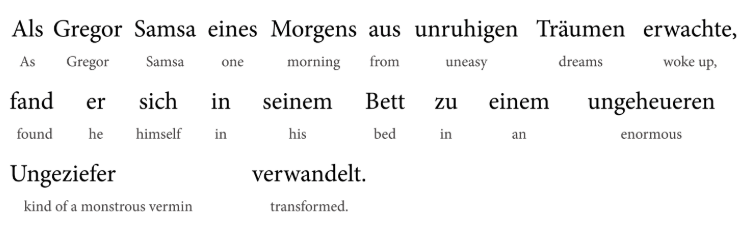
The Kafka Society of America
“The only society exclusively devoted to scholarly exchange in the field of international Kafka studies.”
Kafka’s Transformative Communities at Oxford Kafka Research Centre
“promotes Kafka adaptations”
The Kafka Project
This is a project at San Diego State University that is working on behalf of the Kafka Estate to recover Kafka’s lost writings.
There is a Kafka museum in Prague.
Get The Metamorphosis by Karen Reppin
Translated from Czech (rather than the original German) to English.
Available as .
Get Transforming Kafka: Translation Effects by Patrick O'Neill
"[C]omparing translations extends and expands the potential meanings of the text and reveals the subtle differences among the hundreds of translations of Kafka’s work. A sophisticated analysis of the ways in which translation shapes, rearranges, and expands our understanding of literary works, Transforming Kafka is a unique approach to reading the works of a literary giant." Other formats available.
Available as a paperback (ISBN 9781487547615, 224 pages).
Get Kafka Translated: How Translators have Shaped our Reading of Kafka by Michelle Woods
"Kafka Translated is the first book to look at the issue of translation and Kafka's work. What effect do the translations have on how we read Kafka? Are our interpretations of Kafka influenced by the translators' interpretations? In what ways has Kafka been 'translated' into Anglo-American culture by popular culture and by academics?"
Available as a paperback (ISBN 9781441197719, 296 pages).

Get Kafka: The Early Years (Vol. 1) by Reiner Stach (translated by Shelley Frisch)
Kafka biography covering the years 1883–1910.
Available as a paperback (ISBN 9780691178189, 616 pages).

Get Kafka: The Decisive Years (Vol. 2) by Reiner Stach (translated by Shelley Frisch)
Kafka biography covering the years 1910–1915.
Available as a paperback (ISBN 9780691147413, 624 pages).
Get Kafka: The Years of Insight (Vol. 3) by Reiner Stach (translated by Shelley Frisch)
Kafka biography covering the years 1916–1924.
Available as a paperback (ISBN 9780691165844, 728 pages).
Get The Nightmare of Reason: A Life of Franz Kafka by Ernst Pawel
The standard single-volume biography in English.
Available as a paperback (ISBN 9780374523350, 496 pages).
Get Franz Kafka: A Biography by Max Brod
The primary source by Kafka's best friend and literary executor.
Available as a paperback (ISBN 9780306806704, 296 pages).
Get The Aphorisms of Franz Kafka by Franz Kafka (edited by Reiner Stach and translated by Shelley Frisch)
"In 1917 and 1918, Franz Kafka wrote a set of more than 100 aphorisms, known as the Zürau aphorisms, after the Bohemian village in which he composed them. Among the most mysterious of Kafka’s writings, they explore philosophical questions about truth, good and evil, and the spiritual and sensory world. This is the first annotated, bilingual volume of these extraordinary writings, which provide great insight into Kafka’s mind."
Available as a paperback (ISBN 9780691254784, 256 pages).
Get Franz Kafka: The Drawings by Andreas Kilcher (editor)
"The year 2019 brought a sensational discovery: hundreds of drawings by the writer Franz Kafka (1883–1924) were found in a private collection that for decades had been kept under lock and key. Until now, only a few of Kafka’s drawings were widely known. Although Kafka is renowned for his written work, his drawings are evidence of what his literary executor Max Brod termed his “double talent.” Irresistible and full of fascinating figures, shifting from the realistic to the fantastic, the grotesque, the uncanny, and the carnivalesque, they illuminate a previously unknown side of the quintessential modernist author."
Available as a hardcover (ISBN 9780300260663, 368 pages).
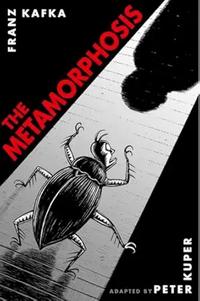
Get The Metamorphosis: The Illustrated Edition by Adapted by Peter Kuper
Graphic novel adaptation. Ebook also available (ISBN 9780307717009).
Available as a paperback (ISBN 9781400052998, 80 pages).
Get Kafka: A Manga Adaptation by Written and Illustrated by Nishioka Kyodai; Translated by David Yang
Manga adaptations of: The Metamorphosis; A Hunger Artist; In the Penal Colony; A Country Doctor; The Concerns of a Patriarch; The Bucket Rider; Jackals and Arabs; A Fratricide; The Vulture.
Available as a paperback (ISBN 9781782279846, 176 pages).
Get The Meowmorphosis by Franz Kafka and Coleridge Cook
From the publishers of Pride and Prejudice and Zombies. “One morning, as Gregor Samsa was waking up from anxious dreams, he discovered that he had been changed into an adorable kitten.” Ebook also available (ISBN 9781594745126).
Available as a paperback (ISBN 9781594745034, 208 pages).
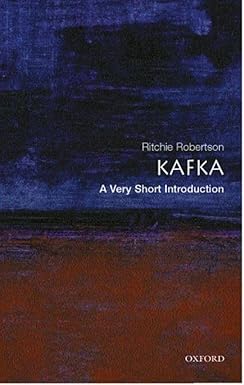
Get Kafka: A Very Short Introduction by Ritchie Robertson
A concise, accessible introduction.
Available as a paperback (ISBN 9780192804556, 160 pages).
The Metamorphosis best translation?
The choice of a “best translation” always depends on the reader’s purpose and preferences (and budget, and possibly preferred design and format). At least this Kafka story is relatively short, so if you want, you can read and compare multiple complete translations without investing a huge amount of time.
Personally, I’d be tempted to read the Muir version first, because it’s been a familiar point of reference among Kafka’s readers for decades. For contrast, then I’d read one of the prominent annotated modern versions (Crick, Bernofsky, or Harman), though it’s hard to pick one.
Click the links below to jump up the page to learn more about the following translations…
Three translations are available for free online:
- 1999 – Johnston – free from the translator’s website
- 2002 – Wyllie – free from Project Gutenberg
- 2021 – Chilcott – free PDF from the translator’s website, includes German text on facing pages
The budget publisher versions are:
- 1996 – Appelbaum – Dover
- 2009 – Aaltonen – Arcturus
- 2011 – Williams – Wordsworth
- 2017 – Pelzer – Sterling
The niche publisher versions are:
- 1937 – Lloyd – Faber Finds
- 2006 – Roberts – Preswick (an educational edition)
- 2014 – Moncrieff – Alma Classics
- 2016 – Wortsman – Archipelago (quirky flash fiction style)
The still-popular classic versions are:
- 1948 – Muir – considered the “original” English translation
- 1972 – Corngold – Bantam, Modern Library
- 1993 – Neugroschel – Schocken
The modern versions are:
- 2007 – Hofmann – Penguin (British)
- 2009 – Crick – Oxford (British, includes endnotes)
- 2014 – Bernofsky – Norton (American, some editions have footnotes)
- 2024 – Harman – Harvard (American, includes endnotes)
Narrow down your choice further by comparing extracts from the different versions of The Metamorphosis.
Enjoy The Metamorphosis!
From the introduction by Jason Baker to the Barnes & Noble Donna Freed translation:
“The mystery of The Metamorphosis emerges in one of the most famous, and most variously translated, lines in Western literature—its first: ‘As Gregor Samsa awoke from unsettling dreams one morning, he found himself transformed in his bed into a monstrous vermin.’ This is marvelously funny. Instead of waking up from a nightmare, Gregor wakes up into one.”

I have a copy of the Donna Freed translation! I did not know it was out of print. I came here after recording an audiobook of the Freed translation for my YouTube channel. I saw that you mentioned if anyone has a copy of the Freed translation to let you know in the comments. I’d be happy to offer any thoughts on it – is there any information about it in particular you’re interested in?
Thanks for your comment! Yeah I think when Barnes & Noble redesigned their classics product line from B&N Classics to Signature Classics, they changed some of the content too… What’s your perspective on the Freed translation after reading it aloud? Did you find it smooth? Did you choose the Freed translation purposely, or just use it because that’s the one you had available?