
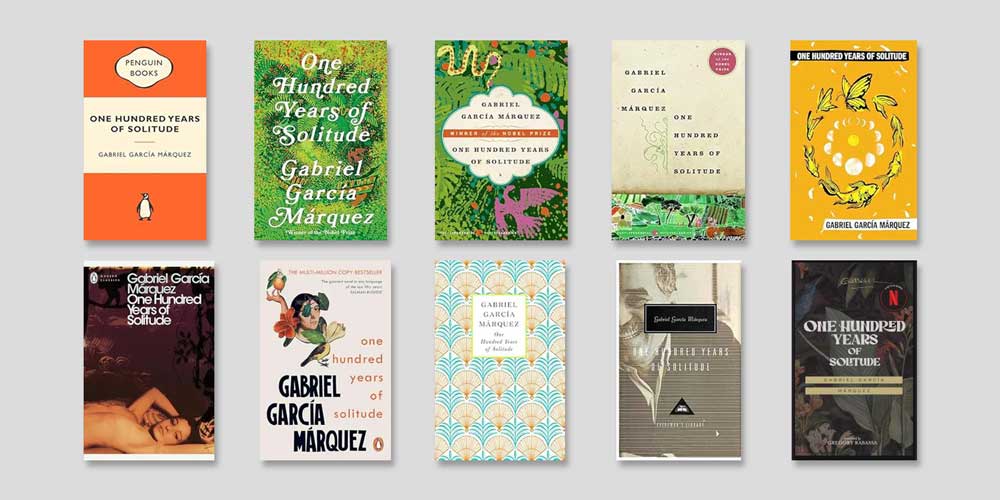
Which English translation of One Hundred Years of Solitude should I read?
The world-famous novel of magical realism Cien años de soledad was published in 1967 in Spanish. In 1970, it was translated into English by Gregory Rabassa. There have been no other English translations!
Why is there only one translation of One Hundred Years of Solitude?
Well, for one thing, 1967 wasn’t so very long ago, so the original text is not in the public domain. (The original text of, say, Crime and Punishment, originally published in 1866, *is* in the public domain, thus publishers wanting to produce new translations don’t have to pay anyone for translation rights. Some of the English versions are old enough to be in the public domain, too!)
For another thing, by all accounts, it would be tough to surpass Rabassa’s version.
The Common: “On Translation, Proust, and Advice for Young Poets: an Interview with Gregory Rabassa” by S. Tremaine Nelson
“In 1967, in his very first attempt at translation, Gregory Rabassa won the National Book Award for his translation of Julio Cortázar’s novel Rayuela (Hopscotch in English). Rabassa’s translation schedule filled up, and, in his own words, he was ‘too busy’ with other projects when Gabriel García Márquez approached him about translating Cien Años de Soledad. At Cortázar’s urging, García Márquez agreed to wait three years until Rabassa’s schedule cleared. Upon the publication of One Hundred Years of Solitude in 1970, García Márquez famously declared that Rabassa’s English version of his book was better than the Spanish original.”
Still, Rabassa remained humble, it seems:
Dartmouth: “Alumnus Was Gabriel García Márquez’s Renowned Translator” by Kelly Sundberg Seaman
“García Márquez’s praise of Rabassa’s work—that he preferred the English translation of One Hundred Years of Solitude to the original Spanish—is widely reported. Speaking with Dartmouth Now on April 18, Rabassa waved away his own credit for that accolade. ‘That’s more of a compliment to the English language,’ he says.”
CUNY: “Opening Doors: The Magical Touch of Gregory Rabassa” by Margaret Ramirez
Márquez “praised Rabassa as having improved the original text and called him ‘the best Latin American writer in the English language.’ The humble Rabassa shrugs at such praise, saying it is Márquez who deserves the credit for writing an epic. ‘The book itself wasn’t a lemon,’ he says with a laugh. ‘It was so well-written that I always say that book translated itself.’”
That doesn’t mean it was an easy book to translate!
Motaword: “A Duel for Magical Realism: Translating Gabriel Garcia Marquez”
“Rabassa faced the challenge of conveying the dense, rich tapestry of Marquez’s magical realism, which required not just a literal translation but a recreation of the narrative’s rhythm and tone. His collaborative relationship with Marquez was marked by mutual respect, with Marquez providing Rabassa the creative freedom to adapt his work authentically…. Because realism turned magical is such an important theme in all of Garcia Marquez’s works, for his translators ‘magical realism’ takes on a whole new definition in ‘meaning for meaning’ translation. Garcia Marquez is a friend to the art of translation because he knew, for a translator to do their work properly, they must magically create a new work that exists within the realism of the original.”
One Hundred Years of Solitude: translations in English
There is only one! It is in print in paperback, hardcover, ebook, and audiobook formats, as listed below.
- 1970 – Gregory Rabassa
- …no really, there’s only one!
Why is the title translated as One Hundred Years of Solitude?
LA Times: Obituary of Gregory Rabassa
“[T]ranslating the title, ‘Cien Anos de Soledad,’ required precision and poetry. ‘Cien’ can mean ‘one hundred’ or ‘a hundred.’ Rabassa decided on ‘one hundred,’ because he believed Garcia Marquez had a specific time frame in mind. A choice also was needed for ‘soledad,’ which can mean ‘loneliness’ or ‘solitude.’ ‘I went for “solitude” because it’s a touch more conclusive and also can carry the germ of “loneliness” if pushed along those lines, as Billie Holiday so eloquently demonstrated,’ Rabassa recalled.”
Not only will you not see the title written as “A Hundred Years of Solitude,” you won’t find it displayed as “100 Years of Solitude”; publishers always spell out “one hundred”.
Why is the first line of One Hundred Years of Solitude so famous?
Literary Hub: “On the Iconic First Line of One Hundred Years of Solitude: Time Passes Differently in the Tropics” by Claire Adam
“So, by the end of the sentence, those first three words, many years later, quietly reverberate with added meaning, because they contain almost the sum total of this man’s life, having almost reached its end. There’s a pathos in those words, depicting a character in his final moments, simultaneously reaching back across this great expanse of time—and that, in itself, is a transcendence of time—and, on the other hand, having a complete knowledge of his future. All this is captured in this single elegant sentence, this brief moment when he is able to see the whole stretch of his life, from end to end…. García Márquez presents an alternate conception of time, of time not simply as something linear, but also as something never-ending…. [He] writes as if there were a kind of parity to past and future, almost as if there were no forward arrow of time at all.”
Who was Gregory Rabassa?
He was an American author and translator of works in Spanish and Portuguese, and is best known for this translation. He is credited with getting people interested Latin American literature in English.
» NYT obituary of Gregory Rabassa
» Washington Post obituary of Gregory Rabassa
» LA Times obituary of Gregory Rabassa
» Guardian obituary of Gregory Rabassa
» Words Without Borders translators remember Gregory Rabassa
» PEN America tribute to Gregory Rabassa
About the Rabassa translation of One Hundred Years of Solitude
Alta: “Translating One Hundred Years of Solitude” by Janet Barrow
“On May 30, 1967… a novel came out in Buenos Aires that was destined to sell more copies world-wide than Homer’s The Odyssey, Mitchell’s Gone with the Wind, or even Dante’s The Divine Comedy. It was the golden age of literature in Latin America, and Gabriel García Márquez, who would later become known to the entire continent by a single name, ‘Gabo,’ had just stolen the spotlight with One Hundred Years of Solitude. Since then, his work has gone on to influence writers from Toni Morrison to Salman Rushdie, and he has even been called a childhood favorite of Barack Obama. But while García Márquez’ fame and notoriety is more than well-deserved, those who fomented their adoration reading his texts in English certainly should not overlook the work of another profoundly talented individual: Gregory Rabassa.”
CUNY: “Opening Doors: The Magical Touch of Gregory Rabassa” by Margaret Ramirez
“[I]n 1967, Argentine novelist Julio Cortázar had recommended Rabassa to Márquez as a translator for One Hundred Years of Solitude. The novel, set in the imaginary town of Macondo, was already a hit throughout Latin America, but Spanish-language novels were still a hard sell in the United States. Rabassa said he was unsure how American readers would react to Márquez, the magic realism literary style, and the themes of imperialism, incest, economics, dictatorships, and destiny found in One Hundred Years. ‘I knew it was damn good book,’ said Rabassa. ‘But at that time, I was very skeptical about books from down there, making it up here [in the U.S.]’”
ProZ.com: “Analysis of Gregory Rabassa’s translation of Cien años de soledad, by Gabriel García Márquez” by Roser Bosch Casademont
“[O]ne can’t but admire the way Gregory Rabassa’s manages to deliver an accurate translation of the novel (even literal on many occasions) which at the same time has a very natural flow and preserves the elegance, richness and evocative language of García Marquez’s prose. He succeeds in doing this by using a wide range of strategies, from exoticisms to all sort of communicative translations, including lexical and grammatical transpositions, morphosyntactic transformations, etc. On a wide range of occasions he uses calques and rather literal translations which seem to emphasize the ‘foreignness’ of the text; on many others, he makes compromises in favour of flow or phonic qualities (rhetorical domestication).”
America Reads Spanish: “New Spanish Books Interview with Gregory Rabassa”
“Q: Looking back, can you share with us what was your best and worst experience in your role as a translator? A: Both would be with the same book, One Hundred Years of Solitude. It was a joy to hear Gabo say that my English read better than his original Spanish, but at the same time, in those days royalties were non-existent or skimpy for translators and groaned as the book took off with great sales and acclaim.”
Translation Journal: “A Key Word in Gabriel García Márquez’s One Hundred Years of Solitude” by Dr. James McCutcheon
“There exists, however, a single line that abruptly interrupts the otherwise consistently detached narrative tone that persists throughout the novel. As this line is found in what several critics have looked at as the central scene of the novel, it would seem that this single break in tone is intentional on the part of the author and is therefore of particular importance in the novel. However, looking at the Gregory Rabassa’s English translation of the novel, it is astonishing to find that this crucial line fails to adequately transmit the impact it has in the original Spanish version. While two articles have appeared pointing out several minor translation ‘slips’ in Rabassa’s renowned English version, what I see as the mistranslation of a key word at a central point in the novel has until now gone unnoticed.”
Extract from the Rabassa translation of One Hundred Years of Solitude
First ~250 words of Chapter 1 (preview at Amazon):
Many years later, as he faced the firing squad, Colonel Aureliano Buendía was to remember that distant afternoon when his father took him to discover ice. At that time Macondo was a village of twenty adobe houses, built on the bank of a river of clear water that ran along a bed of polished stones, which were white and enormous, like prehistoric eggs. The world was so recent that many things lacked names, and in order to indicate them it was necessary to point. Every year during the month of March a family of ragged gypsies would set up their tents near the village, and with a great uproar of pipes and kettledrums they would display new inventions. First they brought the magnet. A heavy gypsy with an untamed beard and sparrow hands, who introduced himself as Melquíades, put on a bold public demonstration of what he himself called the eighth wonder of the learned alchemists of Macedonia. He went from house to house dragging two metal ingots and everybody was amazed to see pots, pans, tongs, and braziers tumble down from their places and beams creak from the desperation of nails and screws trying to emerge, and even objects that had been lost for a long time appeared from where they had been searched for most and went dragging along in turbulent confusion behind Melquíades’ magical irons. “Things have a life of their own,” the gypsy proclaimed with a harsh accent. “It’s simply a matter of waking up their souls.”
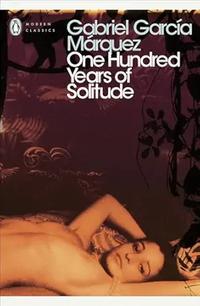
Get the Penguin Rabassa translation of One Hundred Years of Solitude
Available as a paperback (ISBN 9780141184999, 432 pages).
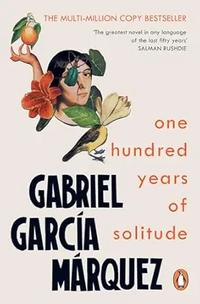
Get the Penguin Rabassa translation of One Hundred Years of Solitude
Available as a paperback (ISBN 9780241968581, 432 pages).
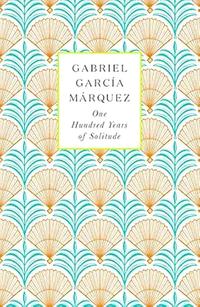
Get the Penguin Rabassa translation of One Hundred Years of Solitude
Available as a hardcover (ISBN 9780241971826, 432 pages).
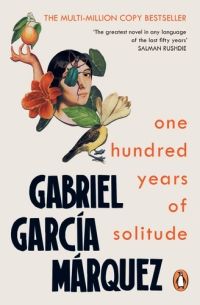

Get the Penguin Rabassa translation of One Hundred Years of Solitude
Available as an ebook (ISBN 9780241968598).
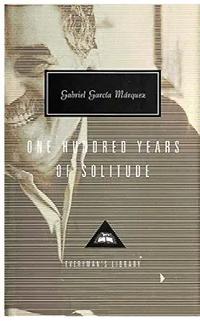
Get the Everyman's Library Rabassa translation of One Hundred Years of Solitude
Available as a hardcover (ISBN 9781857152234, 416 pages).
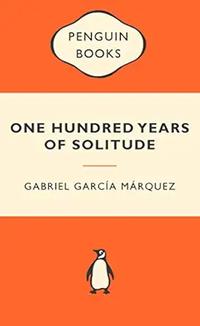
Get the Penguin Australia Rabassa translation of One Hundred Years of Solitude
Available as a paperback (ISBN 9780141045634, 432 pages).
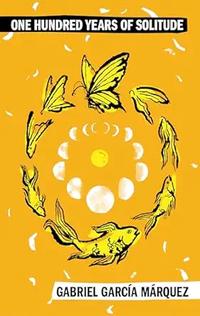
Get the Harper Perennial Olive Editions Rabassa translation of One Hundred Years of Solitude
Available as a paperback (ISBN 9780063464452, 448 pages).
Get the Harper Perennial Modern Classics Rabassa translation of One Hundred Years of Solitude
Available as a paperback (ISBN 9780060883287, 448 pages).
Get the Harper Perennial Modern Classics Rabassa translation of One Hundred Years of Solitude
Available as a paperback (ISBN 9780061120091, 417 pages).
Get the HarperCollins Rabassa translation of One Hundred Years of Solitude
Available as a hardcover (ISBN 9780060531041, 432 pages).
Get the Blackstone Rabassa translation of One Hundred Years of Solitude
Available as an ebook (ISBN 9788200952090).
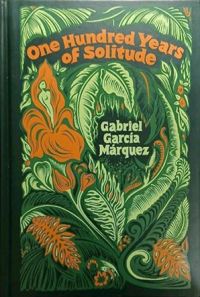
Get the Barnes and Noble Leatherbound Classics Rabassa translation of One Hundred Years of Solitude
Out of print.
Available as a hardcover (ISBN 9781435126053, 417 pages).

Get the Folio Society Rabassa translation of One Hundred Years of Solitude
Out of print.
Available as a slipcased hardcover.
Get the Blackstone Audio Rabassa translation of One Hundred Years of Solitude
Unabridged. 14h 4m, narrated by John Lee.
Available as an audiobook (ISBN 9781483086866).
Get the Penguin Audio Rabassa translation of One Hundred Years of Solitude
Unabridged. 17h 56m, narrated by Ben Onwukwe.
Available as an audiobook (ISBN 9780241998502).
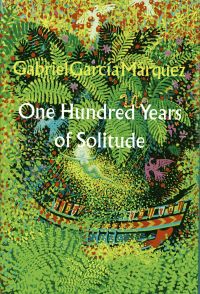
Get the Harper and Row Rabassa translation of One Hundred Years of Solitude
Want a 1970 first American edition?
Available as a hardcover.
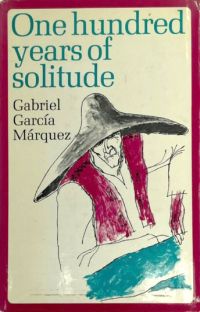
Get the Rabassa translation of One Hundred Years of Solitude
Want a 1970 first British edition?
Available as a hardcover.
Oprah’s Book Club: “Guide to One Hundred Years of Solitude”
“Find the insight you’ve been searching for with your exclusive Oprah’s Book Club guide to One Hundred Years of Solitude. Explore deeper into the novel with reading questions, themes, and a detailed look at magical realism. Don’t miss inside information on Gabo, and his message of solitude.”
Erudit: “Rabassa and the ‘Narrow Act’: Between Possibility and an Ethics of Doubt” by María Constanza Guzmán
“I concentrate on the way Rabassa imagines himself as a translator—inasmuch as this can be traced in his writings—and on his reflections on language, translation, and his own practice, in order to gain some understanding about the way in which these notions inform his reflections on his practice and about the tensions they reveal.”
New Directions: “The Many Faces of Treason” by Gregory Rabassa
“[T]here is a danger of the translator’s committing the saddest treason of all, betrayal of himself. The translator, we should know, is a writer too. As a matter of fact, he could be called the ideal writer because all he has to do is write; plot, theme, characters, and all the other essentials have already been provided, so he can just sit down and write his ass off. But he is also a reader. He has to read the text closely to know what it’s all about.”
There’s a Netflix series of One Hundred Years of Solitude as of 2024. So far, 8 of the planned 16 episodes have been released.
About Rabassa’s memoir, If This Be Treason
Columbia Magazine: “Gained in Translation: A review of If This Be Treason” by Natasha Wimmer
“The mantle of the translator is a garment often diffidently worn. Self-effacement is part of the job, and despite assurances that translation is a noble art, the translator may feel like a traitor when faced with the impossible challenge of fidelity to two languages at once. In this gracefully self-deprecating memoir, Gregory Rabassa takes the sting out of the dread accusation ‘Traduttore, traditore,’ and rolls up his sleeves to engage with the specific demands of the translation of novels by a roster of authors that begins with Julio Cortazar and includes Gabriel García Márquez, Juan Goytisolo, Mario Vargas Llosa, and Jorge Amado.”
The Rumpus Interview with Gregory Rabassa by Susan Bernofsky
“Rabassa: They asked me, ‘Could you write a book about translation?’ So I just wrote about my experience and what I thought about it. But memoirs are selling, so we called it a memoir, and I won a prize for memoir.”
Rocky Mountain Review: “Review of If This Be Treason” by Daniel C. Villanueva
“The second and largest section of Rabassa’s work contains… a list organized by author and works that he has translated, together with impressions and anecdotes relating to the texts…. [This] acquaints one with the breadth and reputation of Rabassa’s work. Those familiar with these authors only in English will appreciate the palpable joy he conveys in the process of having translated them, carrying their expressions and riddles into the target language. Those with detailed knowledge of both source and target texts will find insight into Rabassa’s personal path as a translator as well as encouragement to craft potential alternatives to the authoritative, final version.”
One Hundred Years of Solitude: Original Spanish Text
First ~250 words of Chapter 1 (preview at Amazon):
Muchos años después, frente al pelotón de fusilamiento, el coronel Aureliano Buendía había de recordar aquella tarde remota en que su padre lo llevó a conocer el hielo. Macondo era entonces una aldea de veinte casas de barro y cañabrava construidas a la orilla de un río de aguas diáfanas que se precipitaban por un lecho de piedras pulidas, blancas y enormes como huevos prehistóricos. El mundo era tan reciente, que muchas cosas carecían de nombre, y para mencionarlas había que señalarlas con el dedo. Todos los años, por el mes de marzo, una familia de gitanos desarrapados plantaba su carpa cerca de la aldea, y con un grande alboroto de pitos y timbales daban a conocer los nuevos inventos. Primero llevaron el imán. Un gitano corpulento, de barba montaraz y manos de gorrión, que se presentó con el nombre de Melquíades, hizo una truculenta demostración pública de lo que él mismo llamaba la octava maravilla de los sabios alquimistas de Macedonia. Fue de casa en casa arrastrando dos lingotes metálicos, y todo el mundo se espantó al ver que los calderos, las pailas, las tenazas y los anafes se caían de su sitio, y las maderas crujían por la desesperación de los clavos y los tornillos tratando de desenclavarse, y aun los objetos perdidos desde hacía mucho tiempo aparecían por donde más se les había buscado, y se arrastraban en desbandada turbulenta detrás de los fierros mágicos de Melquíades. «Las cosas tienen vida propia — pregonaba el gitano con áspero acento—, todo es cuestión de despertarles el ánima.»
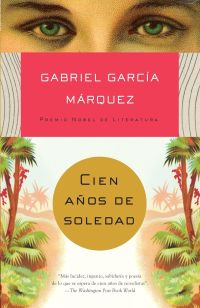
Get Cien años de soledad by Gabriel García Márquez
ORIGINAL SPANISH
Available as a paperback (ISBN 9780307474728, 496 pages).
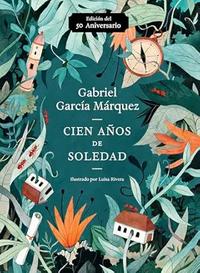
Get Cien años de soledad by Gabriel García Márquez
ORIGINAL SPANISH: Illustruated 50th anniversary edition.
Available as a paperback (ISBN 9780525562443, 400 pages).

Get Cien años de soledad by Gabriel García Márquez
ORIGINAL SPANISH: Gift edition illustrated by Luisa Rivera.
Available as a hardcover (ISBN 9798890981745, 400 pages).
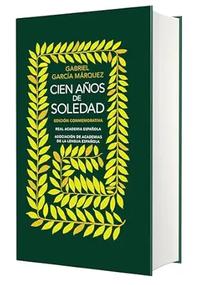
Get Cien años de soledad by Gabriel García Márquez and others
ORIGINAL SPANISH: Includes the novel and critical essays, all in Spanish. "On the fiftieth anniversary of its original publication, the Royal Spanish Academy and the Association of Academies of the Spanish Language revive their commemorative edition of this masterpiece of 20th century literature…. In this edition, García Márquez’s work is accompanied by splendid critical texts by authors of the calibre of Mario Vargas Llosa, Álvaro Mutis, Carlos Fuentes, Víctor García de la Concha, Claudio Guillén and Sergio Ramírez, among others."
Available as a hardcover (ISBN 9781644734728, 752 pages).

Get Cien años de soledad by Gabriel García Márquez and others
ORIGINAL SPANISH
Available as an ebook.

Get Cien años de soledad by Gabriel García Márquez and others
ORIGINAL SPANISH. Unabridged. 17h 29m, narrated by Gustavo Bonfigli.
Available as an audiobook.
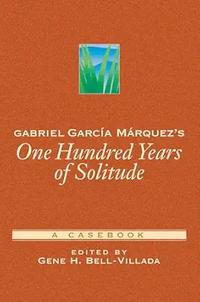
Get Gabriel García Márquez's One Hundred Years of Solitude: A Casebook by Edited by Gene H. Bell-Villada
"Casebooks in Criticism offer analytical and interpretive frameworks for understanding key texts in world literature and film. Each casebook reprints documents relating to a work's historical context and reception, presents the best critical studies, and, when possible, features an interview with the author. Accessible and informative to scholars, students, and nonspecialist readers alike, the books in this series provide a wide range of critical and informative commentaries on major texts."
Available as a paperback (ISBN 9780195144550, 192 pages).
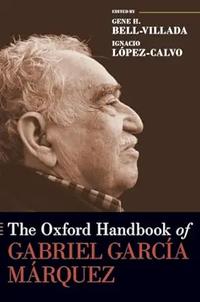
Get The Oxford Handbook of Gabriel García Márquez by Edited by Gene H. Bell-Villada and Ignacio López-Calvo
"The first comprehensive collection of essays on Nobel Laureate Gabriel García Márquez in the English language since his death in 2014."
Available as a hardcover (ISBN 9780190067168, 658 pages).
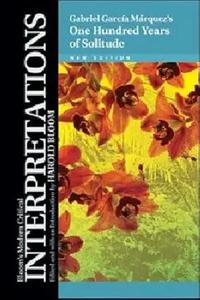
Get One Hundred Years of Solitude: Bloom's Modern Critical Interpretations by Harold Bloom
"This critical volume brings together full-length essays that explore the nuances of Márquez’s captivating fictive world of Macondo. This study guide comes complete with an introductory essay by master scholar Harold Bloom, notes on the contributors, and reference features such as a chronology, bibliography, and index."
Available as a hardcover (ISBN 9781604133912, 232 pages).
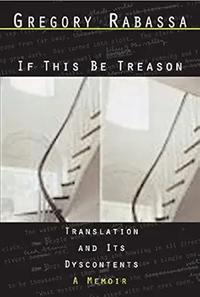
Get If This Be Treason: Translation and Its Dyscontents, A Memoir by Gregory Rabassa
"Rabassa offers a cool-headed and humorous defense of translation, laying out his views on the art of the craft. Anecdotal, and always illuminating, If This Be Treason traces Rabassa's career."
Available as a paperback (ISBN 9780811216654, 208 pages).
The fact that there’s only one English translation of One Hundred Years of Solitude out there doesn’t stop people from thinking there might be more than one; and some of them search this site for this title. Thus this page!
However, the only English translation of One Hundred Years of Solitude is the one by Gregory Rabassa, and by all accounts, it is fantastic. If you want to read the book in English, that’s what you’ll be reading. Enjoy!
